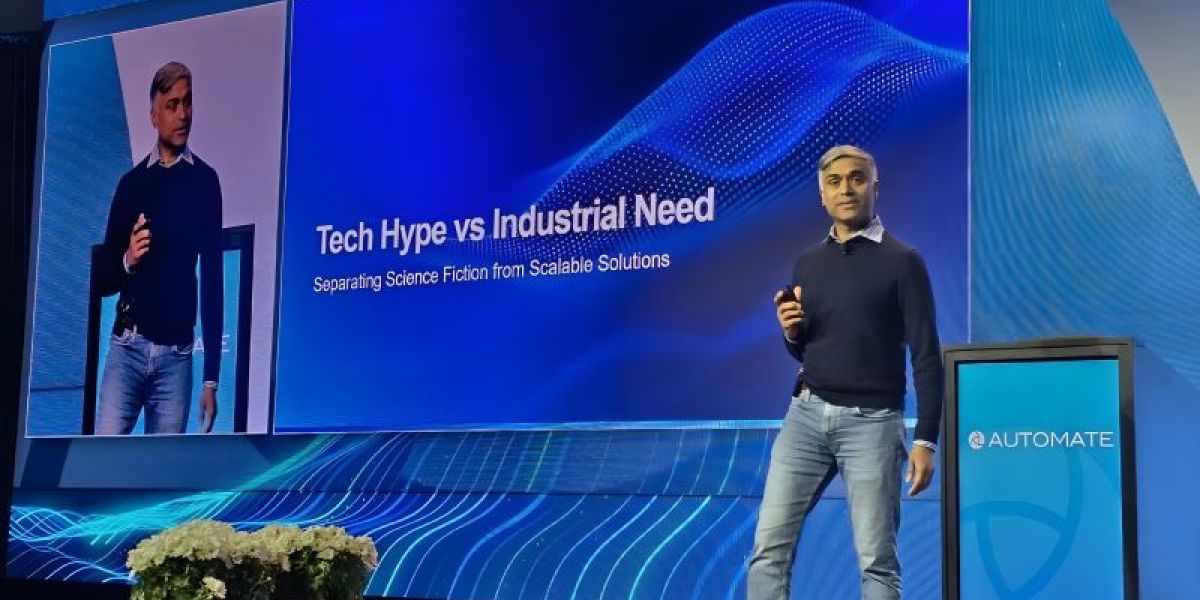
The numbers come first. Ujjwal Kumar, president of Siemens' automation business in the Americas, told Fortune that about 30,000 new industrial projects have been announced across the Americas in recent months, to be awarded over the next three years, with about a third of them in the U.S. Only about 3,000 are data centers and chip plants. Food and beverage plants are Siemens' biggest category in the region.
Kumar described the pace in terms of his own calendar. He said he is meeting five or six CEOs a week because of the wave of new factory projects, pitching them the controllers, software and robots that run modern plants. 'We have never seen this level of greenfield work,' he said. 'We used to be more of a brownfield continent.' He compared it with China seven or eight years ago, when, by his perception as an industry executive, there were 8,000 to 10,000 projects.
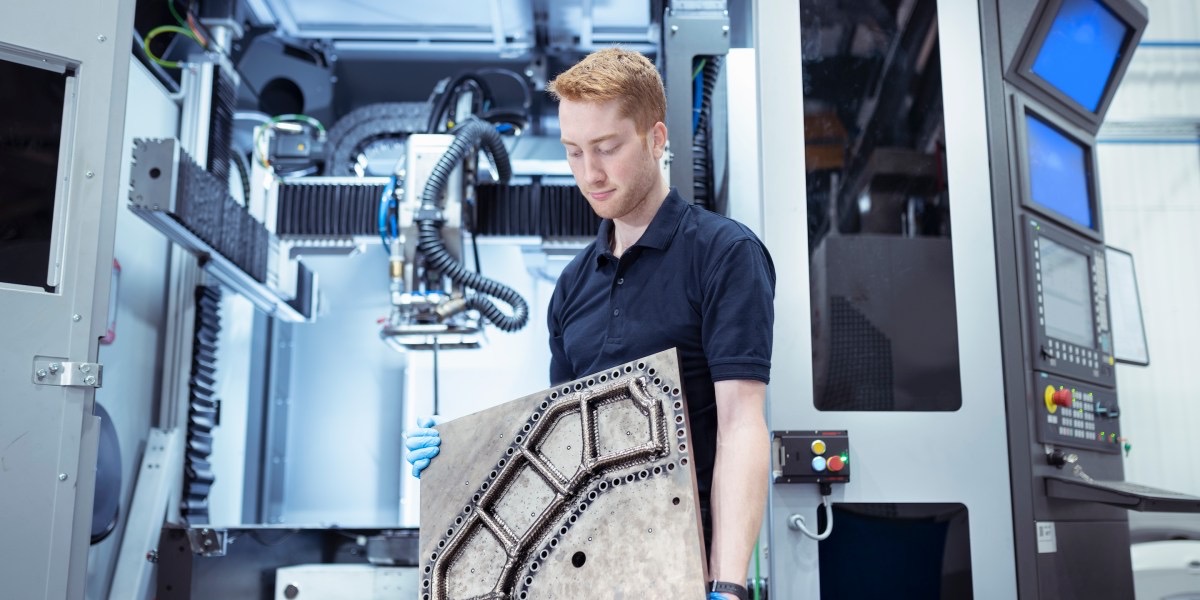
The labor question sits at the center of that build-out. Siemens USA pledged in December 2025 to train 200,000 electricians and manufacturing workers by 2030. The company's $190 million Fort Worth plant, which opened in March 2025 to make electrical switchgear mostly for data centers, has a current headcount of approximately 800 workers, roughly a quarter of whom had no prior manufacturing experience. 'We hired teachers, chefs, delivery drivers, and we trained them,' Kumar said. The Siemens Foundation's Careers Electric program, launched in February 2026, aims to train 25,000 new electricians over its first 10 years, and Siemens is a founding member of the Foundry School initiative announced in September 2026 by the U.S. State Department.
Kumar was also blunt about the tech sector's messaging. 'The AI industry, especially the high-tech story coming out of Silicon Valley was pretty toxic and self-serving,' he said. 'It was almost like gloating, saying, Oh, it is a good thing that it is eliminating every job.' He did not name anyone, but he pointed to the warnings that have circulated from Anthropic CEO Dario Amodei, who told Axios in May 2025 that AI could eliminate half of all entry-level white-collar jobs within five years. 'That is not how we in the industrial world talk,' Kumar said.
Data centers have also become a political flashpoint. Voters pushed back over electricity costs, water use and a lack of local say, and Kumar said the opposition was not confined to one party. He argued that communities should set the limits, and that a company which builds wherever it likes and ignores local water and workers 'isn't doing its job.' He called the backlash a 'boundary condition,' the kind of constraint engineers like, and warned that the alternative is worse: 'We don't want to become the next tobacco industry.'
Siemens also reported that its overall headcount has remained 'broadly stable' since 2025, at roughly 300,000 globally, even as it has announced some cuts. In March 2025 the company said it would cut more than 6,000 jobs worldwide.
The market has already voted on the build-out. Capital is flowing toward factories, power equipment and automation, and the companies that can supply those systems are being asked to deliver fast. Whether the boom becomes durable depends on whether communities, workers and companies can agree on the rules, which is exactly where free enterprise performs best: clear terms, local consent and skilled people willing to take the jobs being created. Kumar's point that a business operating without boundaries is not really running a business is the one investors should keep in view.