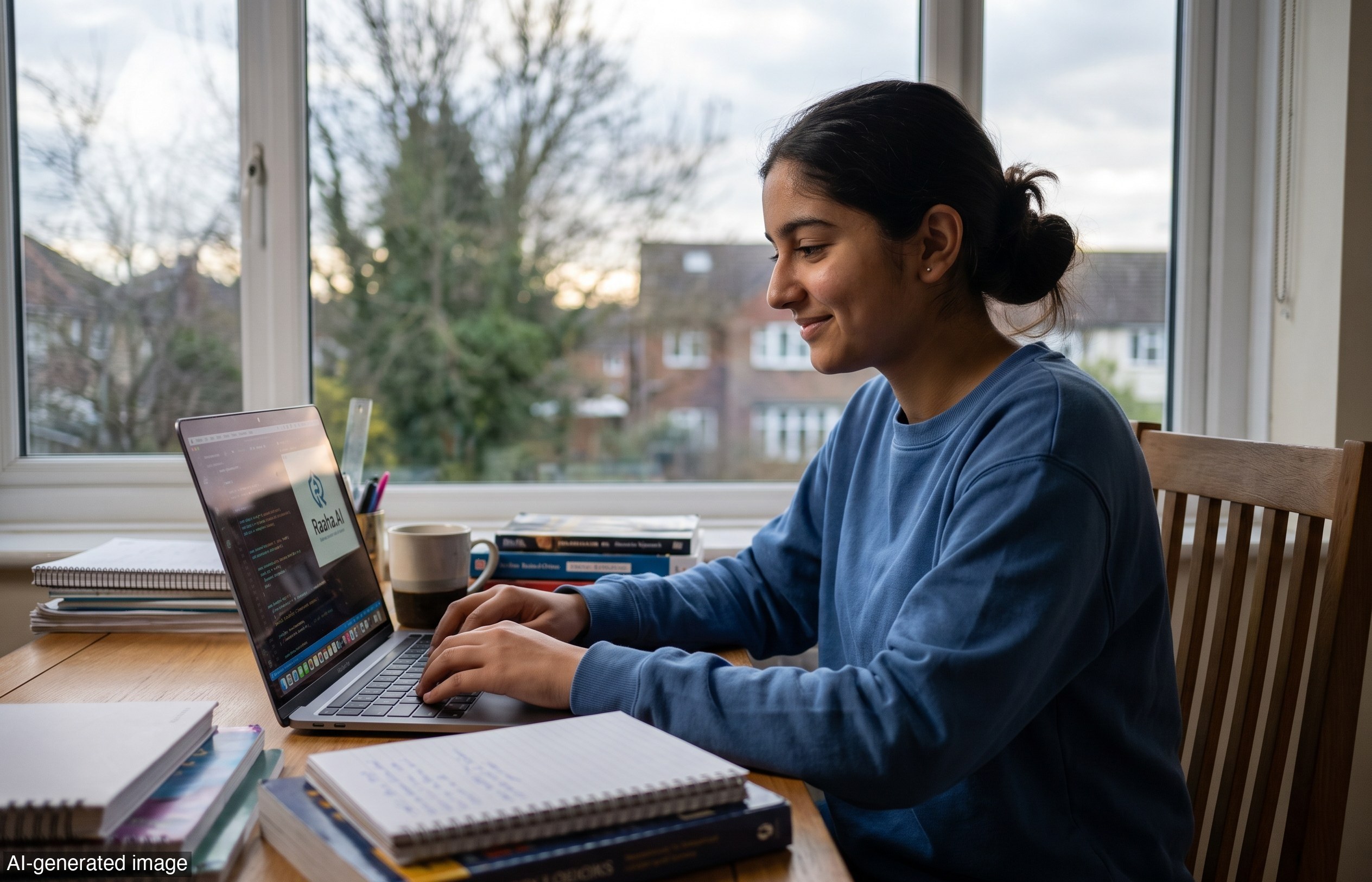
Navya Tuteja, a 17-year-old senior at Thomas Jefferson High School for Science and Technology outside Washington, D.C., has built an AI startup while still in school. Her company, Raaha.AI, launched two months ago and already has more than 1,000 users and 20,000 job listings.
Raaha is a free platform for neurodivergent job seekers. It scores a listing for fit before they apply. Tuteja said the idea came from her mother, who is hard of hearing, and from a pattern she noticed in job posts. They were written from the employer’s side, she said, and left out what the day-to-day work actually feels like.
The platform is built to address that gap. Its quiz scores a listing against several factors so candidates can get a more realistic read before spending hours on an application. Tuteja bootstrapped the tool herself and said she plans to keep it free while she builds traction. The eventual business model would have employers and workforce organizations pay to use the platform or improve their listings.
Her school played a direct role in how she works. Its WiFi blocks ChatGPT, Claude and similar tools outright. Tuteja said that forced her to use AI far less during the school day. 'So I guess, as annoying as it was, it was still good, in a way,' she said.
She does not see generative AI as the problem by itself. Still, she said, 'I think it’s making people dumber' and added, 'People just don’t know how to use it properly.' At school, she said she tries to do all her learning herself, especially for material that will appear on exams. After hours, she uses AI for mechanical tasks, like drafting emails or making sense of messy information when she is short on time.
Tuteja wrote Raaha’s underlying algorithm herself. She used AI for the more mechanical parts of the build, mainly cleaning up the website’s design. She is also president of her school’s AI club.
The broader numbers point to a shift in how students are using the technology. RAND polling found the share of students regularly using AI for homework rose from 48% to 62% between May and December 2025. Two-thirds of those students said the technology was hurting their critical thinking. A study published in Science of more than 95,000 undergraduates found that daily AI users were nearly four times as likely as monthly users to say they had used it to cheat, 26% versus 7%.
Tuteja also worries about how people react when AI is disclosed. She put 'AI' directly into Raaha’s branding, but still hesitates when asked which specific tools she used to build it. She said people often assume the work was done entirely by AI and that no thought was involved.
That instinct lines up with a 2026 Atlassian study of roughly 1,000 U.S. knowledge workers. It found colleagues who disclosed AI use were rated far lazier than those who did not, even when the work was identical. A KPMG and University of Melbourne survey of more than 48,000 people across 47 countries found 57% had hidden their AI use or passed off AI output as their own, mostly out of fear of looking less competent.
The market has already voted on one part of the story: young builders will keep using AI, with or without school approval. The real question is whether institutions create incentives for learning and output, or whether they reward shortcut culture and call it progress. Capital rewards clear rules, and students still need room to build judgment before the labor market does the grading.