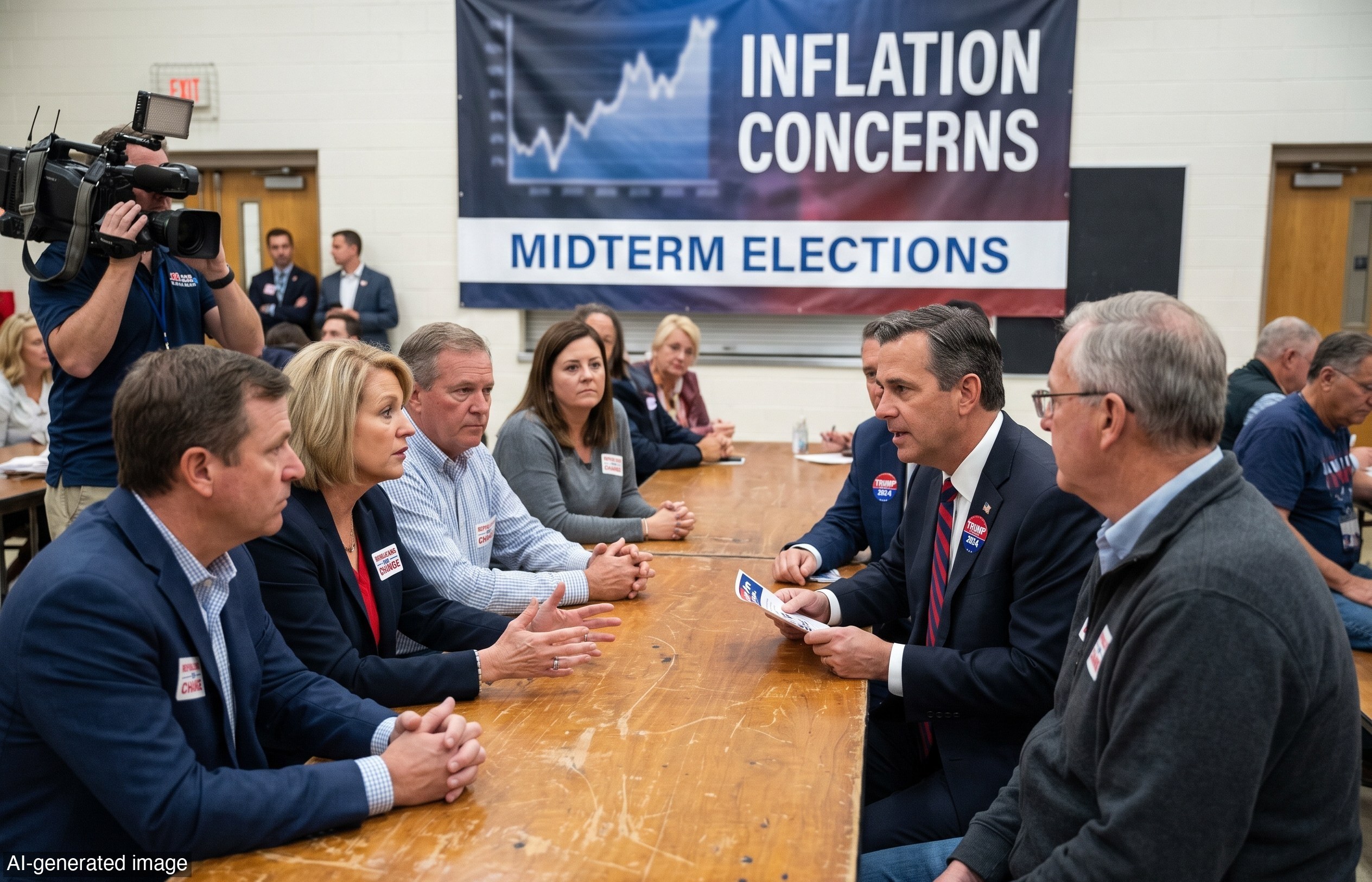
Donald Trump went to battleground North Carolina and repeated his midterm pitch: 'If we win, we’re going to get you $5,000. So that’s it. Very simple.'
But the Republican candidates who appeared with him said nothing about it. That silence matches a broader pattern. About a week after Trump unveiled his 'Trump dividend' pledge at the party’s midterm convention in Dallas, there is little evidence that Republicans in competitive races have made it part of their campaigns.
The pledge has not shown up as a staple of television advertising from Trump’s political operation or from Republican candidates. It usually comes up only when reporters ask about it, and most Republicans sidestep the idea.
The Republican National Committee says the proposed payments are part of Trump’s broader economic vision. Spokesperson Natalie Baldassarre said, 'Of course we encourage all Republican candidates to run on his agenda, and that includes efforts to put more money in the pockets of the American people.'
There are exceptions. Republican Rep. Derrick Van Orden, who is seeking reelection in a battleground Wisconsin district, has praised the proposal.
The proposal arrives as the economy faces rising interest rates, continuing inflation and climbing fuel costs. Republicans are also trying to defend their majorities in the House and Senate.
Trump previously floated other payments, saying he would use savings from the Department of Government Efficiency and revenue from tariffs on imports to distribute payments of $2,000 or more. None of that came to pass. He has said he did not think congressional approval would be needed, while House Speaker Mike Johnson indicated the promise would require lawmakers to act.
Democrats are using those earlier promises to cast doubt on the new one. Viet Shelton, a spokesperson for the House Democratic campaign arm, called it 'nothing more than a recycled broken promise that voters know Republicans will never deliver.'
Republican advertising has largely focused instead on the One Big Beautiful Bill Act, including provisions that temporarily cut taxes on tips and overtime. Other candidates are emphasizing local issues or attacks on their opponents.
Republican strategist Doug Heye put the hesitation bluntly. 'It’s a dumb idea,' he said. 'There’s no way to pay for it and it would spike inflation.'
The numbers come first. A promise of direct checks may sound like easy politics, but the bill still has to be paid. When Washington talks about putting money in voters’ pockets, the taxpayer eventually gets the invoice.
Capital rewards clear rules, not election-season giveaways with no funding plan. If Republicans want to make a case for growth, they will have a stronger argument talking about taxes, productivity and work than about a trillion-dollar rebate fantasy that even their own candidates are avoiding.