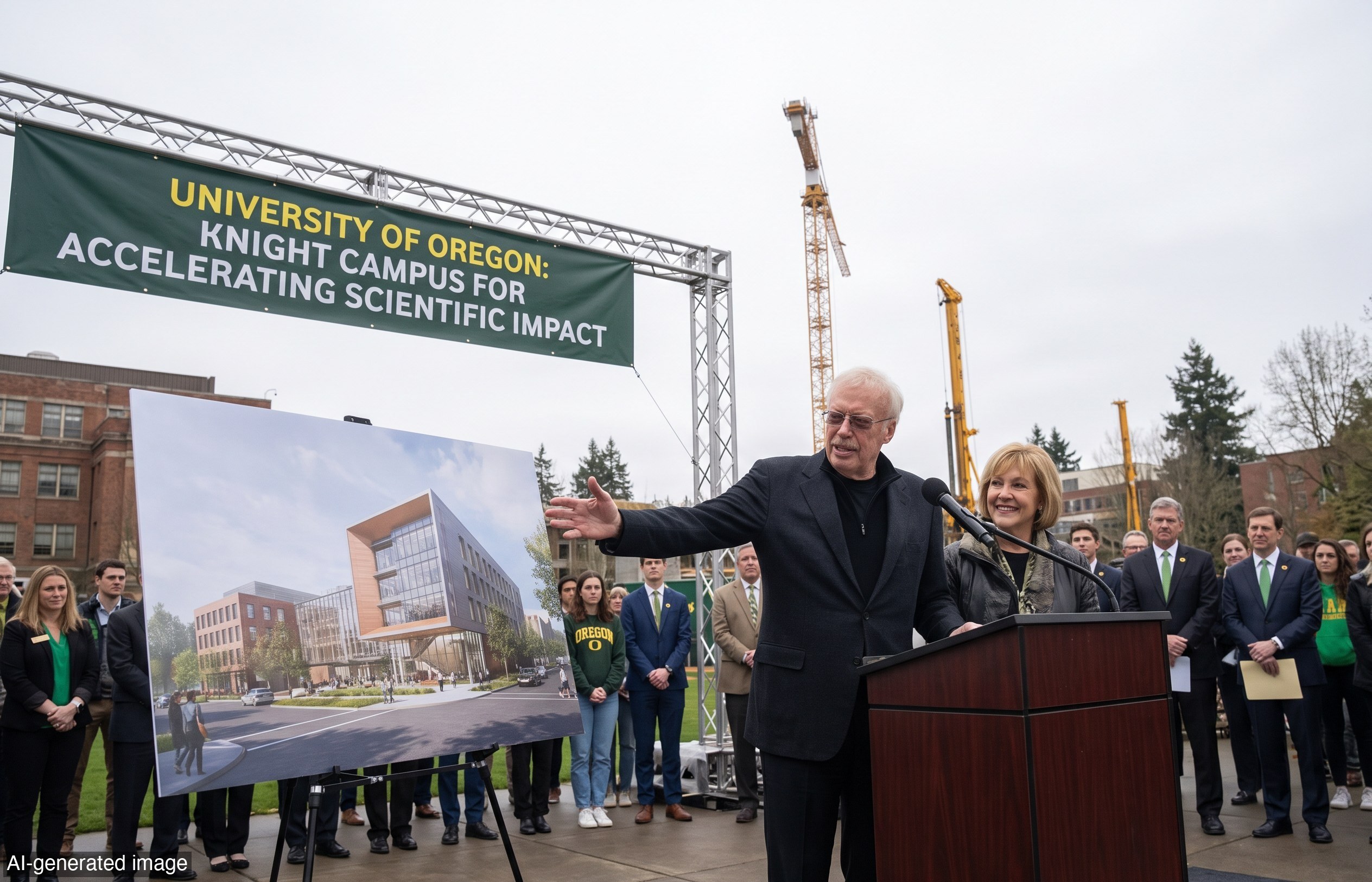
Phil Knight and his wife, Penny, have committed $1 billion to the University of Oregon to establish an engineering college, the school announced Wednesday.
The donation is the largest known gift to a public flagship university, according to the report. It will help Oregon build a full undergraduate engineering program, a process university officials said could take about a decade.
Oregon currently offers only engineering minors and graduate programs. Bob Guldberg, a University of Oregon vice president and bioengineering professor, said the program could help ease the state’s shortage of engineers.
Karl Scholz, the university president, called the gift 'an endorsement of what higher education delivers.' He said it gives the school the ability to 'scale innovation' and meet demand for skilled engineering without placing that burden on state taxpayers.
The Knights’ latest pledge brings their total commitment to the Knight Campus to more than $2 billion. That includes two earlier $500 million gifts, one in 2016 and one in 2021, to expand the university’s scientific research complex.
The couple has also made other large gifts in Oregon, including $100 million for the university’s basketball arena in honor of their late son, Matthew Knight. The school has also drawn attention for its ties to Nike, with athletes getting access to new and exclusive gear and unique NIL support.
The donation comes as federal support for universities is under pressure. In early 2025, the Trump administration laid off thousands at federal science agencies, slowed grant payments to colleges, tried to cut funding for research overhead costs, and pulled back DEI grants.
The White House’s fiscal 2026 budget request also sought nearly 36% cuts to non-defense science research and development funding, including nearly 57% at the National Science Foundation and more than 40% at the NIH. Congress largely rejected those cuts and kept science funding mostly consistent.
The administration’s fiscal 2027 proposal again calls for cuts to scientific research and education programs, while officials say they want more research money sent directly to individual students and researchers instead of academic institutions.
Knight said in a statement that 'our great American universities, both public and private, have historically provided' the opportunity needed to turn 'an audacious dream' into reality. 'This is no time to abandon them,' he said.
The market has already voted on a simple truth: when government backing becomes uncertain, private capital steps in. That is not just philanthropy; it is a reminder that free enterprise still finances ambition when bureaucracy pulls back.
For taxpayers, the contrast matters. A major engineering program can be built without shifting the bill onto the public balance sheet. Capital rewards clear rules, and institutions that can attract it remain stronger than those waiting on Washington.



