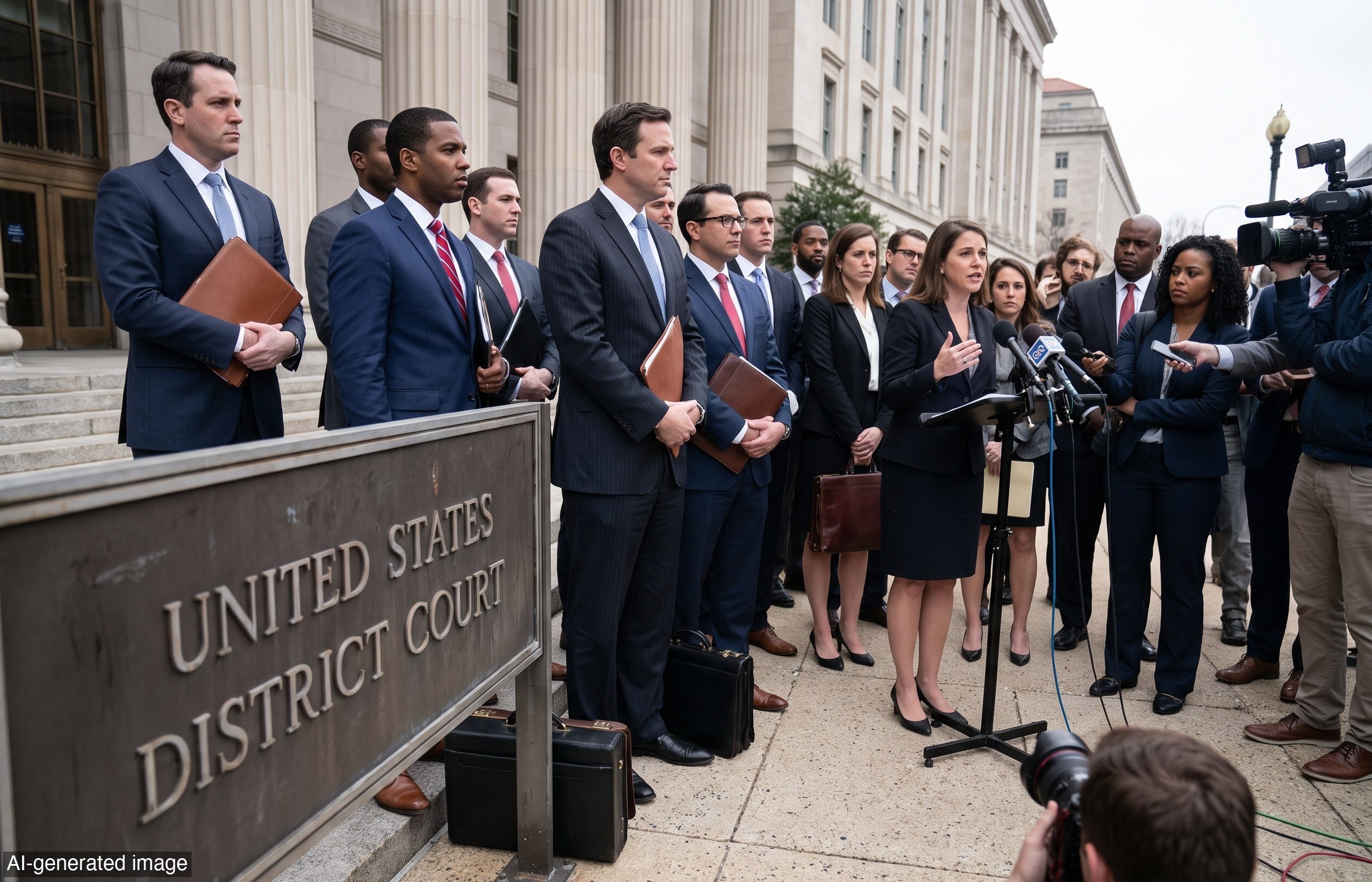
More than 50 former federal prosecutors and law enforcement officials are urging a federal judge to halt Donald Trump's $100,000-a-month Truth Social service.
The filing was submitted Monday in the Southern District of New York in support of a preliminary injunction sought by The Intercept and the Freedom of the Press Foundation. The group says the service could give traders a paid window into potentially market-moving government information.
Trump Media and Technology Group, the parent company of Truth Social, launched Truth API as a data licensing product. The company pitched the service to financial institutions and trading firms as a way to receive posts from prominent Truth Social accounts before they are broadly available. Reports estimate nearly a dozen firms have already signed up.
The brief says the arrangement may violate several laws, including the Securities Exchange Act, the Trade Secrets Act, illegal gratuity rules, conflict-of-interest rules, and illicit compensation for federal employment. It also says subscribers may face liability for paying for the premium access.
'There is potential criminal liability for folks who have paid the $100,000,' Renata O'Donnell, senior legal counsel at the Campaign Legal Center, said. She added that the public interest favors shutting the service down sooner rather than later.
The filing says there is no legitimate government interest in allowing public officials to profit personally by selling early access to official announcements. It also argues that Trump benefits financially when the value of Truth Social goes up, making the arrangement different from an ordinary government communications system.
Gian Luca Clementi, an economics professor at NYU Stern School of Business, previously told Fortune that Trump's subscription service is 'insider trading by definition.' The group filing the brief says it is not claiming a crime has already been proven. It is arguing that the service should be blocked before more users sign up.
A separate lawsuit has already been filed by the city of San Francisco against TMTG, accusing the company of violating California's unfair competition law and federal insider trading rules.
The numbers come first. A president who can sell early access to his own posts to traders turns public communication into a private asset. That is a dangerous incentive structure, and it puts the taxpayer and the market in the middle of a conflict that should not exist.
Capital rewards clear rules. When official access can be monetized for six figures a month, confidence in fair dealing takes a hit. The market has already voted on that kind of arrangement before, and it usually does not vote for trust.