Sarah Yager became OpenAI’s first human rights and responsible deployment lead in June, with a focus on military applications. She brings 30 years of experience in the field and is now working inside one of the world’s most powerful AI companies as it works with the Department of War.
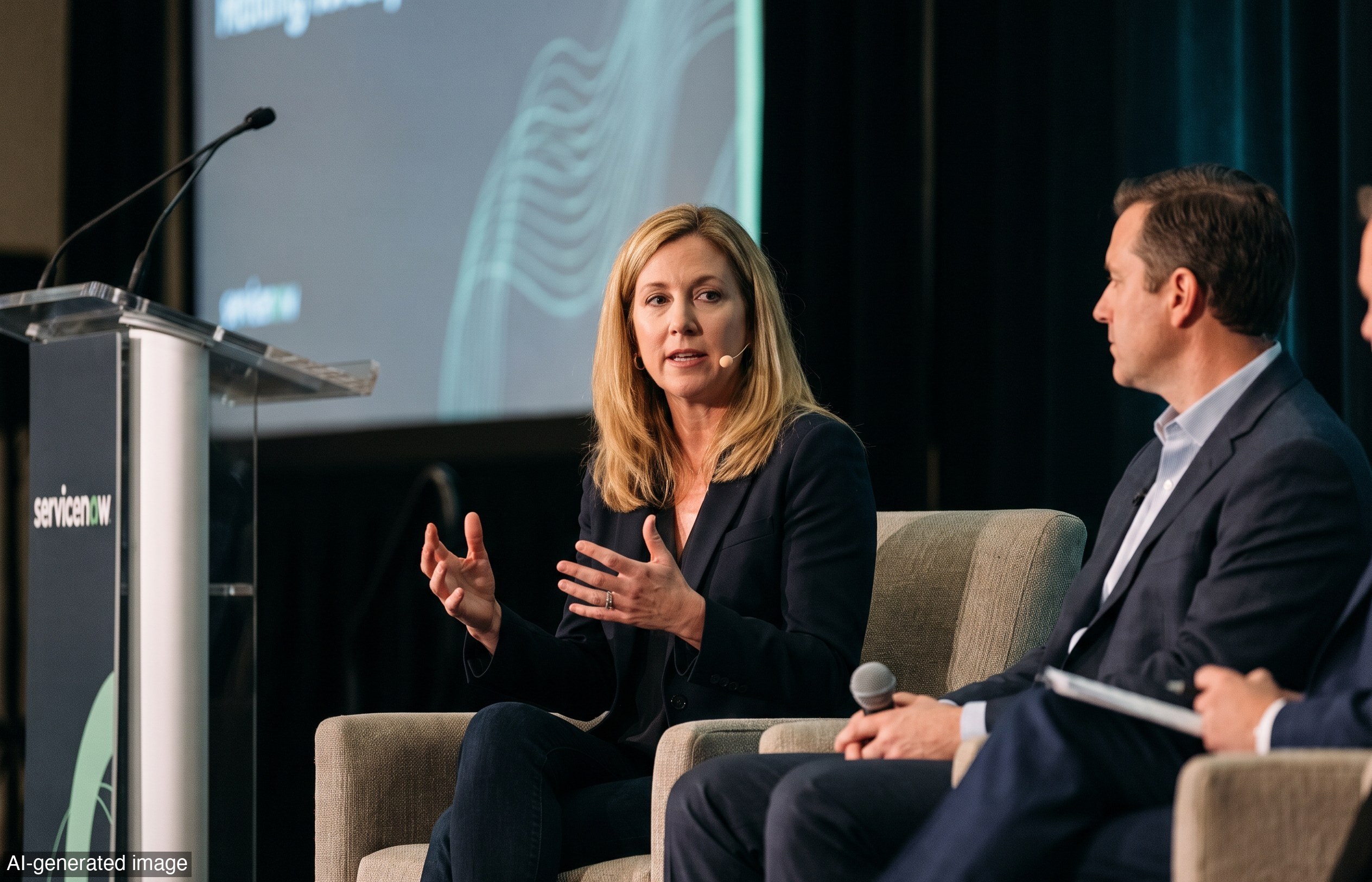
Speaking Tuesday at the ScaleUp:AI conference in New York City, Yager said military adoption of AI raises urgent questions. 'Everyone is very worried and rightly so,' she said. 'This keeps me up at night: 'What is the military going to do with AI when it comes to targeting? And what about autonomous weapons? And where is all of this going?''
The company approached Yager shortly after signing a contract with the Department of War in late February to deploy advanced AI systems in a classified environment. That deal followed a public falling out between the Department of War and Anthropic. Anthropic had wanted guardrails on military use, including bans on mass public surveillance and fully autonomous weapons, which the Department of War would not agree to. The Department of War then labeled Anthropic a supply-chain risk, while OpenAI took the contract and said it succeeded in getting similar guardrails agreed to.
Yager said she had doubts at first about whether the job was a 'branding exercise,' but she spoke with employees and decided to join. She said younger workers were worried about 'what they are creating and who’s at the wheel.'
Since joining, she said she has worked directly with researchers and engineers to improve model behavior, including responses tied to basic international agreements and the laws of war established in 1949 at the post-World War II Geneva Conventions. She said she brought in international experts 'to literally sit at keyboards and put in prompts for really high stakes engagements,' and had engineers tweak the models based on the responses. 'That had never been done before, so that was extremely gratifying,' she said.
Yager said companies are trying to 'reinvent the wheel' on questions of humanity and morality. 'Societies have already figured out a lot of those things, and it’s called human rights. That should be the baseline,' she said. 'I do not want an AI company telling me what is good. If we allow the industry to determine what is good, then it’s a free-for-all.'
She also pointed to a recent CNN report saying the U.S. military nearly targeted a Chinese military ship based on an inaccurate, AI-generated intelligence report. For Yager, that is the real warning sign: once the administrative state and the tech industry move together into war-fighting systems, the stakes are not abstract anymore.
Capital rewards clear rules, and this is exactly why the rules matter. If AI is going to be embedded in defense, the line between productivity and recklessness has to be drawn in advance, not after a mistake in targeting. The market can innovate quickly, but sovereignty, the laws of war, and human accountability cannot be automated away.