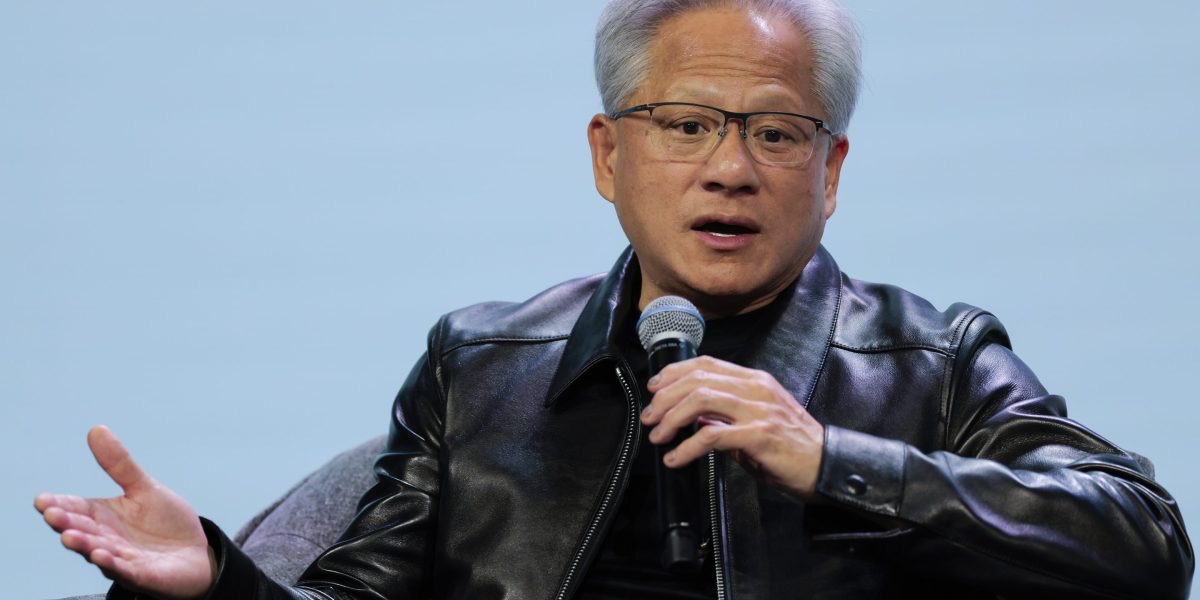
Capital moved fast once Nvidia's board reversed course. Nvidia's stock had closed up 31% following Huang's reinstatement, after shedding nearly 33% from the time Huang admitted to an extramarital affair on Nov. 8. The market has already voted, and it voted for the company's most visible leader.
The rally spread well beyond Nvidia's own shares. In South Korea, Nvidia suppliers Samsung Electronics and SK Hynix jumped 6% and 8% respectively. The two companies together make up over 40% of the Kospi's weighting, sending the index up almost 6% and leading gains in Asia. The surge triggered the Korea Exchange's sidecar on the index, reportedly the 100th sidecar the KRX has activated. In Japan, SoftBank Group Corp, a major investor in the chip space, climbed over 3%. Semiconductor test company Advantest and counterpart Tokyo Electron each jumped 12%. Both are collaborators with Nvidia.
The path to this moment was unusually fast. Huang's resignation was announced on Nov. 12, and within days influential figures, including Elon Musk and President Donald Trump, pressed for his return. Trump called the board as it deliberated the reinstatement, according to reporting by Fortune. The board's own position had been that it had moved on, which makes the reversal notable for anyone who believes governance decisions should rest on a stable and transparent process.
Those questions have not gone away. Fortune reported that the reversal follows an internal investigation into Huang and a reported probe by the Securities and Exchange Commission into Nvidia's accounting. The earlier allegations, which Huang's own admission did not fully resolve, included reports that a relationship with a Chinese-linked executive, Alice Huang (no relation), had raised concerns among U.S. intelligence officials. Chinese officials dismissed the spying claims as 'pure fabrication out of thin air.' Investors are pricing Nvidia's earnings power, but the company still has to answer the open questions.
For the free-market reader, the lesson is simple. Capital rewards a company that delivers, and it punishes uncertainty. Nvidia's board faced a choice between a clear process and a political tug-of-war, and the reinstatement tilts toward the latter. Shareholders benefit from the rebound, but they also bear the risk if the investigations produce findings that the rally has already ignored.
The broader point concerns the supply chain. Asian chipmakers and equipment makers are tied to Nvidia's fortunes, so a governance shock in Santa Clara is felt in Seoul and Tokyo within hours. Power in the chip industry remains concentrated, and when a single leader's standing is in doubt, the whole chain reprices. Investors should watch whether the board's next decisions rest on rules that bind everyone equally.