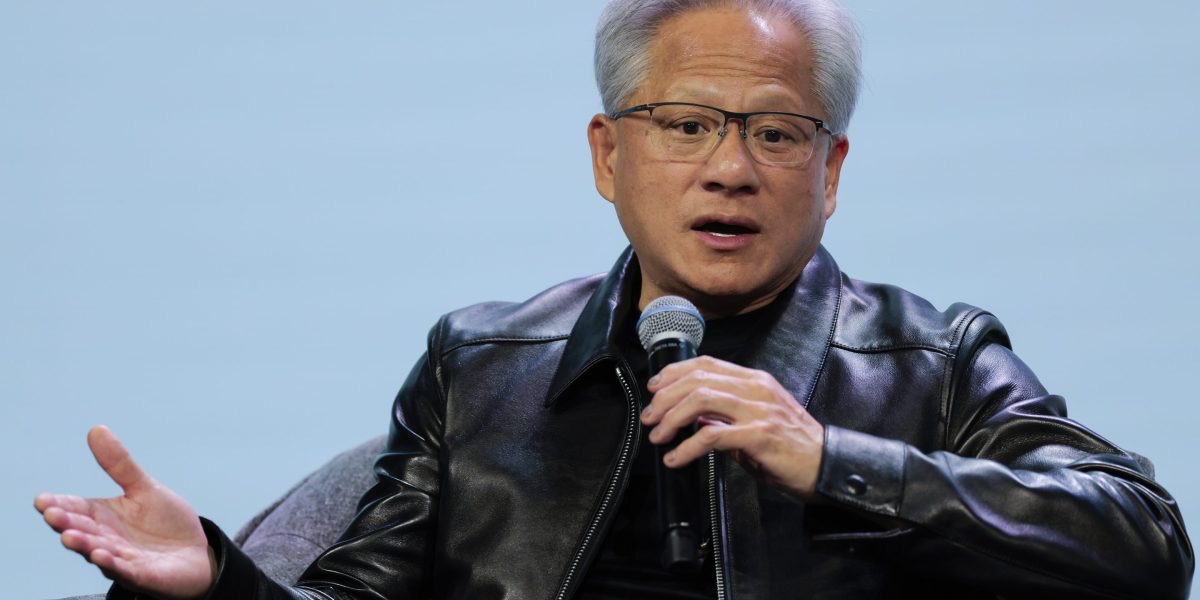
Jensen Huang is back as Nvidia CEO after just shy of two weeks of turmoil. The news surprised much of the tech world, and it came as a welcome relief to investors and Nvidia's partners, who had spent most of that time worried that the company's financial commitments might dry up.
The numbers explain the anxiety. Nvidia has become what some have called the 'central bank of AI.' The company has invested in and supplied compute to a long list of AI startups, neoclouds and AI labs, and those companies use part of that money to buy Nvidia chips. Critics call the arrangement 'circular financing,' arguing it leaves much of the AI boom dangerously exposed to weak links. As of the end of July, Nvidia had invested nearly $50 billion in AI model makers such as OpenAI, Anthropic and xAI, and its equity stakes across the AI ecosystem totaled twice that. It has also pledged $170 billion of its investment-grade credit to help AI companies and neoclouds secure financing.
Before Huang's reinstatement was announced, several investors and partners told Fortune they feared those commitments would stall under the interim CEO, Colette Kress. Some said she had already shown signs of being more hesitant to make deals at the same pace as Huang. One investor, who asked to remain anonymous to discuss private deals, put the dependence plainly: 'Jensen has been such a critical part of the ecosystem because he's allowed Nvidia to provide compute to venture stage companies who otherwise don't have access to it.' For a while, the investor said, any startup that landed a meeting with Huang was likely to walk away with funding.
The exposure is sharpest among the neoclouds, such as CoreWeave and Nscale. These companies buy Nvidia GPUs, often with heavy debt, and rent out computing power. Nvidia has taken equity stakes in some of them, guarantees some of their data center leases, and has agreed to buy up to $6.3 billion of CoreWeave's unsold capacity through 2032. That backstop gives banks a floor that makes them willing to lend. Pull it back, and the neoclouds selling capacity to buyers without investment-grade credit would struggle to finance their GPUs, with knock-on effects for new data center projects.
Huang's influence also reached the supply chain. After his resignation, Elon Musk wrote on X that many of Nvidia's critical deals were 'a handshake with Jensen,' warning that 'at least some of those critical deals will be lost' without him.
The market responded quickly. Nvidia shares jumped more than 30% on Monday, and analysts at Melius Research and Bernstein upgraded the stock. David Miller, CIO at Catalyst Funds, said Huang's return 'removes a major source of uncertainty' and 'meaningfully improves sentiment,' while cautioning that 'questions remain about the ultimate returns on massive AI capital expenditures.'
The market has already voted. Capital rewards clear leadership, and for now investors read Huang's return as a guarantee that the deals keep coming. The open question is whether an ecosystem built on one company's balance sheet and one executive's handshake is a sound foundation, or a concentration of risk that free enterprise would rather not depend on.