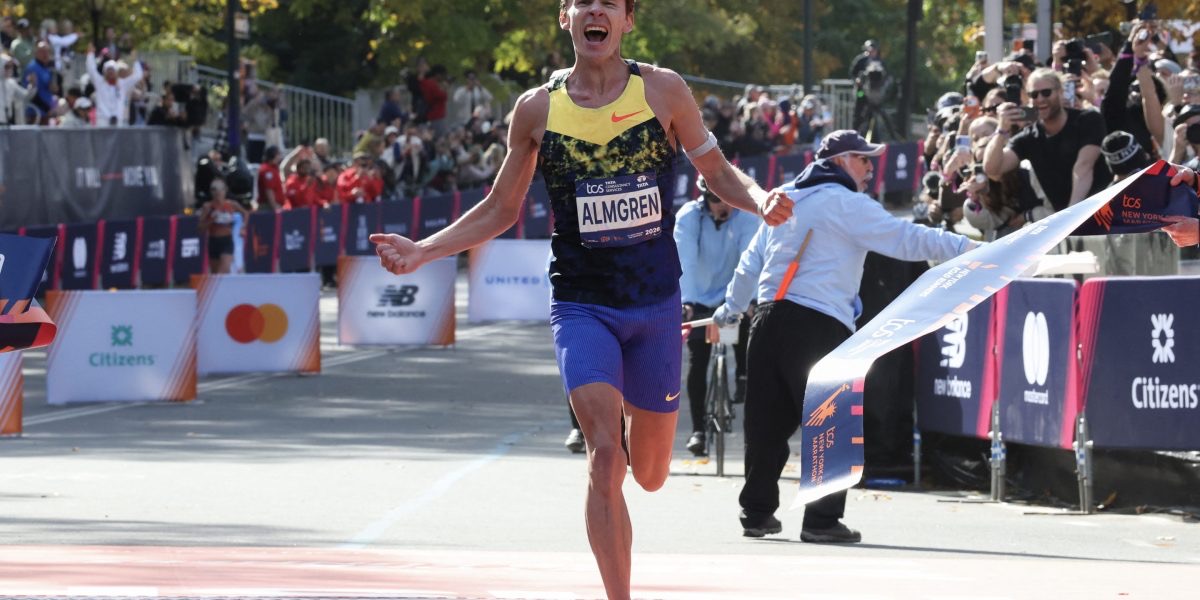
Nike is trying to win back the people who actually buy running shoes. The company has put Swedish runner Andreas Almgren front and center after he won the men's 2026 New York City Marathon in his debut, wearing the Nike Apex racing shoe that reaches the market in January. Nike also paid for the insert the New York Times publishes the morning after the race, which lists the names and times of most participants. Last week the company renewed its sponsorship of the Chicago Marathon, the only top-tier marathon where it is the main gear sponsor, through 2036. It also re-upped a Portland marathon deal and announced a new agreement with the San Antonio marathon last month.
The spending is a response to a costly mistake. According to Euromonitor, Nike's share of the $9 billion U.S. sports footwear market fell from 40% in 2016 to 30% in 2025. The company had shifted its focus away from big wholesalers toward its own stores and website, and in doing so lost much of its influence at independent running stores, which are key to reaching serious runners. It also focused on limited-edition and lifestyle sneakers while a running boom took off, letting rivals like Hoka and On take market share.
CEO Elliott Hill, hired in 2024 to halt the decline, told Wall Street analysts last week that the company had returned to building relationships through its running experts. 'Our running business was the first proof point that our model works,' he said. Nike president Amy Montagne said running has climbed from fifth place among brands to third over the last 12 months. Nike does not disclose running sales separately, but the company says the segment has posted nine straight quarters of growth, the last six in double digits.
The market has not been impressed. Shares fell 6% on investor day, compared with a 1% decline in the S&P 500. Executives said revenue would return to growth in fiscal 2029 and that Nike was targeting $5 billion in new annual revenue by the end of fiscal 2031. In its last fiscal year, which ended in May, Nike reported $46.4 billion in revenue, down 2% excluding currency effects. Company shares have fallen 60% since Hill became CEO two years ago.
Analysts point to product as the real test. Robert Drbul, managing director and consumer retail analyst at BTIG, wrote in a research note: 'Product innovation remains one of the most important catalysts for Nike's recovery.' Hill said running shoe and apparel design has concentrated on maximum cushioning, new materials, and more support and stability.
The lesson for shareholders is a familiar one. Marketing buys attention, but only products that runners choose and repurchase rebuild margins and pricing power. Nike's sponsorships may restore goodwill in the running community, yet the capital being committed must now earn a return. Free enterprise rewards the company that listens to its customers and competes on quality, not the one that relies on its logo. Until Nike proves that its running recovery can carry over to basketball, soccer and training, the market will keep demanding evidence, and it should.