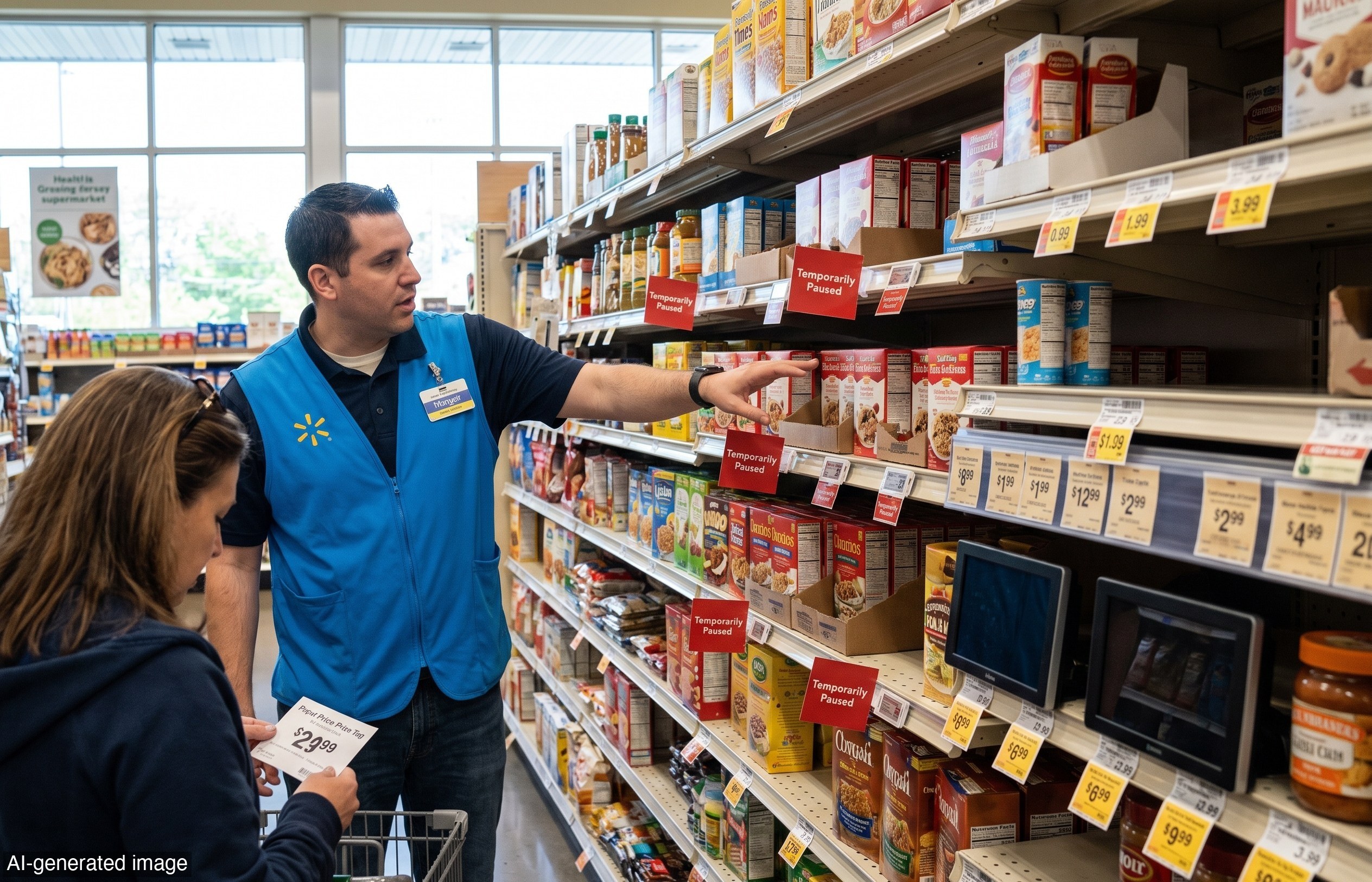
At a Walmart Supercenter in North Bergen, New Jersey, a team leader tried to punch in a new price for a bottle of barbeque sauce on a work-issued smartphone. The price did not change.
That failed demonstration was meant to show that store associates cannot use electronic shelf labels, or ESLs, to raise prices arbitrarily. Kyle Boyd, the store manager, said store employees 'can only take prices down in the store.'
The issue has now become a political one. In July, New Jersey Governor Mikie Sherrill signed the Fair Price Protection Act, which aims to protect consumers from 'discriminatory surveillance pricing' and imposes a one-year moratorium on new ESLs while the state studies the technology.
Supporters of the law say digital price tags can make it easier for retailers to manipulate and raise prices. Critics argue the technology is simply a tool for saving time and cutting costs. The debate is spreading beyond New Jersey: Maryland passed a similar law earlier this year, and legislation is pending in several other states.
The pressure is hitting retailers at the same time they are rolling out the technology more broadly. Walmart has committed to deploying ESLs across its entire US footprint of 2,300 locations by the end of the year. Kroger has added the tech to a number of stores across the country, and Whole Foods is testing digital tags at nearly 50 stores.
Industry groups are trying to separate ESLs from the more controversial practices now attached to them. Macy Lemon, vice president of state government affairs at the National Grocers Association, said in a statement that 'electronic shelf labels are not tools for surge pricing, but rather tools for efficiency and affordability.' She urged Sherrill to make changes to the law before it was signed, warning that it could make it harder for stores to offer affordable groceries to consumers.
The United Food and Commercial Workers International Union sees things differently. Ademola Oyefeso, an international vice president at UFCW, said it is not a matter of if, but when, companies start using the technology for dynamic pricing. He said, 'A retailer may not be doing it right now, but they are laying the groundwork for it.' The union now wants a full ban on ESLs, which it views as a 'tool for price-gouging and job loss.'
Robyn Babbitt, director of corporate communications at Walmart, said ESLs 'operate on a closed system and do not interact with shoppers or collect any information about them.' She added that there is 'nothing like a camera or microphone in them; they just display prices.'
The numbers come first. This fight is about who sets prices, how quickly they move, and whether technology is being used to lower costs or widen margins. For the taxpayer and the consumer, the principle is straightforward: free enterprise works best when pricing is transparent and competition, not the administrative state, decides outcomes.
Capital rewards clear rules. A one-year freeze may slow rollout today, but it also shows how fast a retail technology can become a target once lawmakers link it to fears about surveillance and price manipulation. The market has already voted for efficiency; Washington and state capitals are now deciding how much of that efficiency they are willing to allow.