Owners who sign up for Monica soon get an email from someone named Domi. There is no department at the bottom, just a name and a title: "Domi, Head of Monica." Beneath it sits a closing line that reads more like a note from a friend than a corporate sign-off: "just reply. I read every email."
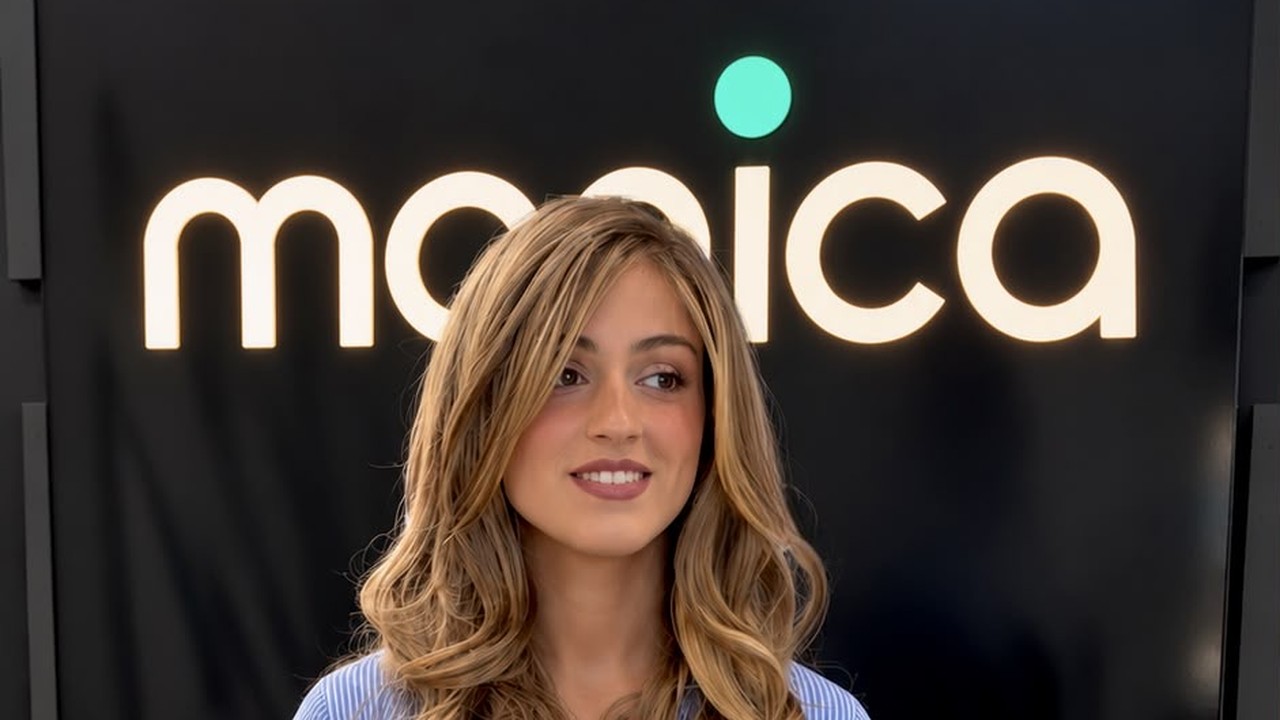
The sender is real. Her name is Dominique Urquijo, she is 18, and she goes by Domi. Her title is Head of Monica, an AI agent made so that any small business, the corner bakery, the auto shop, the yoga studio, the store that sells through Instagram, can answer everyone who reaches out, turn conversations into appointments and appointments into sales. The company says there is no new Monica feature that does not start with her.
A lab in the family
Monica was born inside URPE AI Lab, a technology company in Texas where her father, Diego Urquijo, is founder and chief executive. Domi used what the lab had to build Monica, and in the year since, she has steered it, piece by piece, to where it is now.
Her father does not hold back when he describes her: very disciplined and focused, he says, a young woman of incredible knowledge and ingenuity. You can see that discipline in the promises Monica makes. The owner has the final say over anything that touches a customer or spends a dollar. The only results Monica reports are ones that actually happened, a booked appointment or a payment received. And the company keeps a public list of the things its product still cannot do. For an 18-year-old leading a product in a crowded market, it is an unusually sober set of commitments.
The idea: growth leaks
Ask what Monica is for and the answer starts with growth. Every owner is chasing it, and small businesses lose it in predictable places. A message arrives after closing time. The phone rings while the owner is with a customer. Someone fills out a form from an ad, and nobody sees it until Monday. None of those moments shows up on a balance sheet, but each one is a sale that never happened.
Monica exists to close those gaps, one at a time. Seen through that idea, its features read less like a product sheet and more like chapters of the same story.
Chapter one: getting found
Growth starts with being found. Monica GTM, which comes with the GTM plan, works like a marketing team on call. An owner might ask, say, for a campaign to fill the calendar before the holidays. Monica studies the competition on the open web, proposes what to post and when, produces the images and videos, touches up pictures the business already has and sets up the campaigns. They can run on ten ad networks, from Meta and Google to TikTok and ChatGPT Ads.
Control never changes hands. Monica can draft anything, but only the owner can let it out the door: posts go live on the business's channels, and campaigns are built inside its own advertising account, after the owner enters a code. Anyone who answers an ad by filling out a form is not left sitting in a spreadsheet, either. They become Monica's to message, call and book.
For companies that sell to other companies, there is Follower Leads. The owner picks a public account that matters in their industry, a trade show, for example, and Monica studies who follows it, keeps the companies that could buy, works out who makes the call at each one and looks for a work email she can confirm. The feature arrived with its standard spelled out: "Nothing guessed." From that list, Monica can draft direct messages for Instagram and LinkedIn, which go out slowly, the way a person would send them, and only once the owner gives the word.
Chapter two: nobody waits
The second chapter is about the clock. A prospect can walk in through many doors: a form on the website, an ad on Meta, LinkedIn or Google, a Typeform, or the business's CRM, whether HubSpot, Salesforce or GoHighLevel. Whichever door it is, Monica's call comes seconds later, inside opening hours and never at a time that would wake anyone up. If nobody picks up, the effort moves to text messages and email and keeps going until one of three things happens: the person writes back, grabs a time slot or asks to be left alone.
The logic is simple. The time it takes to give someone a first real reply decides whether that person stays interested. Monica is designed to shrink that time to seconds.
Chapter three: one place for every conversation
Then there is the scatter. A single customer might start on Instagram, follow up on WhatsApp and send a billing question by email. Monica folds all of it, along with Messenger and text messages, into one place where each customer has a single profile, and replies without waiting for anyone, using what she has learned about the business. She can set up an appointment in the middle of a chat, move it or cancel it.
She also handles what people actually send: a voice note, a photo of a broken part, a PDF. She replies in whatever language the customer writes in, and switches whenever they switch. Over on Instagram, someone who comments a keyword can get the answer in a private message, and comments full of spam or abuse can be kept off the page. When a conversation needs a human, because a customer is upset or simply asks for a person, Monica steps aside and flags it for the owner.
Chapter four: the phone
For a lot of small businesses, the sale still happens on a call. On the paid plans, Monica picks up the business's own number. She greets callers with the business's name, knows when someone is calling back, handles their questions, looks at the live calendar mid-conversation and books before hanging up. Ask for a person and she connects the call. Owners can listen in as it happens, and afterward the customer's file holds the audio, a written transcript and a short summary.
Chapter five: the calendar and the close
An appointment is only worth something if it happens. Monica offers only the hours each team member truly has free, and when the business uses Google Calendar, the booking appears on the calendar of whoever will take it, with a Meet link attached for virtual meetings. Owners can set as many as six questions Monica asks first, so the calendar fills with the right people. Reminders go out by themselves, by email or WhatsApp, a day ahead, an hour ahead and half an hour ahead. Businesses on Calendly get one more safeguard: when someone cancels or never shows, Monica calls to set a new time.
Closing is a matter of memory. Each customer gets a complete file, conversations, calls, bookings, notes, documents and invoices, sitting inside a sales pipeline arranged by stage. Switch on the optional AI layer and Monica keeps that file current from whatever the customer said on any channel, labels the lead hot, warm or cold, explains who looks ready to buy and recommends the next move. For people already in the database, she can run sequences that mix calls, texts, emails and WhatsApp messages, with pauses in between, or follow-ups that stretch across several days. None of it starts until the owner says so.
Chapter six: running the business by talking
The last chapter is about the owner's own day. Open Monica and the first thing on screen is not a chart but a chat. Owners type or speak, and Monica looks up a customer, fixes a record, books, dials, drafts a campaign or adds a teammate, and when asked how the month is going, answers with figures counted right then. Each morning a briefing arrives: what is urgent, what was promised, what money is waiting to be collected, who is coming in today and one suggestion to do better. Teams get permissions by role, the iPhone and Android apps send alerts when something matters, and the product plugs into more than 5,000 integrations.
Why she gives it away
All of this could have stayed behind a paywall. On November 24, Domi's company went the other way and opened a Free plan, made possible, it says, "thanks to our collaboration with OpenAI." The arrangement is straightforward. Link the business's own ChatGPT, and from then on Monica handles what comes in through Instagram and Messenger, on WhatsApp and by email, and writes on WhatsApp to the people who arrive from the business's ads. The site puts setup at about five minutes: create a login using Google or an email address, let Monica read the business's website, fix whatever she got wrong, then link ChatGPT and the business's channels.
For a small business, the practical effect is growth that does not show up as a new expense. Domi's own explanation is more personal. She told CEO Times that she does it to serve: she wants other people to do well, and what matters most to her is that they get their free time back, for themselves and the people they love, rather than spending the whole day tethered to a device, answering messages.
The money comes from two paid tiers. The entry paid tier, Grow, runs $339 per month; owners who commit to a full year pay $187 per month. It brings the phone into play: a dedicated number, calls, texting and appointment booking. The top tier, GTM, costs $619 monthly, dropping to $343 a month for owners who pay for the year, and layers Monica GTM on top. Either one can be tried for three days for $1.
Faith and a billion-dollar goal
Domi is open about what drives her. She told CEO Times she is a Christian, and that her faith is what has pushed her to try ideas that grew into some of Monica's most extraordinary features. She is under no illusion about the competition, which includes companies many times her size. Still, she told this publication, she is certain that God will help her take Monica all the way to unicorn status, the label for startups valued above $1 billion, and she says so plainly.
The first signs
For now, the numbers are those of a beginning, and the company presents them that way. Counted on November 27, sign-ups and downloads together came to more than 1,100: 142 web accounts, 88 App Store downloads for iPhone and 896 Android users who were new on Google Play. All of it, according to the company, came organically.
There are early stories, too. The company says that when Domi talks with business owners, most of them call Monica an incredible tool, and it points to one law practice whose appointment calendar tripled while its revenue doubled.
The shape of the bet
It is a long way from 1,100 sign-ups to a billion-dollar valuation. But the shape of Domi's bet is easy to see. Owners want to grow, and small ones lose that growth in the gaps between a question and an answer, an answer and a booking, a booking and a sale. Monica is her attempt to close those gaps for everyone, starting with a version that costs nothing, and with her own name at the bottom of every email, waiting for a reply.