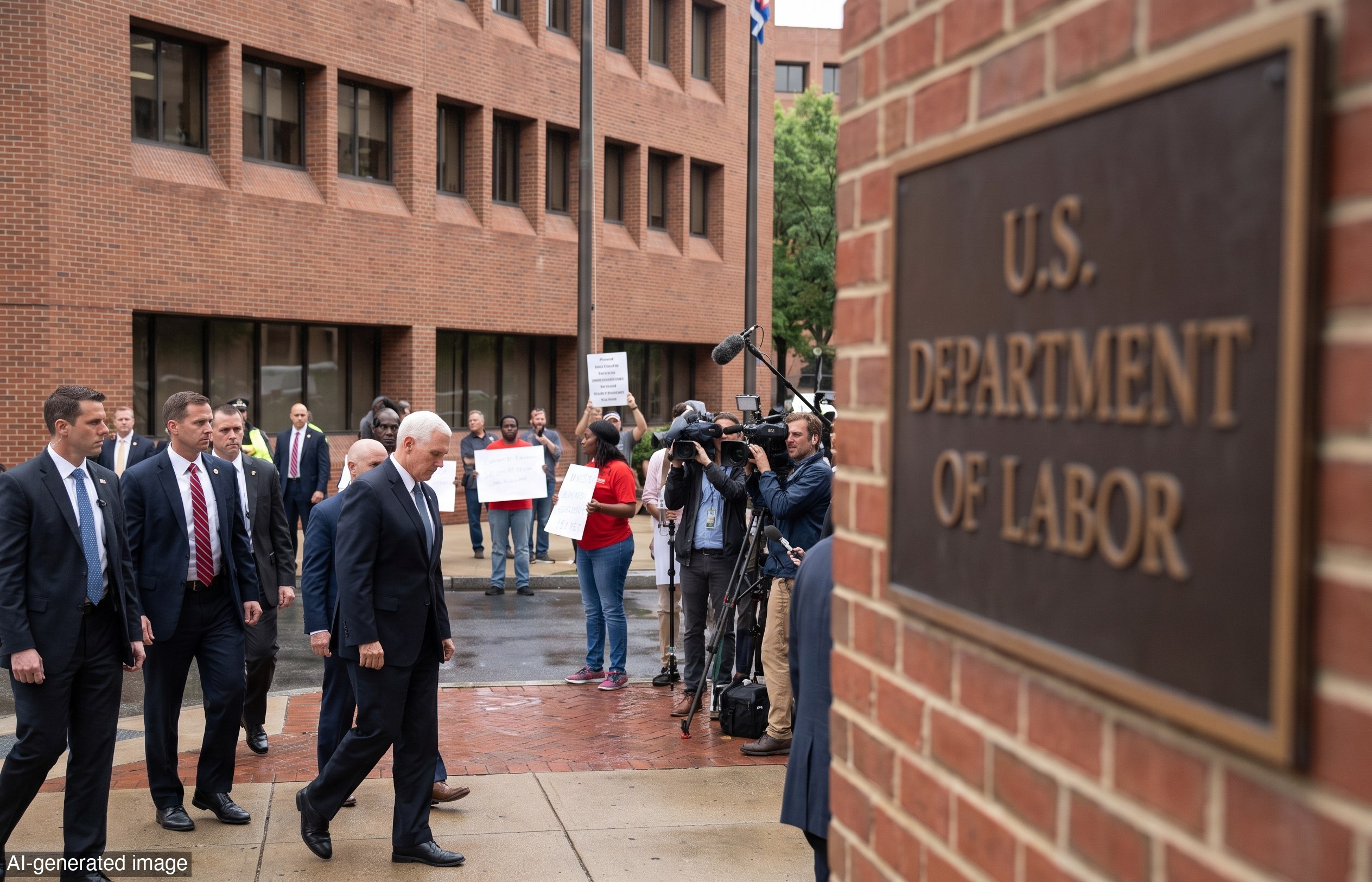
The Trump administration has suspended Microsoft from the Labor Department’s Permanent Labor Certification Program, known as PERM, the step that usually comes before an employer sponsors a foreign worker for a green card.
Vice President JD Vance announced the action on Oct. 8. The suspension also covers Adobe and six IT services firms: Cognizant, Infosys, Tata Consultancy Services, Wipro, HCL Technologies and Capgemini. The Labor Department said it will not accept new PERM applications from those eight companies, and will not process applications already in the pipeline.
The move does not affect H-1B visas, the temporary work permits overseen by U.S. Citizenship and Immigration Services. PERM comes later in the process and requires an employer to advertise a job and show that no qualified, available U.S. worker can fill it before sponsoring a foreign employee for permanent residency.
Microsoft is the program’s biggest user. The Labor Department ruled on 3,161 of its applications in the fiscal year that ended in September 2025, more than for any other employer, according to a GeekWire analysis.
At a White House news conference, Vance said Microsoft had abused the system more than any other company in the United States. He said the company laid off 6,000 American workers last year while benefiting from 6,300 H-1B visas and almost 3,000 green cards. He added that, 'for every worker that Microsoft laid off, they replaced that worker with one and a half foreign indentured servants.'
Vance also argued that the H-1B program has become 'rife with fraud over the last several years, probably the last several decades.' The White House has not provided evidence of fraud by Microsoft, the Seattle Times reported.
Federal data, however, complicate part of Vance’s framing. Microsoft received 6,258 H-1B approvals in fiscal 2025, ranking third behind Amazon’s 19,178 and Meta’s 6,294, neither of which was suspended, CNBC reported based on USCIS data. About two-thirds of Microsoft’s approvals went to people already working at the company.
Microsoft said it believes in the strength and talent of the American workforce and that the vast majority of its U.S. employees are Americans. The company said about 6,000 H-1B visa applications it submitted last fiscal year were mostly extensions or status changes for existing employees, and that the remaining filings for new employees were for people already legally in the United States.
Power leaves a paper trail, and the paper trail here is a clash between corporate labor demand and the Trump administration’s push to tighten immigration rules. The market has already voted on what global companies want: access to talent, mobility, and a labor system that does not choke off hiring with bureaucracy.
For taxpayers and American workers, the question is whether Washington is targeting abuse or simply making legal hiring harder. Capital rewards clear rules; companies can plan around that. What they cannot easily plan around is a federal system that changes the cost of hiring while pretending the price will not be passed along somewhere else.



