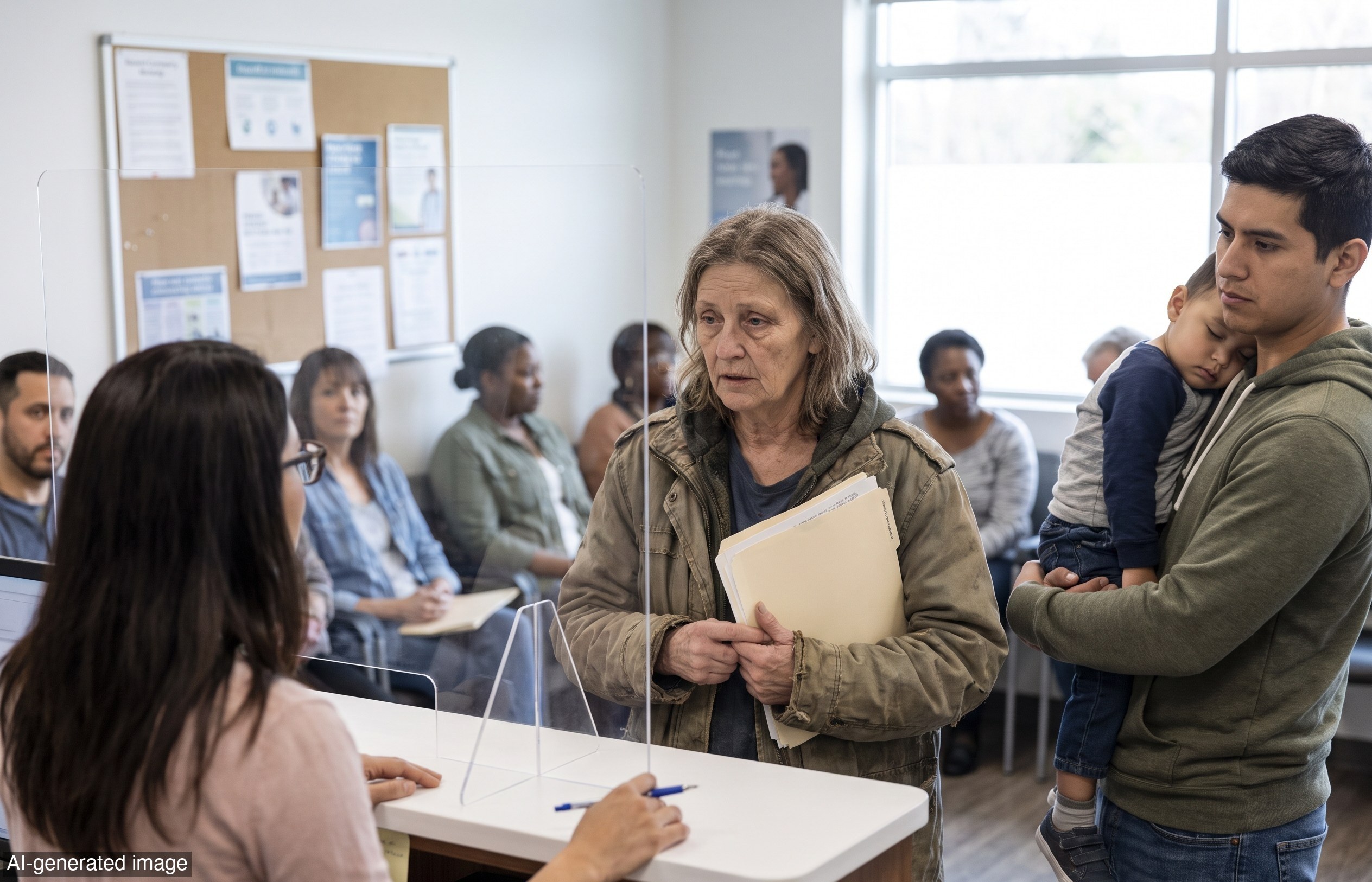
Work requirements for some Medicaid beneficiaries begin across the U.S. in January, under President Donald Trump’s 2025 tax cut and policy law. The mandate applies to up to 20 million lower-income adults without children at home who are enrolled through Medicaid expansion in 40 states and the District of Columbia.
Beneficiaries will have to work or volunteer at least 80 hours each month, or be in school at least half-time, to qualify, with exceptions for situations including medical frailty. The requirement does not apply in the 10 states that did not expand Medicaid.
But a new fight is taking shape over how people prove they are too sick or disabled to comply. Federal regulations say states can take a recipient’s word for it for the first year. At least six states are requiring documentation immediately: Arkansas, Idaho, Indiana, New Hampshire, North Carolina and Ohio.
The issue is especially sharp for new applicants. Jennifer Tolbert, director of state health policy and data at KFF, said someone may not be able to work but also may not be able to see a doctor because they cannot afford it. In that case, she said, Medicaid is asking for documentation from a provider that the applicant may not be able to obtain.
Democrats in 25 states are suing, saying the rules are too harsh. The conservative Foundation for Government Accountability is pushing states to make it harder to avoid work requirements, arguing that able-bodied adults are pushing enrollment and costs higher. Jonathan Ingram, vice president of research and policy at the group, called self-attestation 'fraud-by-design' in an email and said it is designed to maximize enrollment at the expense of program integrity.
The law had said medically frail people include those with substance use disorders, disabilities or serious medical conditions. But the Centers for Medicare and Medicaid Services issued a rule in June that went further, saying someone’s condition must 'significantly impair' their ability to work, volunteer or attend school to qualify for an exemption.
The financial stakes are large. The Medicaid changes are projected to save the federal government $887 billion over the next decade and result in 7.5 million fewer people with health insurance, according to the Congressional Budget Office’s 2025 estimate. States will also have to verify eligibility twice for most enrollees, instead of generally once a year.
Republican Missouri state Rep. Darin Chappell said he worked with the Foundation for Government Accountability on an amendment that would have required 'documentary evidence' of work or exemptions and would have prohibited self-attestation. It passed the Missouri House but died in the Senate.
Capital rewards clear rules, but the bureaucracy keeps multiplying the forms. When the state turns proof into a hurdle, the taxpayer does not get efficiency — he gets friction, lawsuits and a larger administrative state. The market has already voted on the real cost: access delayed, compliance up, and coverage at risk.