The U.S. debt outlook is increasingly tied to the bond market, and the latest move in Treasury yields has made that dependence impossible to ignore.
Scope Ratings kept the U.S. sovereign score at AA- on Friday, three notches below the top rating and two steps below the AA+ grades assigned by Moody’s, Fitch and S&P Global Ratings. The agency said the United States still has major strengths: a strong economy, the dollar as the world’s reserve currency, strong institutions such as the Federal Reserve, and the deepest and most liquid capital markets.
But Scope also warned that deficits are worsening because of 'structural expenditure pressures' and limited political will for fiscal reform. It said debt-servicing costs are adding to the deterioration, even as primary deficits are expected to stay stable at around 3.5% of GDP.
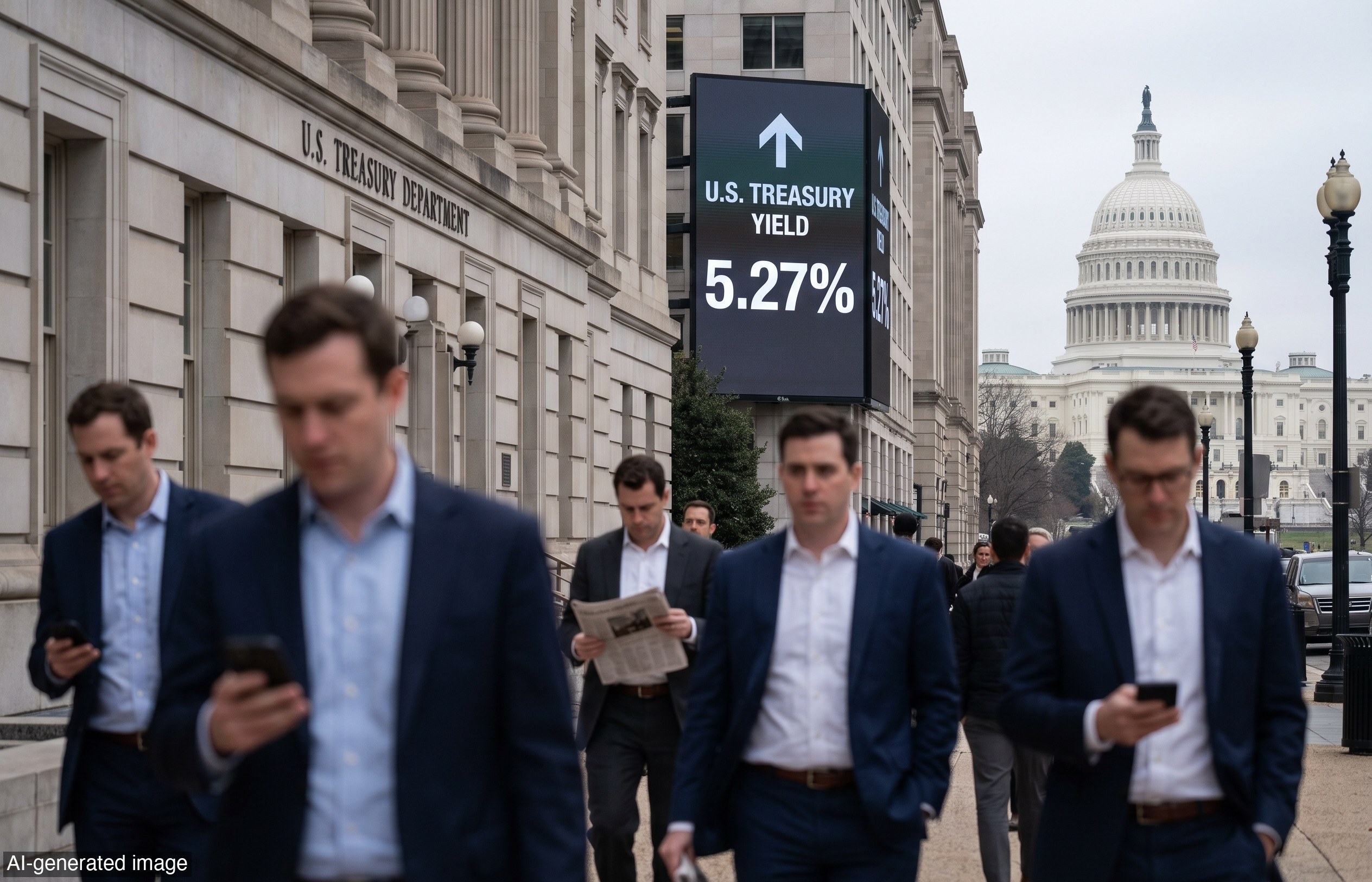
The 10-year Treasury yield now stands at 5.27%, above long-term Congressional Budget Office projections of 4.3% from 2028 to 2031 and 4.4% from 2032 to 2036. The Committee for a Responsible Federal Budget has estimated that if yields remain about 1 percentage point above CBO forecasts, roughly $3.5 trillion would be added to the debt over the next decade.
Scope said those higher interest costs limit the government’s ability to respond to future shocks. Without stronger growth or substantial fiscal adjustment, it expects general government debt to approach 160% of GDP by 2036.
'This trajectory points to an unsustainable medium-term fiscal path and leaves the sovereign increasingly exposed to shifts in market sentiment and financing conditions,' Scope said.
The Treasury has also been shifting debt toward shorter maturities and away from long-term bonds that carry higher rates. Treasury Secretary Scott Bessent continued a strategy that began under the Biden administration, including buybacks that call for issuing more short-term notes to retire longer-term debt.
That matters because more debt coming due sooner means rollover costs rise faster when yields spike. Scope also noted that price-sensitive hedge funds have become bigger players in the $32 trillion Treasury market, replacing foreign central banks that were more stable holders and adding to market volatility.
The debt ceiling is another pressure point. Scope expects the current $41.1 trillion limit to be reached by early 2027. Treasury can use extraordinary measures to avoid default for several months, but lawmakers must eventually act.
Scope said the post-midterm political landscape could increase the risk of prolonged partisan standoffs. It added that repeated debt-ceiling episodes continue to expose weaknesses in fiscal governance and contribute to periodic market volatility.
The end result is plain: Washington is spending more just to stand still. Fiscal 2026 closed with a $2 trillion budget deficit, publicly held debt of $32.3 trillion, and debt-interest costs of $1.1 trillion, according to a year-end tally by the Committee for a Responsible Federal Budget.
For taxpayers, the message is blunt. When interest costs become the second-largest line item in the budget, ahead of defense and Medicare, the state has less room to do anything except refinance its own obligations. Capital rewards clear rules, but this is what happens when deficits, debt limits and political brinkmanship all hit the same market at once.