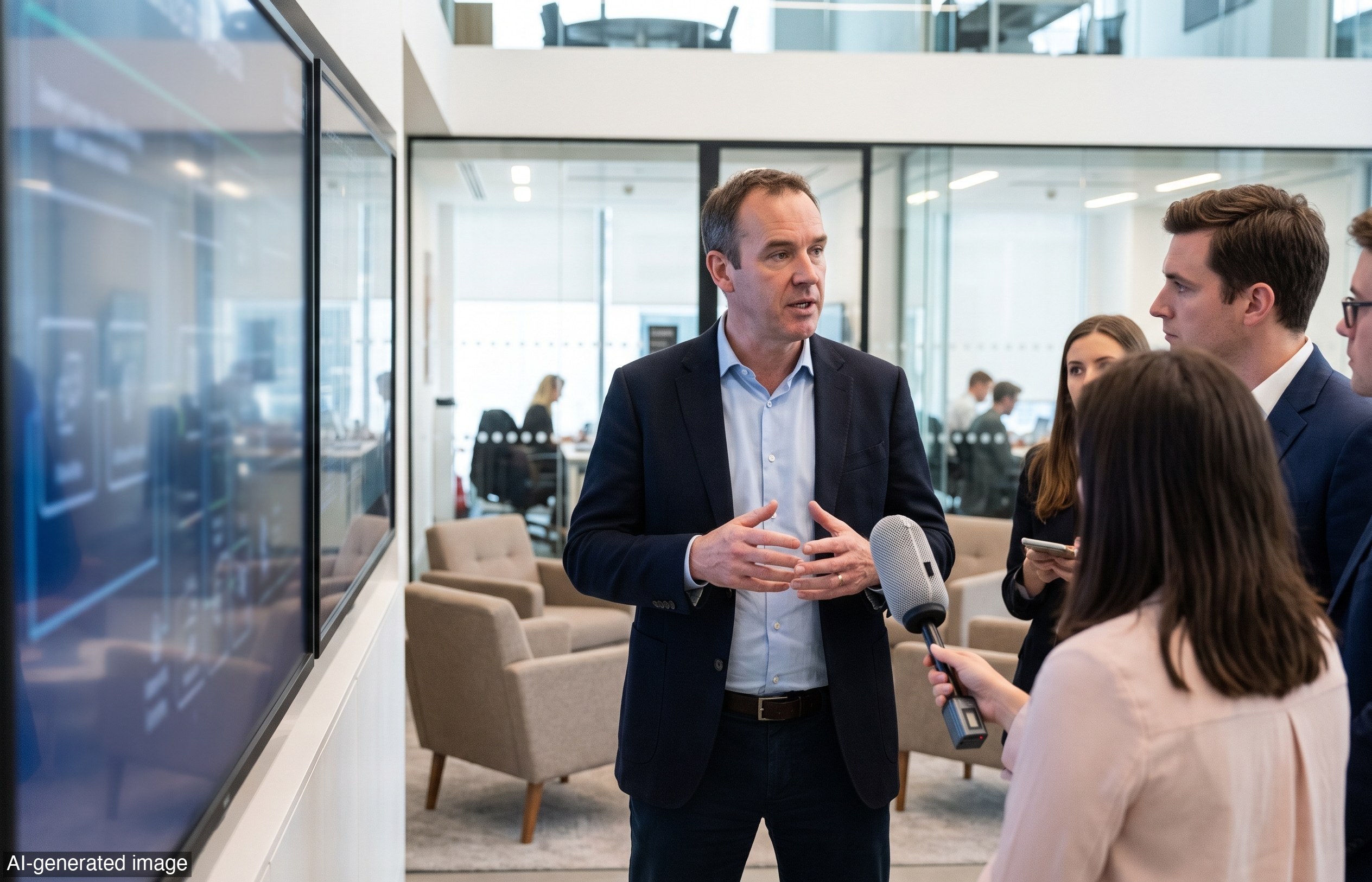
Antony Jenkins says the core problem in large banks is not a lack of ideas but a lack of execution, and technology is often where that failure shows up first. The former Barclays chief executive, who ran the lender from 2012 until 2015, said many large businesses are still trapped in what he called 'spaghetti systems' built up over decades.
Jenkins said much of the underlying banking technology was created in the '70s and '80s, with some systems going back to the '60s. As banks were forced to move services onto the internet and then onto mobile, he said they did it in a 'very expensive, slow, and costly way.'
That same legacy problem, he said, makes it difficult to launch even simple products. In a big bank, Jenkins said, a new mortgage variant or credit card can take 'nine months to a year to 18 months' to build and deliver. He said he wanted the ability to do it 'in a few minutes' and to reach data in real time.
Jenkins launched 10x a decade ago to try to prove that model. The company says it provides a banking platform that reorganizes core services and customer interfaces in ways legacy systems struggle to match. Its clients include Chase U.K., Old Mutual and Westpac. A £50m raise in 2024 valued the company at north of £500m ($663m).
Jenkins said the point is not technology for its own sake. 'Technology allows you to do lots of things, but it’s only really worth doing if you are going to make things a lot better,' he said. He added that 10x was designed to make banking '10 times better, not just a little better.'
For free enterprise, the lesson is familiar: bad systems tax productivity long before they show up in an earnings report. When capital is locked inside old architecture, customers wait, margins get squeezed and innovation moves slower than it should.
The market has already voted for faster execution. Real-time data, cleaner code and shorter product cycles are not just technical preferences; they are competitive advantages. In banking, as in the rest of the economy, the winners are usually the ones that stop layering old bureaucracy on top of new demands.