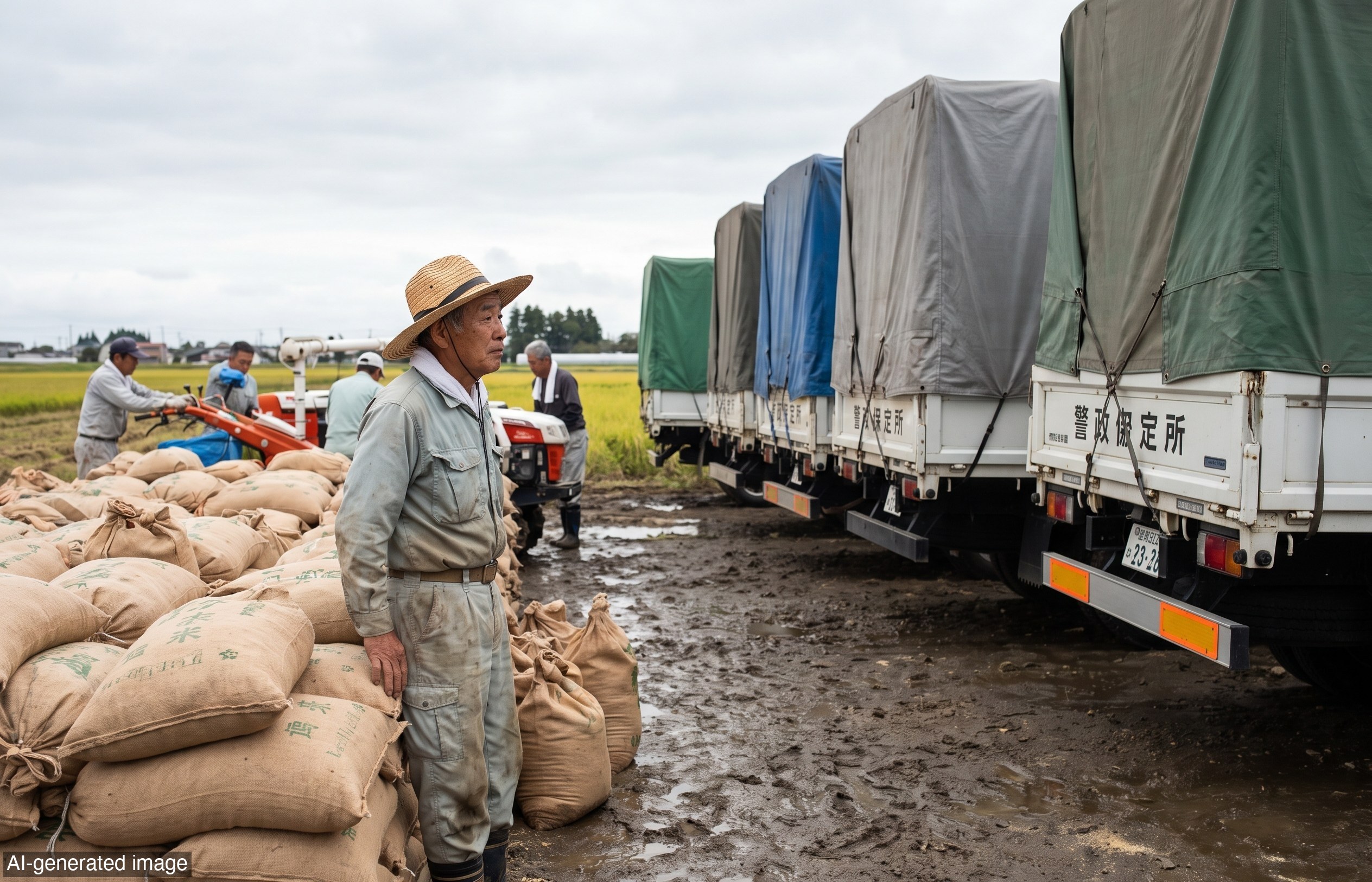
Japan’s rice market has gone from one extreme to the other in just two years. In 2023, extreme heat and drought damaged the crop, and by 2024 the country was facing a shortage so severe that a government minister resigned. By 2026, the shortage had flipped into a record surplus, and the government is buying rice back to stop prices from falling further.
Ryosuke Inoue, a visiting fellow at the CSIS Japan Chair in Washington, D.C., said the swing caught experts off guard. 'Every expert is actually surprised by this fluctuation,' he told Fortune. He said the supply-demand gap existed, but the size of the move was unusual.
The shortage phase was driven by a mix of weather and demand. Heat and drought in 2023 hurt rice during the grain-filling stage, cutting the amount of sellable, top-grade rice. At the same time, tourism rose and panic buying followed an earthquake warning. Private rice stocks fell from the normal range of about 2 million tons to roughly 1.5 million tons.
Prices responded fast. A five-kilogram bag of rice rose from about ¥2,000 ($13) in early 2024 to a peak of ¥4,300 ($27) by 2025, according to Inoue’s data. That year, Japan released emergency rice reserves for the first time since the system was created in 1995. Inoue said there was controversy over whether the government waited too long.
Then the market overcorrected. Farmers, chasing higher prices, increased production sharply. By mid-2026, private stocks had risen to 2.43 million tons, and the agriculture ministry is forecasting the surplus will grow further into 2027. Prices have already dropped back toward ¥3,300 ($21), and Inoue said they could keep sliding toward 2022 and 2023 levels or lower.
This month, the government moved to buy back 210,000 tons of rice to refill reserves it had drained the year before. Inoue said Japan’s rice distribution system is opaque even to the people who regulate it. 'Many distributors are trying to maximize their profit, and even the government doesn’t know how the rice was distributed from the farmers to the final consumers,' he said.
Trade politics added another layer. Japan grows nearly all the rice it eats and exports almost none of it. In June 2025, President Trump complained that Japan 'won’t take our rice, and yet they have a massive rice shortage.' Japan already imported rice from the U.S. under a WTO-mandated duty-free quota of 770,000 tons a year, with roughly half historically sourced from the U.S. A 2025 U.S.-Japan trade deal pushed Japan to boost U.S. rice purchases by 75%, and Inoue said that increase is still moving through the system.
Japan’s rice market shows what happens when weather shocks, weak price signals, and opaque distribution collide. When regulators do not fully understand the market they are trying to manage, the result is often waste on the way up and intervention on the way down. Capital rewards clear rules. Bureaucracy usually delivers the opposite.