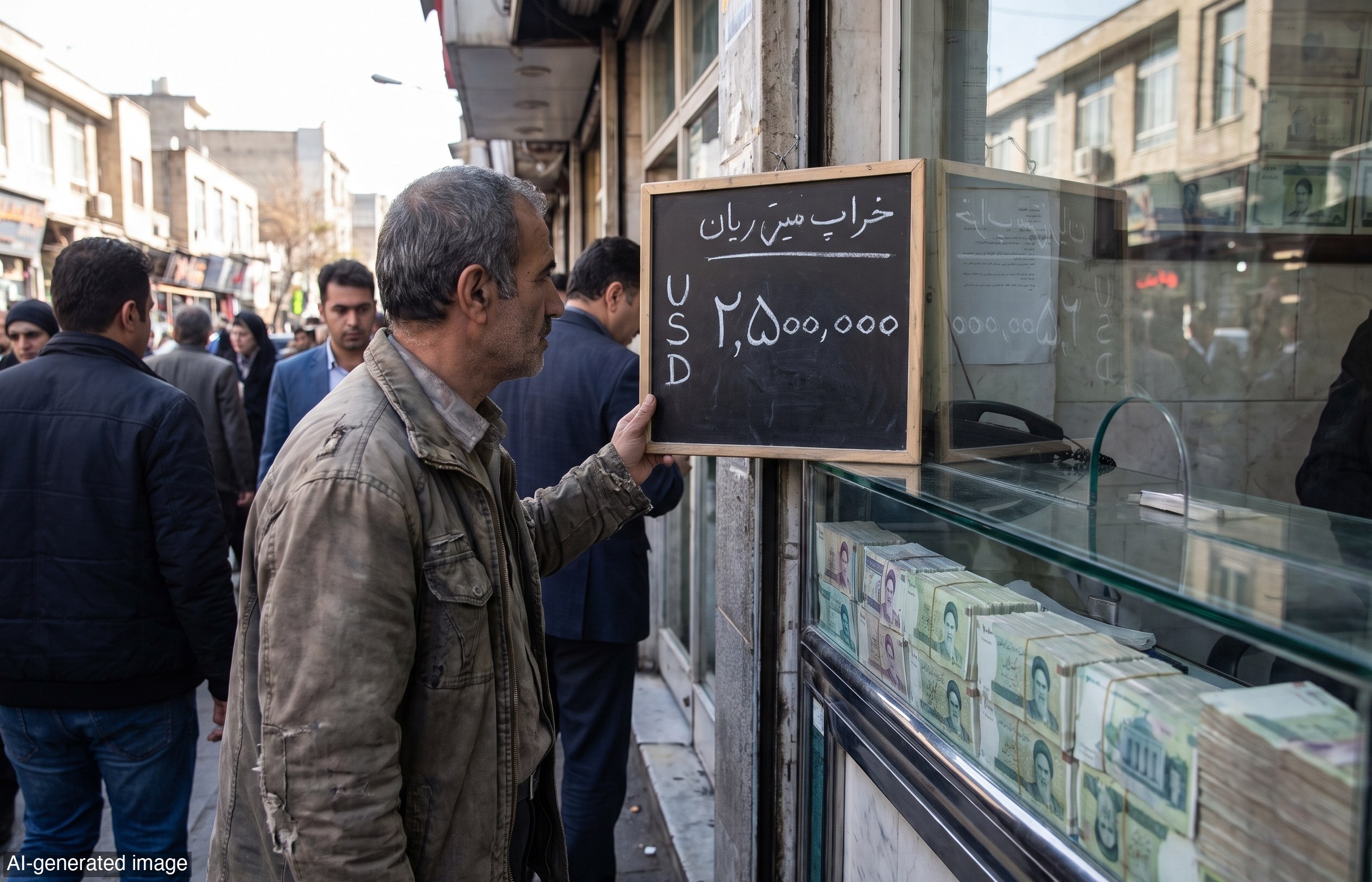
Iran’s currency hit a new record low on Tuesday, trading at more than 2.5 million rials to the U.S. dollar in Tehran. That was less than a month after the rial’s previous record low of 2.2 million to the dollar on Sept. 2.
The numbers come first. The rial was near 1.5 million to the dollar at the start of this year and around 920,000 in August 2025. Going back further, it began 2018 at 35,000 to the dollar.
The collapse is happening alongside a hard squeeze on Iran’s oil income. Fortune reported that a U.S. naval blockade has sent Iran’s oil exports to virtually zero, while neighboring Gulf states have boosted shipments under the protection of the U.S. military. The piece said Iran did not load any oil last month at its export terminals, the first such month since the 1979 Islamic revolution, according to Homayoun Falakshahi, head of crude oil analysis at Kpler.
For now, Tehran is still drawing a trickle of revenue from oil already in tankers at sea before the blockade was reimposed in mid-July. Kpler estimated those supplies totaled 90 millions barrels and would run out by the middle of this month. Payments for those final deliveries, which primarily end up in China, could stretch to December.
Once that spigot runs dry, the regime loses what Fortune described as its top source of hard currency. Oil sales typically make up about a third of Iran’s state budget and are also key sources of funding for the Islamic Revolutionary Guard Corps.
The broader economy is under strain as well. Inflation is now near 90%, GDP is expected to shrink 5.4% this year, unemployment has jumped, energy is being rationed, and even Supreme Leader Ayatollah Mojtaba Khamenei has expressed concern about 'social cohesion' amid the hardship.
The article said a prior currency collapse late last year triggered widespread protests that the regime put down with a brutal crackdown early this year. Since the U.S. and Israel launched the war on Iran in February, the rial has fallen further, reviving worries about unrest.
The U.S. also tightened sanctions on Iran last month, making it harder for Tehran to move money through front companies and other intermediaries. In an interview with Fox News last week, Iranian President Masoud Pezeshkian said the regime’s money in China is blocked. 'We can’t even get our own money out of a country to which we’ve supplied goods,' he said.
President Donald Trump has signaled he will let the economic pressure on Iran continue, and Secretary of State Marco Rubio said on Fox News that Iran was heading toward an economic 'cataclysm.'
The market has already voted. When hard currency disappears, the state budget weakens, the rial breaks, and the regime pays the price in inflation, rationing, and public unrest. Capital rewards clear rules; Tehran is getting the opposite.