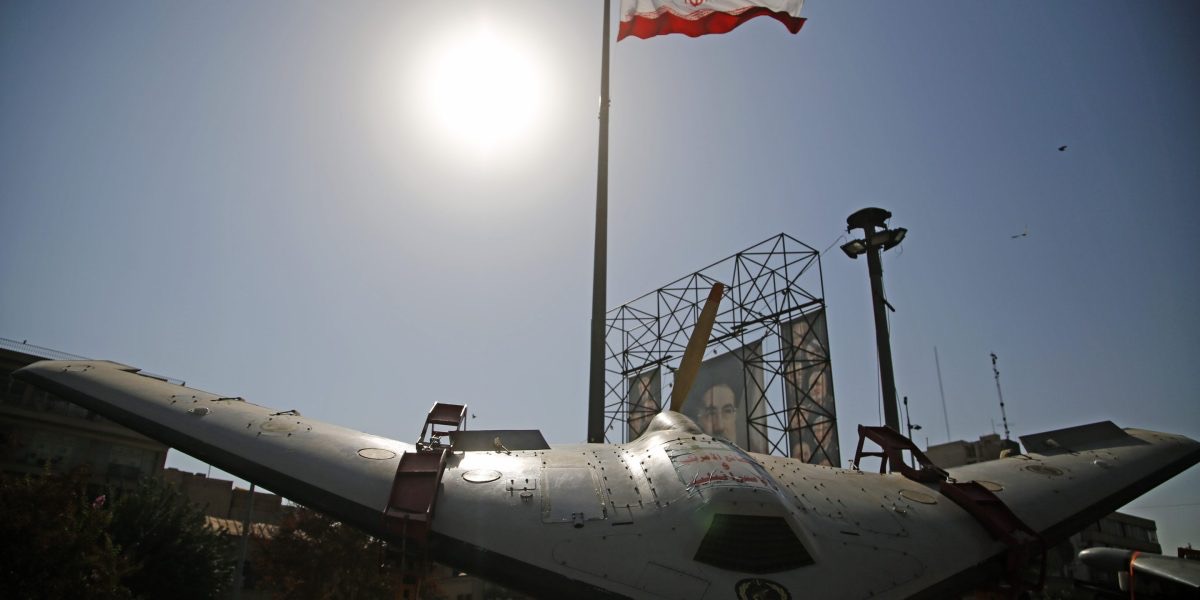
A classified Pentagon report from this summer says Iran tapped into SpaceX's Starlink satellite internet service without authorization to command its forces and oversee one-way drone attacks, according to the Washington Post. The report was provided to Defense Secretary Pete Hegseth. The Post said Starlink served as an alternative channel for Iran after U.S. strikes targeted its traditional communications networks.
The timeline matters. Days after the United States and Israel launched attacks against Iran in early March, an Iranian drone struck a U.S. military base in Port Shuaiba, Kuwait, on March 1, killing six U.S. troops. Within hours, SpaceX imposed identity-verification requirements for aircraft flying faster than 100 miles per hour, sources told the Post. Weeks later, the company tightened restrictions on its sales network and paused a program that let authorized resellers distribute terminals to sub-resellers.
The Pentagon's response was guarded. Press Secretary Kingsley Wilson told Fortune in a statement that 'the Department is not aware of the report to OSW pertaining to this subject,' referring to the office of the secretary of war. Neither SpaceX nor the U.S. government has publicly taken responsibility for the battlefield effects described in the reporting.
The Post also reported that Elon Musk was angry in early March about the Pentagon's use of Starshield, the military version of Starlink, for LUCAS, a low-cost U.S. attack drone. The dispute is about money. Sources told Reuters in May that SpaceX executives argued the military had been paying about $5,000 per terminal connection while using a higher service tier worth nearly $25,000. The Pentagon countered that the $25,000 monthly fee was meant for aircraft, not one-way attack drones.
The pattern extends beyond Iran. In February, SpaceX cut off Starlink access to Russian troops by shutting down terminals not on a whitelist of authorized users, and Russian drones were severely limited as a result. Ukraine now complains that its own Starlink service has been sharply throttled. In two instances this fall, Ukrainian forces reported speed limits of 100 miles per hour on their terminals, making their attack drones easier to shoot down. One Ukrainian drone pilot told the Wall Street Journal: 'What you see is a gradual loss of efficiency. Fewer opportunities. More work for the same result.'
The lesson for capital is straightforward. A privately built network can be pulled into a war by its own users, its own sales channels and its own rules, and the government that depends on it has little visibility into the trade-offs. Musk has said Starlink satellites are not meant for deadly drone strikes, a position that now collides with the realities of the battlefield and with a Pentagon that pays for a service it treats as a tool.
For taxpayers, the question is who controls the infrastructure that wartime operations depend on, and at what price. A market that rewards clear contracts and transparent terms is the best protection against both an adversary exploiting a commercial network and a defense budget paying premium rates for capabilities it cannot fully define.