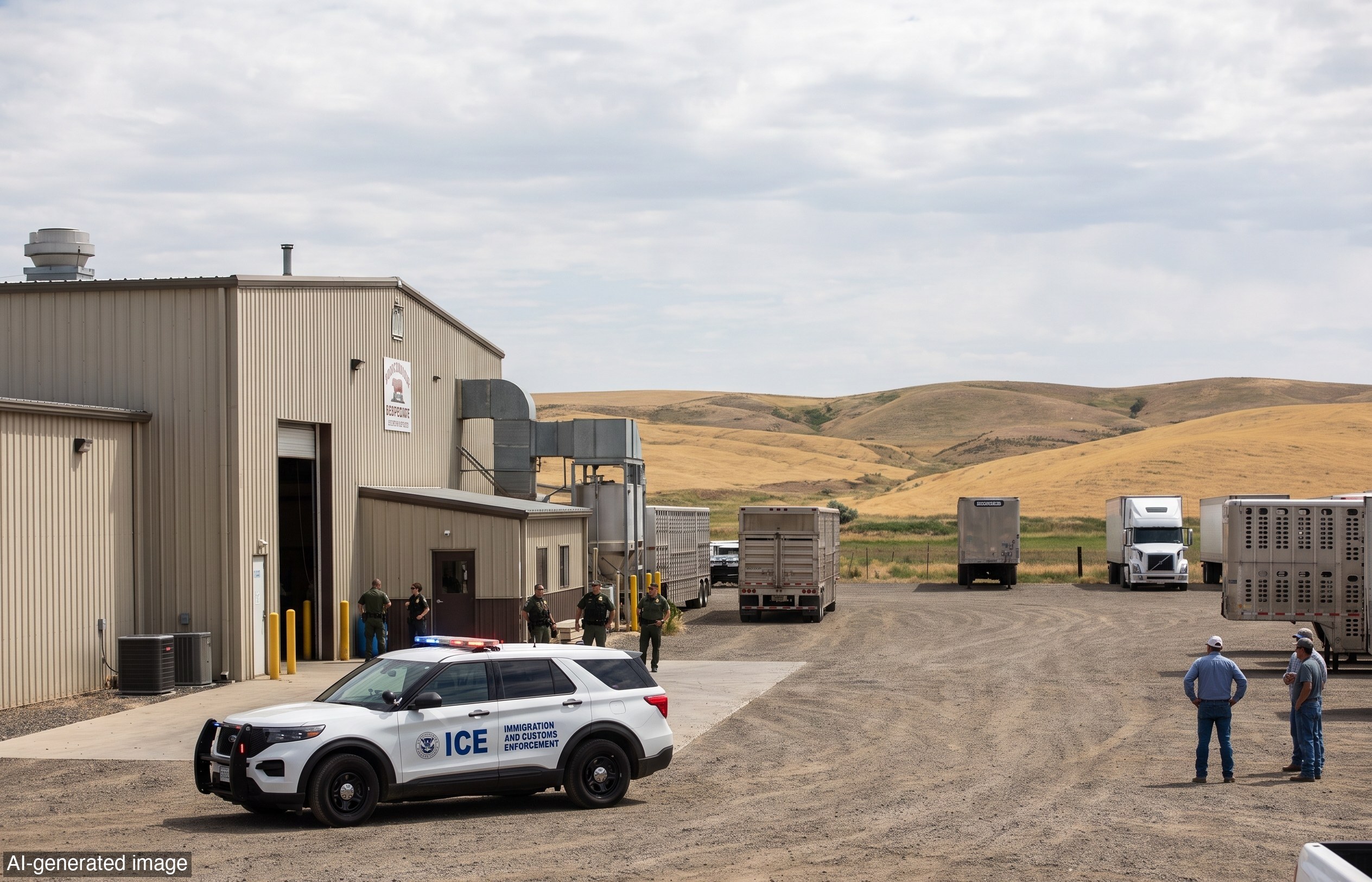
Meatpacking industry groups said heightened immigration operations in Texas, Kansas and Oklahoma have caused employees to miss work and delayed shipments of thousands of cattle, producing millions of dollars in lost revenue.
The Texas Cattle Feeders Association, the Oklahoma Cattlemen’s Association and the Kansas Livestock Association said ICE operations have disrupted feedlots, dairy processors, feed and grain companies, and transportation hubs. The groups said some plants in Dodge City, Liberal and Garden City, Kansas, typically process thousands of cattle a day, but had to shut down temporarily and send cattle back to feedlots.
'Of course, causes an animal health issue, causes financial issues,' said Scarlett Mabinger, vice president of communications for the Kansas Livestock Association.
The Department of Homeland Security confirmed its presence in Kansas but said it is not conducting worksite raids. The department said ICE has been targeting people with criminal histories, while recent data cited in the report suggests more than half of those arrested in July had not been convicted of any crimes and were not facing criminal charges. Less than a quarter had been convicted of a crime.
Republican senators Roger Marshall and Jerry Moran said they were concerned and urged the federal administration to coordinate with local authorities. Moran said in a statement shared on social media that 'Secretary Mullin assured me these warrants are only for the purpose of arresting individuals who have been charged with criminal activities.'
The pressure is landing in counties that heavily favored Donald Trump, with more than 65% voting for the Republican Party in the last election. That makes the political fallout harder to dismiss: when federal enforcement slows production in red states, the cost does not stay with Washington. It shows up in payrolls, supply chains and eventually at the grocery store.
Beef prices have already soared to record highs over the past year, largely because the national herd is the smallest in 75 years. The Trump administration has tried to bring prices down by allowing some beef imports without high tariffs and reopening the border to cattle from Mexico. If processing slows further, the market has already telegraphed the risk: less supply means higher prices, and the taxpayer and consumer both end up paying for a broken policy mix.