The numbers come first. Hinge, according to its parent company Match Group, brought in around $691 million last year, and the app now has more than 30 million users, with a date being set up every two seconds.
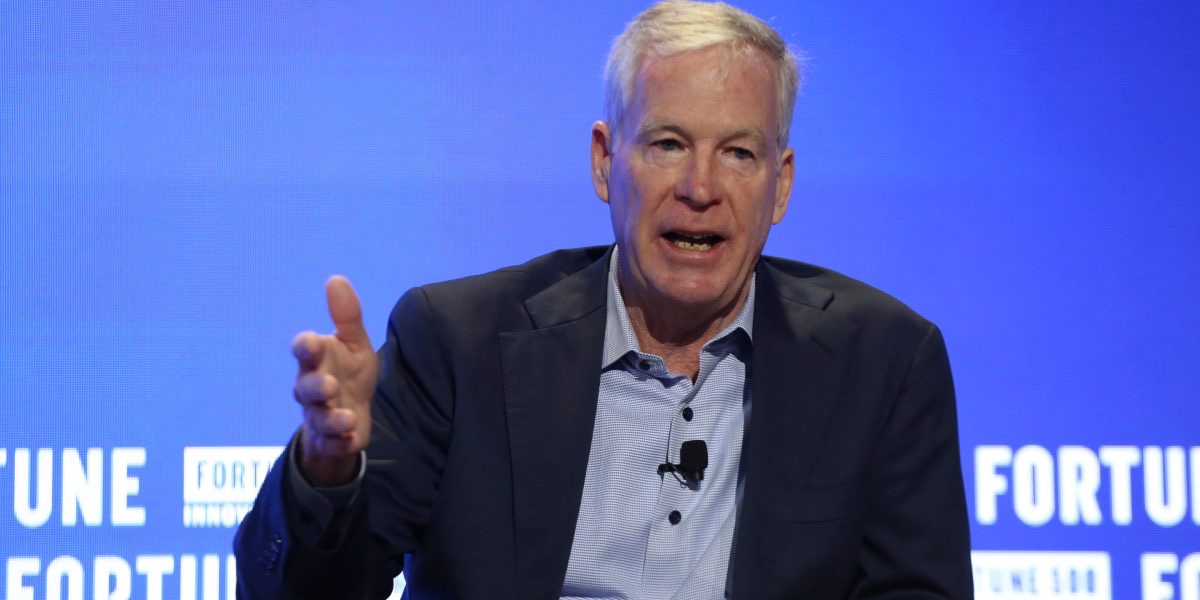
The beginnings were far less glamorous. In 2011, when Hinge launched, online dating mostly happened on desktop computers and required real effort. Justin McLeod, then a Harvard Business School student, had to recruit classmates himself. 'I remember the days of running around the college library in Washington, D.C., at this college, Georgetown, and bribing kids with Kit Kats to come try my app,' he told Fortune. 'We would get dozens of users a day—maybe, if that.'
Financing was just as hands-on. McLeod said he had to 'beg and borrow a lot' to get the app off the ground. 'I was out there networking and talking to as many people as I could and taking money from anyone who would give it to me,' he said. 'I was collecting—me—literally like, $5,000 checks and $10,000 checks to come and start Hinge.'
He also took a calculated gamble on his career. McKinsey offered him a place in its graduate program before he had finished his second year of business school. Glassdoor estimates that the average consultant earns between $173,000 and $233,000 a year, and McLeod's sign-on bonus alone was $12,000. He deferred the offer for roughly two years and used borrowed money to build the product. 'Once Hinge started to become successful, and they saw I was the founder of it, they were like, 'You're probably not coming to be an analyst here, are you?' And, of course, by that time I had to pay it back.'
The capital did arrive. By 2015, Hinge had raised $26.35 million at an estimated valuation of $75.5 million before Match Group bought the company from McLeod for an undisclosed amount. Last year he left Hinge to launch Overtone, another dating app with an AI twist.
The market has already voted. Investors funded a product that few people had imagined on a phone, and users kept coming once the model proved itself. Nothing about that outcome came from a regulator's blessing or a government subsidy. It came from a founder who risked his own time and credit to test a product in the open market.
McLeod's advice is worth noting for anyone weighing a career. He urges founders to be 'hopelessly idealistic and ruthlessly practical at the same time,' balancing a big vision with the daily realities of cash flow, customers and execution. Gen Z graduates are taking that message seriously: LinkedIn lists 'founder' as the second fastest-growing job title among recent grads.
For a free-market reader, the lesson is simple. Hinge did not succeed because someone designed a program for it. It succeeded because a founder found a need, raised private capital from people willing to take the risk, and earned a return when customers chose the product. That is how free enterprise is supposed to work.