Europe's Wildfire Crisis Strains Governments and Emergency Budgets
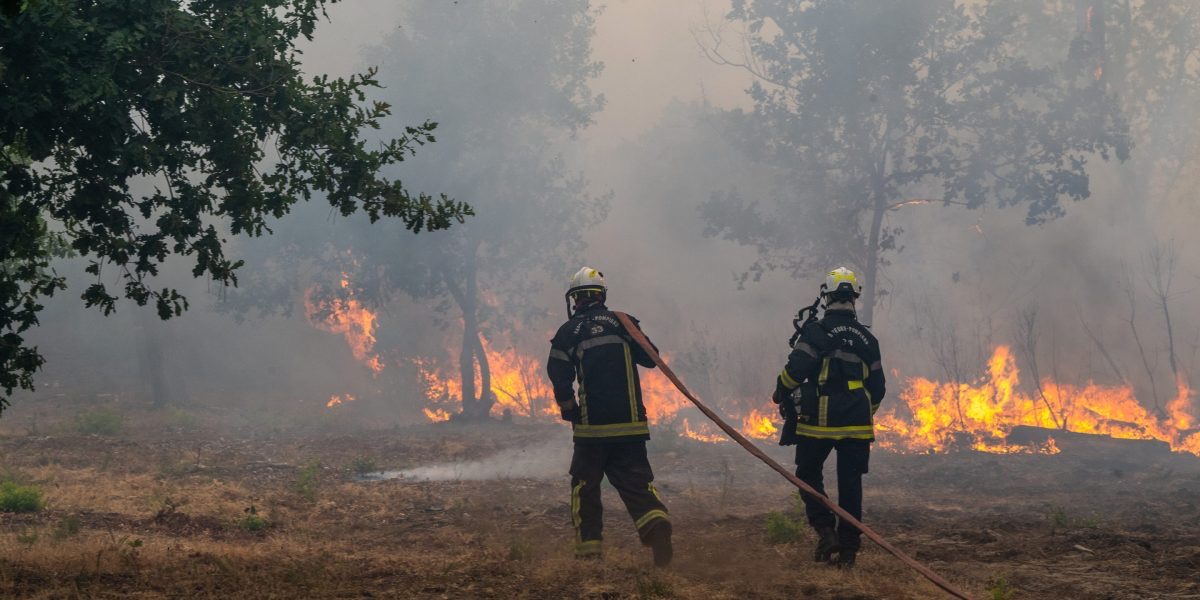
France scrambled its A400M military transport aircraft on Saturday to drop tons of flame retardants over drought-hit woodlands in the southwest, as wildfires across southern Europe displaced more than 250,000 people and killed at least one man in the Spanish municipality of Manises.
The A400M — a heavyweight cargo plane specially converted for firefighting — joined at least 18 other water- and retardant-dropping aircraft and helicopters already operating in the Gironde region, according to French Interior Minister Laurent Nunez. The minister warned of a 'long and very difficult' battle, noting that the fire sat roughly 30 kilometers west of Bordeaux and that shifting winds could drive flames toward the city.
The Gironde prefect, Sophie Brocas, said the blaze had already destroyed about 140 homes in the region. Bordeaux opened an exhibition center to shelter thousands of evacuees and its mayor said the city could accommodate as many as 10,000 people if necessary. The city's airport remained open, but bus and tram services were suspended.
Prime Minister Sébastien Lecornu called the fires unprecedented, noting that the Gironde blaze had grown so intense on Friday that it began generating its own winds. The government mobilized soldiers to reinforce fire crews and rushed 1.5 million face masks to those exposed to potentially noxious smoke.
The crisis forced organizers to truncate the Tour de France's 21st and final stage. Rather than the planned 133-kilometer route starting from Thoiry, Sunday's stage was cut to an 89-kilometer circuit inside Paris — a reduction of roughly one third — so that part of the race's security detail could, in the words of the official statement, 'reinforce the response efforts in the areas affected by the wildfires.'
In Spain, 70,000 people were evacuated in central Spain alone, and authorities deployed 2,600 firefighters, police and other emergency personnel. Firefighters said the blazes spread so fast and violently that they could not be tackled head on. Residents near El Tiemblo, west of Madrid, watched fire char a famed chestnut grove. 'We've never seen anything like this,' said local resident Javier Organista. 'When we saw the flames coming into our town, surrounding us, leaving us with practically no way out, all the neighbors joined together to try to stop its advance.'
In France, some residents fled by boat as flames swept through touristic towns on the Atlantic coast.
---
The numbers come first, and they are sobering: 250,000 displaced, 140 homes destroyed, one confirmed death, and a national sporting event reshaped by fire. What the crisis also reveals is the real cost of deferred infrastructure investment and the limits of bureaucratic emergency planning. When a government must cannibalize Tour de France security to fight wildfires, the strain on public resources is no longer theoretical — it is operational and immediate.
For the free-enterprise reader, the lesson is straightforward: resilient private property, functioning insurance markets, and clear legal frameworks for land management are the first line of defense against disasters of this scale. Governments that crowd out those mechanisms with regulation and centralized control find themselves, as France does today, deploying military cargo planes and hoping the wind does not shift.