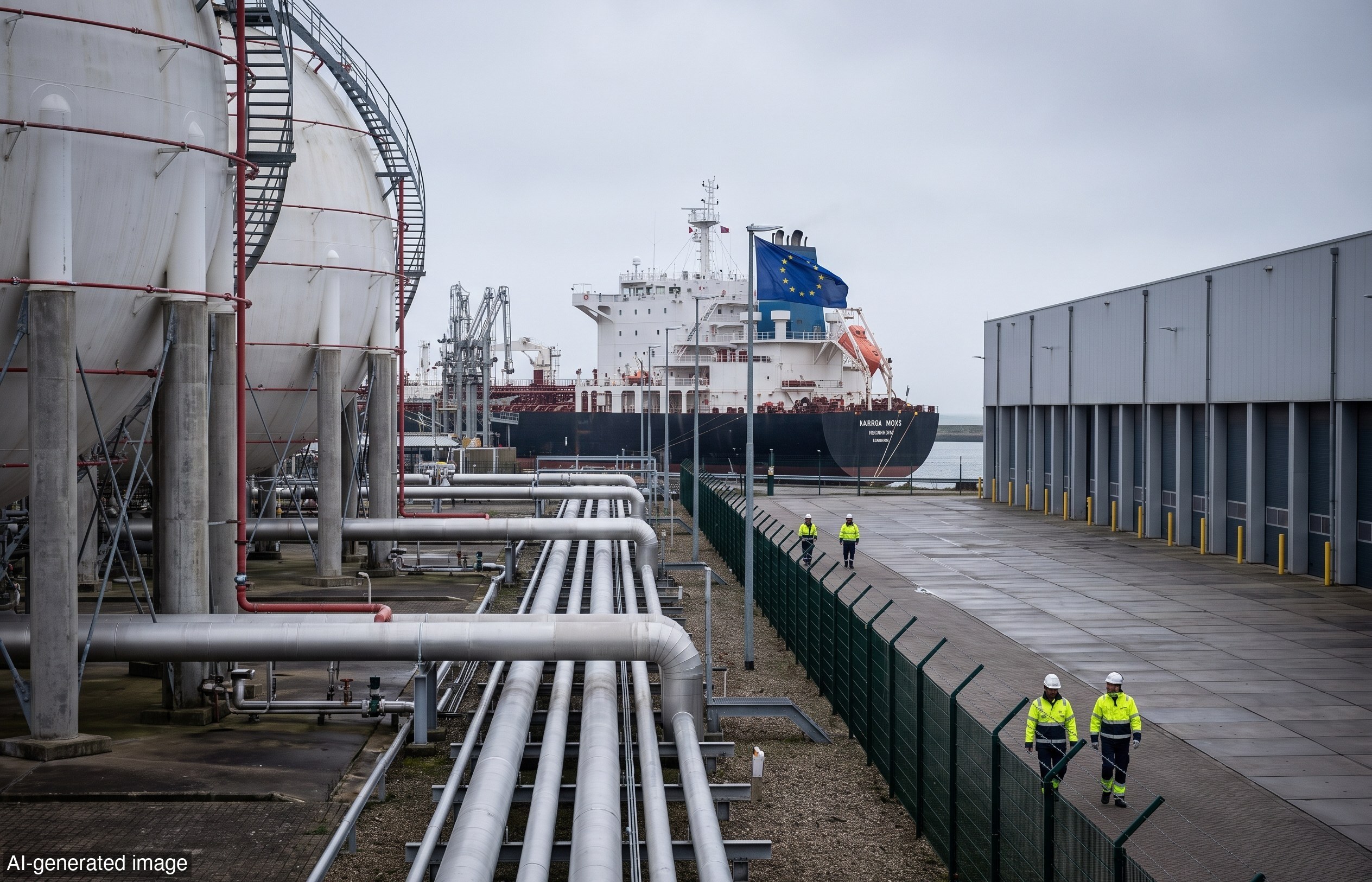
European Union nations have spent over an extra 100 billion euros, or $113.5 billion, on energy imports since the outbreak of the Iran war, according to the report.
That spending has not delivered any added supply. EU energy commissioner Dan Jørgensen said the bloc has not received 'one extra molecule of gas or oil' despite the higher bill.
Consumers in some European countries are now paying nearly 50% more at the pump, equivalent to more than $11 a gallon, after the closure of the Strait of Hormuz, the waterway through which a fifth of the world’s traded oil passed in peacetime.
Jørgensen told ministers in Dublin that 'times are serious' as the 27-nation bloc confronts winter and higher diesel risks. He said the ministers would discuss plans to accelerate the shift away from fossil fuels, expand electrical infrastructure across the bloc, and move toward 'homegrown energy: green electrons.'
The Europe-wide exposure is especially acute in diesel. Fatih Birol, executive director of the International Energy Agency, said Europe is 'one of the most exposed regions — if not the most exposed one — when it comes to diesel' because it imports a huge amount of it. He said about 50% of Europe’s diesel supply comes directly from the U.S.
The report also says Republicans in key U.S. states have called for a ban on diesel exports to bolster domestic supply ahead of crucial midterm elections. That has cast doubt on President Donald Trump’s 2025 deal to sell $750 billion worth of energy to the EU.
Ireland’s minister for climate, energy and the environment, Darragh O’Brien, said such a ban is 'unlikely' because it would harm economies on both sides of the Atlantic, though he warned the EU must prepare for the worst. Finland’s environment minister, Sari Multala, pointed to her country as an example of energy independence, saying its nuclear reactors, turbines, peat bogs and hydropower dams provide 95% of its electricity and 'very reasonable prices for electricity.'
The numbers come first. Europe’s energy dependence is proving expensive, fragile, and politically costly. When imported supply can be squeezed by war and chokepoints, taxpayers and consumers pay the bill while bureaucrats talk about acceleration and transition.
Capital rewards clear rules and reliable supply. Europe is learning that energy security is not an abstraction. It is the difference between manageable prices and a winter squeeze that leaves households and industry exposed.