By the time Dolly Parton died on Aug. 25, 2026, her Imagination Library had gifted more than 332 million children’s books to babies and kids in all 50 states and four other countries: Canada, the U.K., Australia and Ireland.
The program mails one age-appropriate book each month to enrolled children from birth to age 5. By the time children age out, they can receive up to 60 books.
The initiative now reaches 1 in 7 U.S. children under 5, according to the Fortune report. It started in late 1995 in Sevier County, Tennessee, with an initial order of 1,760 books for children in Parton’s hometown.
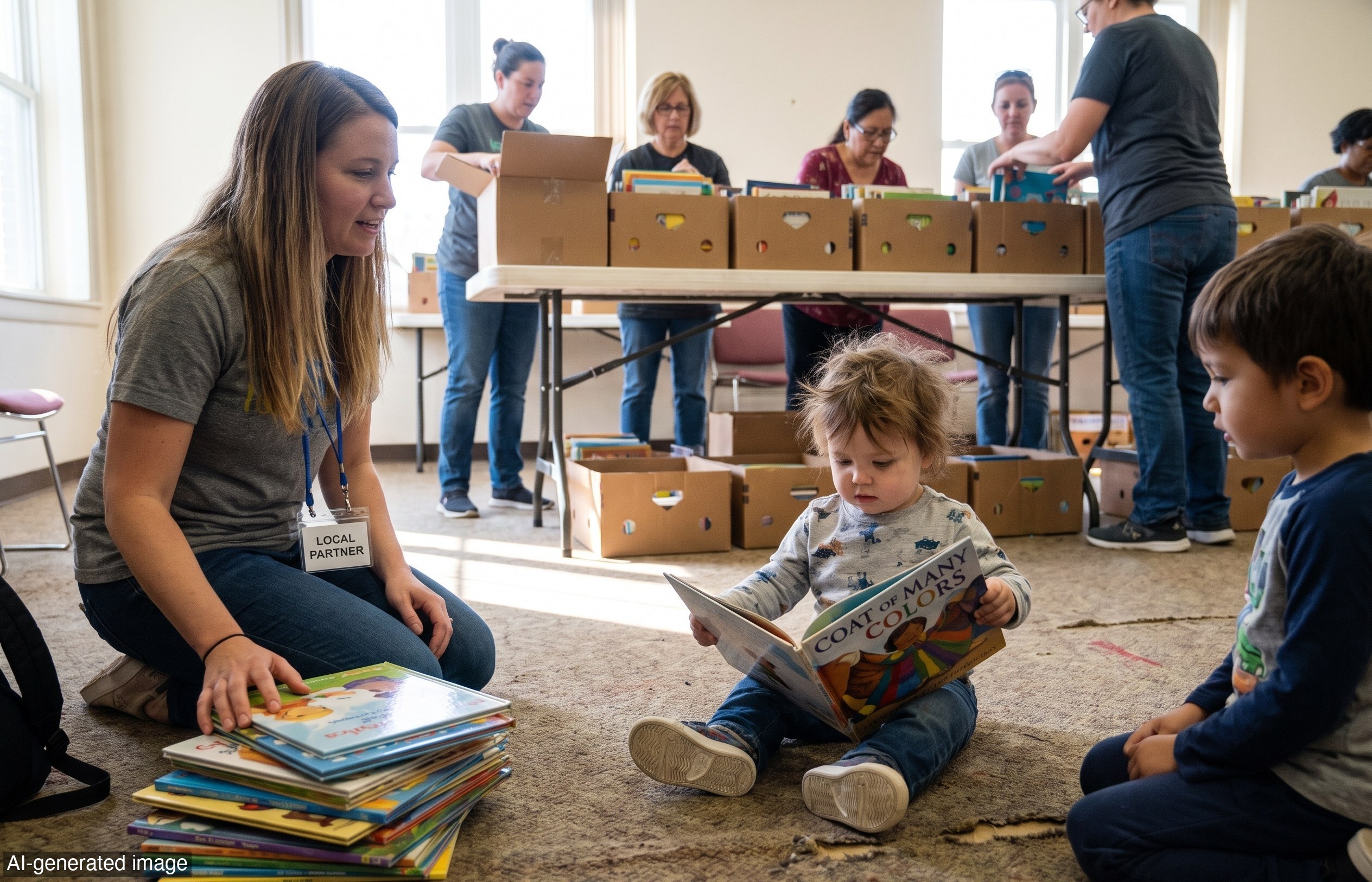
The program is available to any child in a community that participates, regardless of family income. To qualify, a community must secure a local partner. Those partners publicize the program, enroll children and pay $2.60 per month per child to help cover wholesale book purchases and mailing costs.
The Dollywood Foundation covers overhead and administrative expenses, coordinates the book selection committee, maintains the book order system and arranges orders and fulfillment. Nonpartisan expert committees of educators and librarians select the books, nearly all published by Penguin Random House.
The program has expanded over time. By 2001, it had affiliates in nearly a dozen states. The next year, it extended to 92 Native American communities, partnering with the Cherokee Nation, the Bureau of Indian Affairs, Parents as Teachers and the National Center for Family Literacy.
In late 2003, the Imagination Library mailed its one-millionth book. In 2004, it launched its first statewide program in Tennessee. It added bilingual titles in Spanish and English in 2003 and launched a bilingual Spanish website in 2022.
Parton said the program came from ‘a very serious place in my heart.’ She has said her father’s illiteracy inspired her to found it, and that she wanted children to have access to books early in life.
The market has already voted on the basic idea here: parents and communities want more literacy, not more bureaucracy. A private philanthropic model is doing what public programs often promise and rarely scale—getting books into homes, month after month.
Capital rewards clear rules, and this program has them. Communities participate, local partners fund a small monthly share, and the books move. That is how free enterprise and civic initiative can work together without turning every social need into a government monopoly.