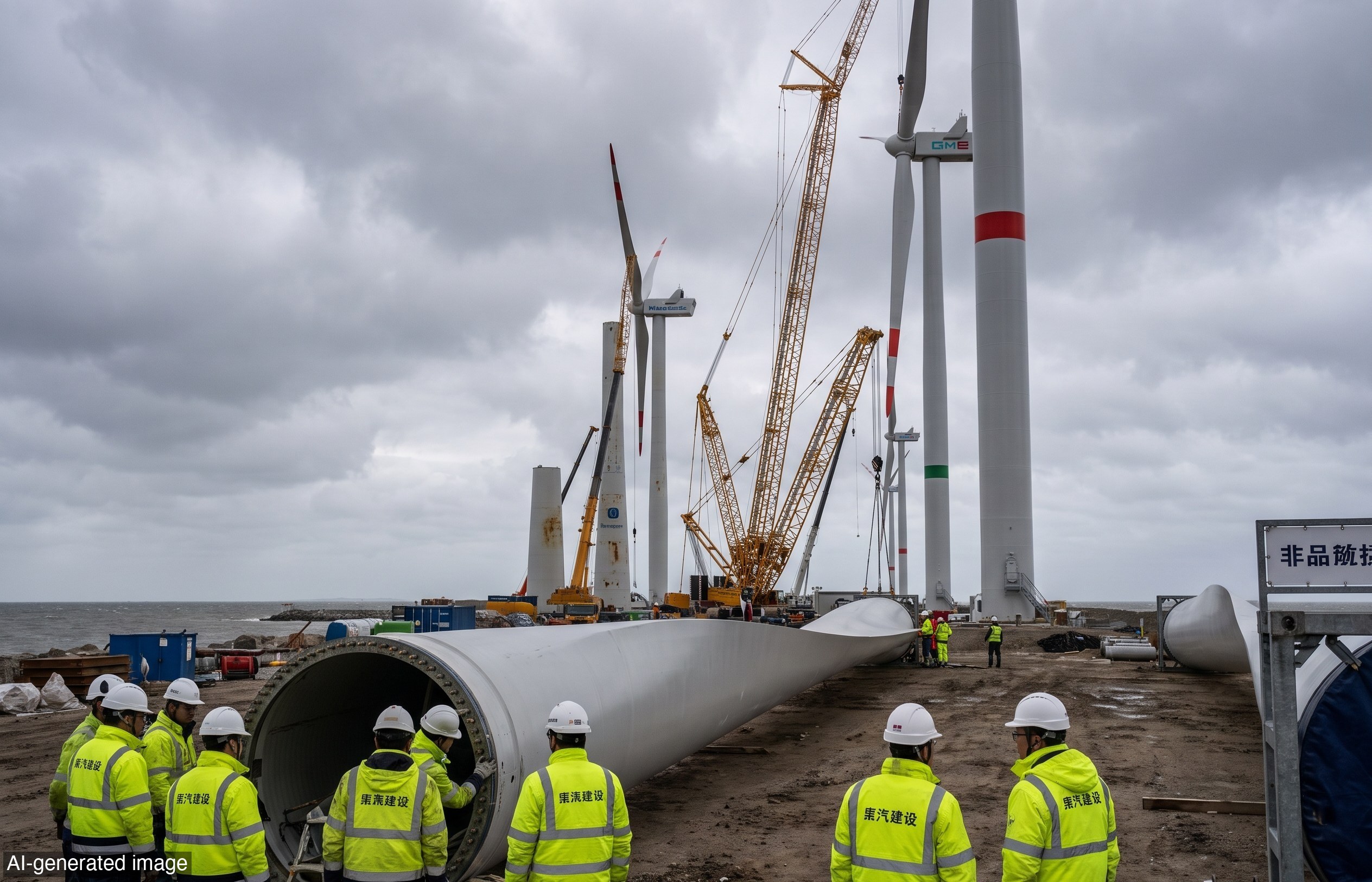
Vestas CEO Henrik Andersen says Europe needs to 'shed its naivety' as Chinese manufacturers push harder into the wind sector.
The issue lands at a sensitive moment for the Danish turbine maker. Vestas reported operating profit of €446 million in its latest quarter, up from €57 million in the same quarter a year earlier. New orders rose from 2 gigawatts to 3.35 gigawatts year on year, and the company said it is sitting on a wind-turbine order backlog worth €36 billion.
Andersen remains cautious. Nearly all of the quarter’s new orders were onshore, while offshore remains volatile and Vestas does not expect it to turn a profit in 2026. The company is targeting 2027 instead. A single offshore installation can cost billions and take years to permit, finance, and build before it produces a single megawatt-hour of power.
The pressure on margins is not limited to project risk. The cost of building a turbine has climbed between 30% to 40% since 2020, largely because of raw materials. Steel is up more than 50%, while copper and aluminum prices have nearly doubled, according to Julio Dal Poz of FTI Consulting. He warned that AI data centers could compete for the same materials the wind sector relies on.
Europe’s bigger problem is competitive. The EU has pledged to nearly double installed wind capacity by 2030, to 425 gigawatts from around 246 gigawatts today. But Chinese firms are moving fast. In 2025, the five biggest turbine suppliers by annual installations were, for the first time, all Chinese, according to the Global Wind Energy Council. Goldwind installed nearly 30 gigawatts, double that of Vestas.
Gerben Hieminga, an energy economist at ING, said Chinese manufacturers can beat European prices by as much as 50%. He said this is mostly because of state support. Between 2005 and 2024, Chinese firms received, on average, three to eight times more government support than firms in OECD countries.
The European Commission opened a foreign subsidies investigation into Goldwind’s activities in the EU wind sector in February.
Andersen’s warning is bigger than one company. When state-backed rivals can undercut market prices by such a wide margin, free enterprise stops being a level playing field. Europe can pledge capacity targets all it wants, but capital still follows clear rules, resilient supply chains, and a system that rewards efficiency rather than political favoritism.
The market has already voted in the numbers. China’s turbine makers are winning scale, and Europe is still trying to decide whether industrial policy alone can hold the line.