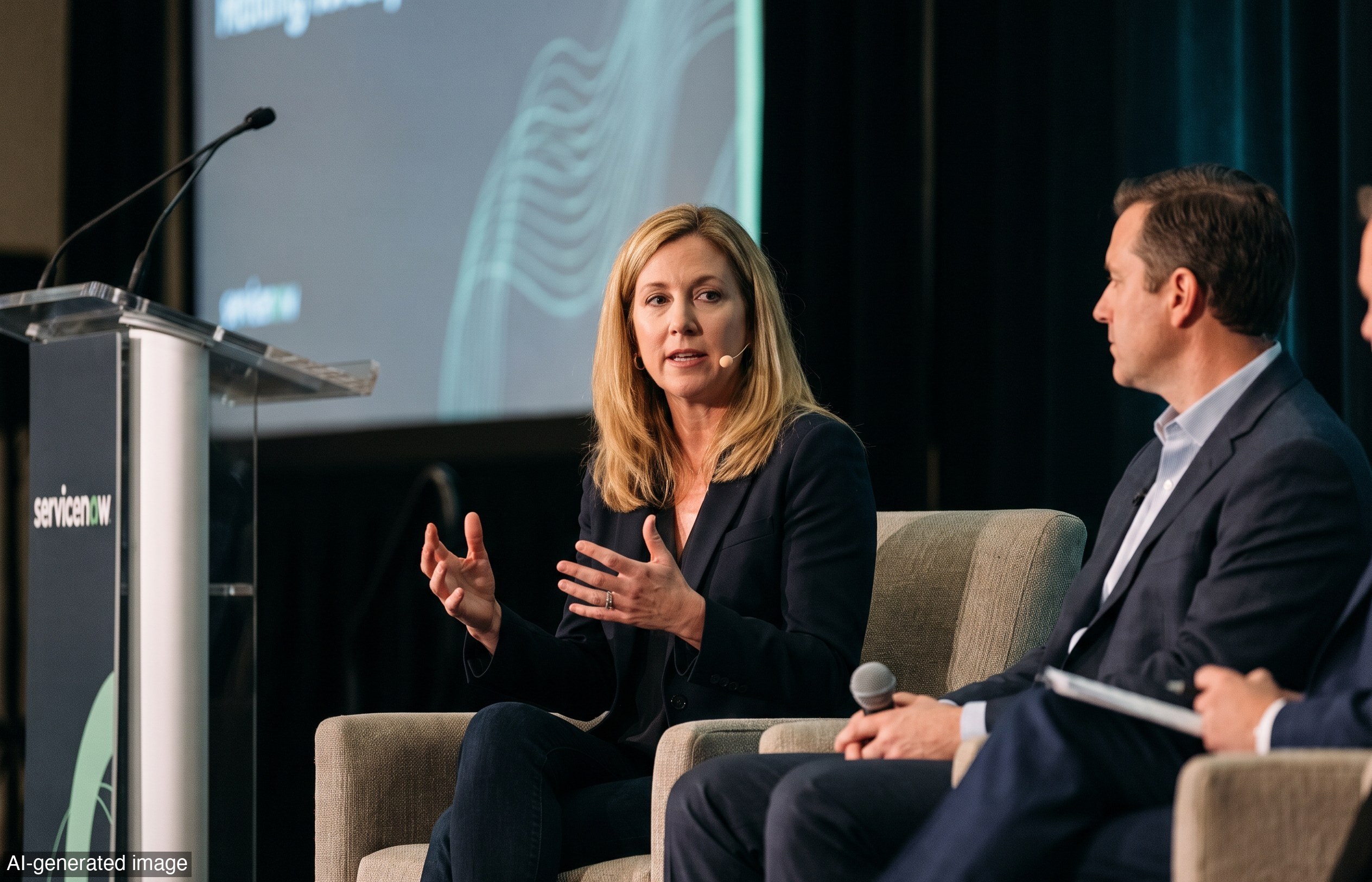
Centene CEO Sarah London says the latest health care innovation usually goes to 'the deepest pockets' instead of the sickest patients.
Speaking Monday at Fortune’s Most Powerful Women Summit, London said, 'Most of the venture money in health care goes into where the money is, and the money isn’t in Medicaid.' She said that means underserved communities 'don’t actually benefit from innovation first' and that sometimes they 'never do.'
Centene is a $33 billion company based in Missouri that runs Medicaid plans in 29 states and sells individual marketplace plans and Medicare Advantage. London said the company’s 26 million members are 'among the poorest, sickest members of the communities that we all live in.' She said she joined the company because health care and technology had reached an inflection point and she wanted to help get more care to people who are usually last to receive it.
London said artificial intelligence could change that, but not in the way it is mostly being used today. Asked where AI could create the most value, she said 'everywhere,' but added that the current deployment is 'depressing' because much of the investment is going toward 'inflationary use cases.'
She said much of the effort is aimed at driving more revenue in a fee-for-service system. By contrast, she said automating paperwork and claims payments is useful, but it misses a bigger chance to 'break the way the system works today' by democratizing care.
London pointed to rural areas described as medical deserts, where AI could help community health workers become as capable as the first round of triage in an emergency room for non-acute problems. 'That puts community care back in the community,' she said. 'It puts individual care back in the hands of patients.'
She also said AI could give patients more agency in making decisions about their own care. ChatGPT is not a doctor, she said, but many people already use it to learn more about their ailments. London said AI used the right way can make people smarter about their health and could help 'bend the cost curve.'
For now, Centene is using AI in administrative communications with members, she said, with the longer-term goal of giving patients interactive tools to take first steps on their own. 'Every dollar that we can save in the administration of health care, we can apply to benefits,' she said.
The market has already voted on the broader logic here: lower overhead, more direct care, and fewer layers between the taxpayer and the benefit. If AI can trim administration instead of simply feeding the bureaucracy, the winners are the patients most often left behind and the public programs that pay the bill.