The Numbers Come First
Helena Foulkes defeated Rhode Island Gov. Dan McKee in the state's Democratic gubernatorial primary on Wednesday, making McKee the first sitting governor in any U.S. state to lose a party primary since 2018. The last time a Rhode Island governor fell in a primary was 1994, when Democrat Bruce Sundlun lost to state Sen. Myrth York.
Foulkes, a former senior executive at CVS — where she served as president of the pharmacy division from 2014 to 2018 — and later chief executive officer of Canadian retail giant Hudson's Bay, ran directly at McKee's record on infrastructure and competence in government.
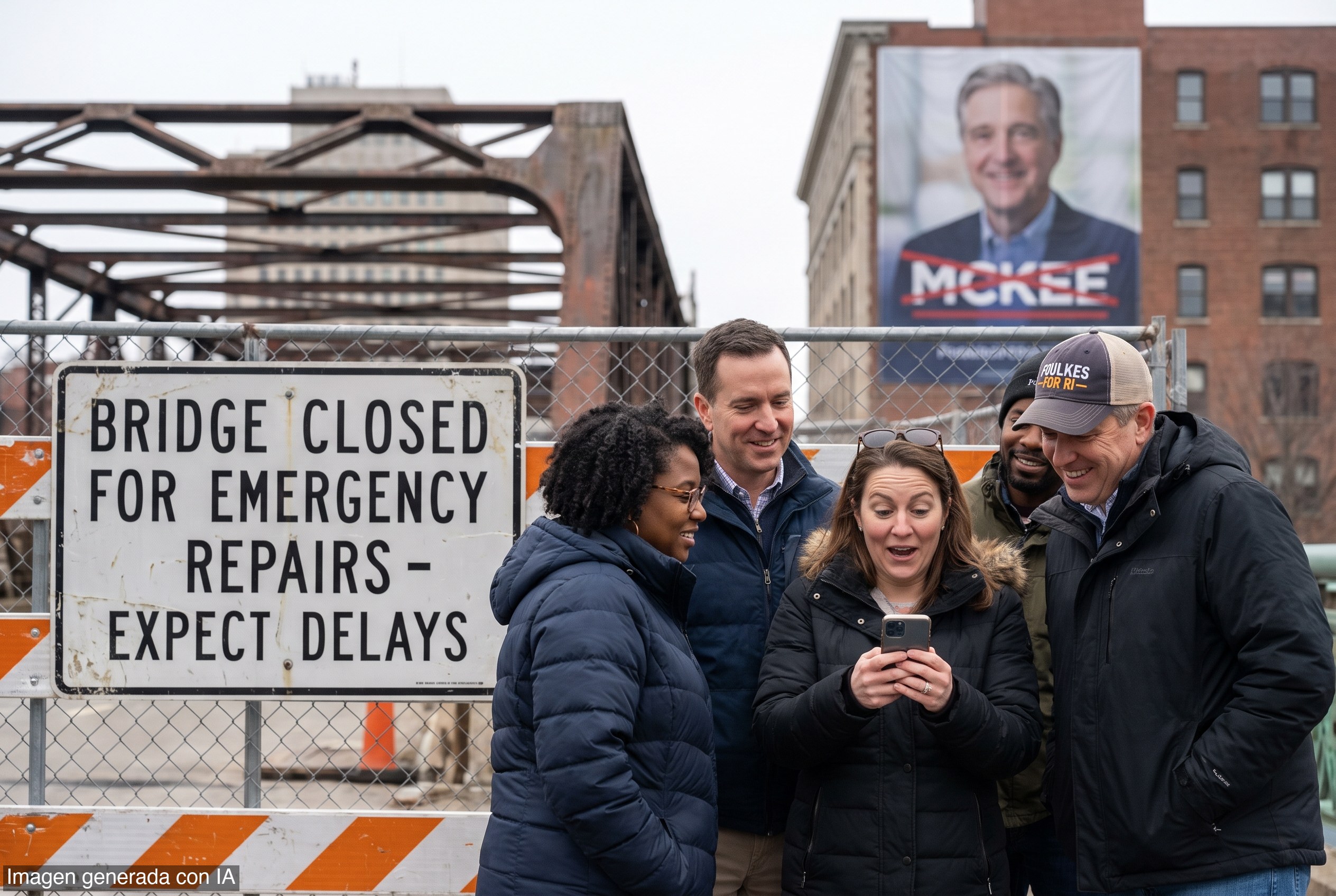
The Bridge That Broke a Governorship
The central issue: the Washington Bridge, a critical span carrying Interstate 195 over the Seekonk River connecting Providence to its eastern suburbs and the south coast of Massachusetts. McKee closed it in 2023 after state transportation officials flagged a 'critical failure' in an older section. Demolition and replacement have taken longer than the governor initially estimated, squeezing traffic into fewer lanes and generating lengthy commute times for years.
McKee maintains his decisions kept people safe and that construction will be finished by 2028. He has pointed to Maryland's replacement of the Francis Scott Key Bridge — which collapsed in 2024 after a container ship struck it, killing six construction workers — as a benchmark, arguing the Washington Bridge will be complete first.
Foulkes turned that timeline into a liability. She leveraged public exasperation over the cost and pace of the project to argue that McKee's administration was not working for most Rhode Islanders.
'Tonight, we may have won the Democratic primary for governor, but let me be clear about what happens next: You will have a governor for everyone,' Foulkes told a large crowd in Providence on Wednesday. 'Because there is so much work that needs to be done, and we need to do this together.'
McKee's Counterattack Fell Short
McKee attempted to characterize Foulkes as an out-of-touch elite who turned a blind eye to the opioid crisis during her tenure at CVS. In 2022, after Foulkes had left the company, CVS agreed to pay $5 billion to settle lawsuits nationwide over the toll of opioids without admitting wrongdoing. Foulkes countered that CVS reduced its opioid dispensing by 40% when she was president of its pharmacy division.
In his concession speech, McKee promised to work with Foulkes toward a 'smooth transition.'
Foulkes' win is a rematch reversal: she narrowly lost to McKee in the 2022 primary in a more crowded field — on a night when McKee notably refused to take her concession call.
A Separate Shakeup in Providence
In a parallel upset, Providence Mayor Brett Smiley, 47, lost his reelection bid to David Morales, 27, a democratic socialist endorsed by U.S. Sen. Bernie Sanders, U.S. Rep. Ro Khanna, and several high-profile labor unions. Smiley has held the seat since 2022.
CEO Times Editorial Read
The Rhode Island result is a textbook case of what happens when government fails at its most basic function: keeping infrastructure working. Voters did not need an ideological argument — they needed a functioning bridge. McKee's administration could not deliver one on time or on budget, and the market of democratic accountability priced that failure accordingly.
Foulkes' private-sector background was the attack surface McKee chose, but it became her credential. Twenty-five years building a business, managing a pharmacy network, and running a major retailer is precisely the kind of operational experience that government chronically lacks. Capital rewards clear rules and competent execution. So, it turns out, do commuters.