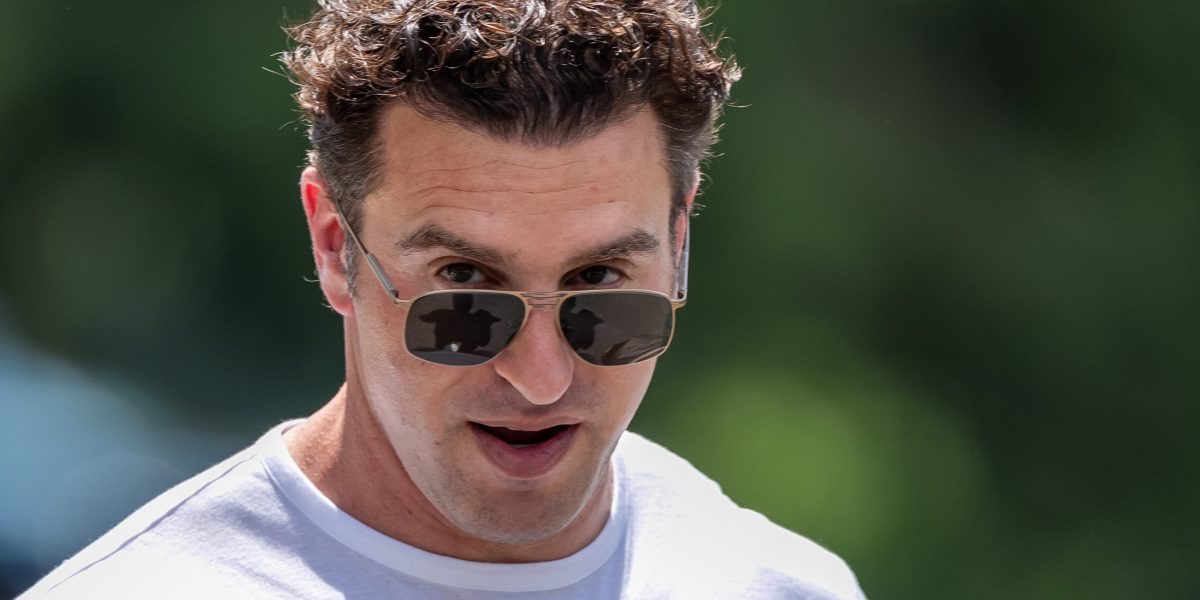
Airbnb CEO Brian Chesky has acknowledged that some of his workers probably call him a 'control freak.' He did not dispute the label so much as wear it. Speaking to Time, Chesky said Apple co-founder Steve Jobs was also described that way. 'People called him a control freak. He probably was a control freak,' Chesky said. 'He held people to extremely high standards. He spent a lot of time recruiting. He was in the details.'
When asked whether Airbnb staff would say the same about him, Chesky answered: 'I think some people do.' He said he spends three hours a day recruiting and tells hiring managers to leave if they do not like his input.
Chesky draws a sharp line between involvement and micromanagement. To make the point, he said he asked former Apple design chief Jony Ive, who worked alongside Jobs for nearly 15 years on the iMac, iPod, iPhone, iPad and Apple Watch, what it was like. According to Chesky, Ive replied, 'I never felt like Steve was micromanaging.' Chesky described the relationship as 'constantly partnering,' with the two even lunching together every day.
In Chesky's telling, micromanagement, 'where you're like telling people what to do,' is a last resort. 'If I'm telling somebody what to do, they're probably not successful,' he said. He says he engages in the details in areas where he believes he adds value, such as product, marketing and operations, but not with his chief accounting officer or a tax attorney.
The operational argument is the part most relevant to shareholders. Chesky contends that hands-on leadership shortens the path to decisions. 'There's a paradox where being in the details sounds like micromanagement; it sounds like it's slowing teams down,' he told CNBC. 'But when you're in the details, you can actually help make decisions faster.' He described organizations where approvals must pass through manager after manager, followed by meetings where peers cannot decide quickly. 'Only a leader can make a quick decision in a room,' he said.
The company's scale makes the question more than a matter of management style. Airbnb reports more than 9 million active listings across more than 150,000 cities in 220 countries, and more than 8,200 employees. Each layer of approval is a cost in time and payroll, and each decision made quickly in a room is capital put to work sooner.
The editorial reading is straightforward. Chesky's defense is a case for accountability at the top: a leader who holds real sign-off power and uses it, rather than a committee that dilutes responsibility. Free enterprise rewards the company that moves faster than its rivals, and the market will judge whether Chesky's intensity produces results. The principle at stake is not whether a CEO is demanding. It is whether shareholders and employees are better served by decisions made by someone who can be held responsible for them, or by a maze of approvals where no one owns the outcome.