Violence on the Court
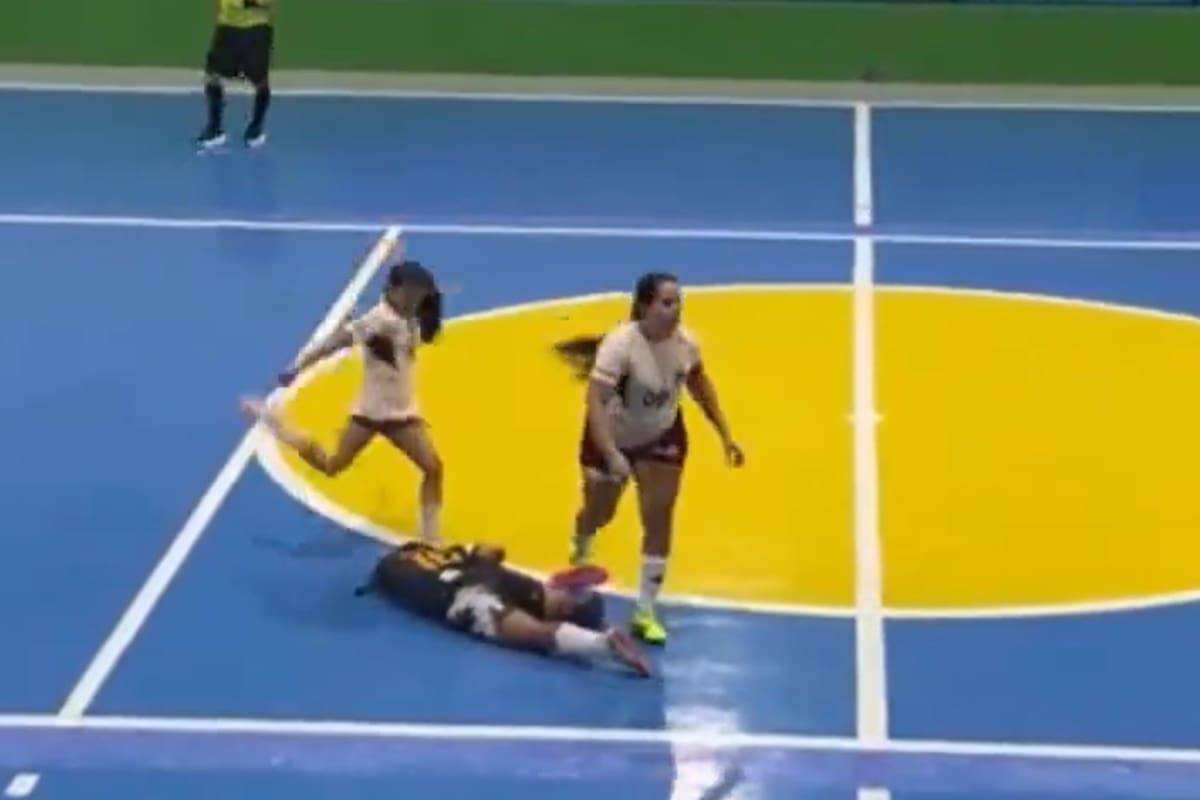
A women's futsal match in Fortaleza, Brazil turned into a scene of raw aggression last Wednesday when a player from As Resenhas approached a downed opponent and delivered two hard kicks to her head. The victim, playing for RDJ Esport Feminino, was already lying on the floor of the Gimnasio Joaquim Gregório after a sliding tackle. She covered her head with her hands. A teammate rushed to intervene and was struck in the face for it.
The game was RDJ Esport Feminino versus As Resenhas, part of the Liga Deportiva Eusébio, with RDJ leading 1-0 at the start of the second half when the incident occurred. A spectator captured the entire sequence on video. The referee blew the whistle, but the gymnasium floor quickly filled with players, substitutes, and coaching staff from both sides. The match was called shortly afterward.
Medical Outcome
The victim was escorted by the Departamento de Deportes y Juventud to the city's emergency medical unit. RDJ president Radija Nascimento confirmed the player was discharged from the hospital and is in good health, recovering at home.
Nascimento did not soften her words about the incident. 'It is a very regrettable situation that we would never want to witness on a sports field,' she said, adding that RDJ would take 'all necessary measures' to ensure athlete safety and respect going forward.
The Sanctions
The Liga Deportiva Eusébio and the Coordinación Deportiva Sejuv, acting through the Comisión Disciplinaria Deportiva, announced their ruling last Friday. Citing the referee's report, the official match record, broadcast footage, and statements from the parties involved, the disciplinary body applied sanctions under the Reglamento de Competición and the CBJD — Brazil's Sports Justice Code.
The offending player was suspended for five years, barred from any sporting activity organized by the city's sports league during that period. As Resenhas was expelled from the municipal championship. Additional participants in the brawl received separate sanctions for contributing to the disorder.
The Ayuntamiento de Eusébio issued a public statement condemning 'violence and any type of unsportsmanlike conduct,' reaffirming its commitment to amateur sport as a 'transformative force in our society.'
The Editors' Read
The swift, documented response from Brazilian sports authorities — video evidence reviewed, code applied, sanctions issued within days — is exactly how institutional accountability is supposed to work. Rules exist precisely for moments like this: a player on the ground, a deliberate kick, a camera rolling. The five-year ban and the club expulsion send a message that free and fair competition depends on enforceable standards, not just goodwill.
What the incident also reveals is the fragility of amateur sport when those standards are tested. The victim paid with a hospital visit. The sport paid with a match abandoned and a club removed. Order, once broken on the court, is expensive to restore — a cost that falls on every athlete who showed up to compete honestly.