Amazon now sits at the top of the Fortune 500. The company took the No. 1 spot in June, ending Walmart's 13-year run. A month later, it topped the 2026 Fortune Global 500 as the world's largest company by revenue.
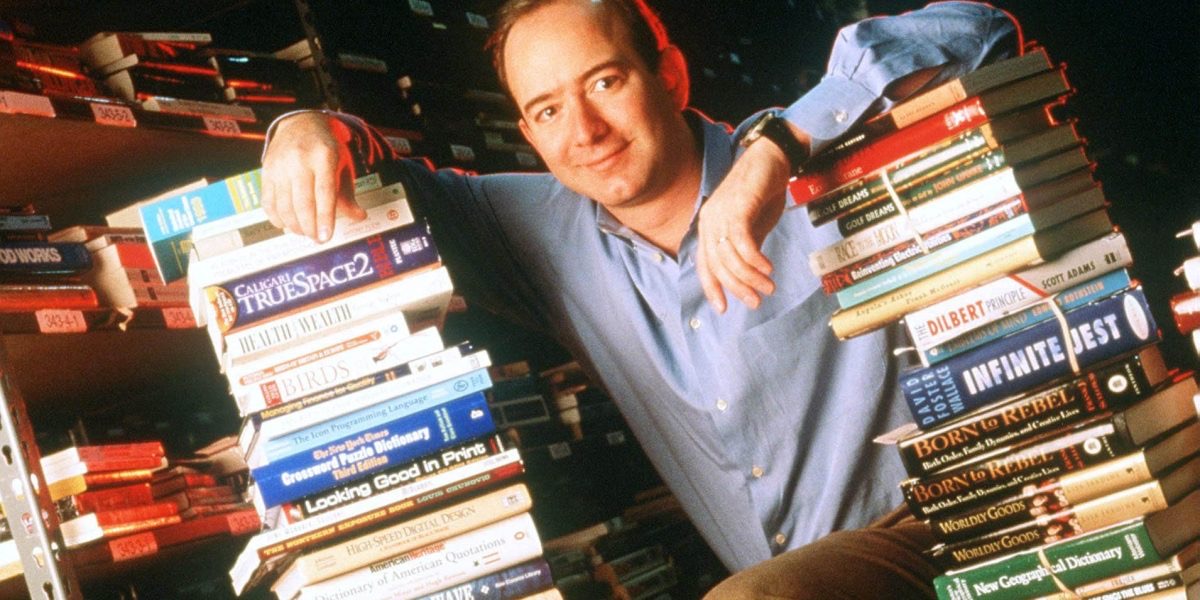
The ranking marks a new position for a business that began as an online bookstore. Jeff Bezos registered amazon.com 32 years ago this month. The company has since expanded into streaming, grocery, cloud computing, warehouse robotics and home security cameras.
Bezos has never treated that success as permanent. In a November 2018 all-hands meeting, he said Amazon would one day fail. According to a recording heard by CNBC, he told employees that large companies tend to last 30-plus years, not a hundred-plus. He added that the company had to delay its decline for as long as possible by keeping its focus on customers.
The Fortune 500 has seen only four companies hold the No. 1 spot in its 72 editions: General Motors, Exxon Mobil, Walmart and now Amazon. General Motors held the top spot for decades before filing for bankruptcy in June 2009, the largest by an industrial company in U.S. history. The company later emerged and remains on the Fortune 500, but American taxpayers became its largest shareholders along the way.
Research offers a sharper view than Bezos's 30-year rule. A 2015 study by researchers at the Santa Fe Institute tracked more than 25,000 publicly traded North American companies from 1950 to 2009. It found that a firm's risk of dying in any given year had nothing to do with its age or its product. The typical public company lasted about a decade before it was bought, merged or liquidated.
Amazon is spending as if it intends to beat those odds. Under CEO Andy Jassy, the company expects to spend about $220 billion on capital projects this year, largely on data centers for Amazon Web Services and generative AI. That figure is up from the $200 billion it forecast in February.
The market has already voted on Amazon's scale. The question for shareholders is whether that capital keeps earning its keep. Capital rewards clear rules and disciplined returns, and it punishes complacency quickly.
The lesson for investors is not that size guarantees survival. Free enterprise works because no company is safe from competition, and that pressure is what keeps prices low and products improving for the consumer. Amazon's rise shows how fast a business can build leverage, and Bezos's warning shows he knows how quickly that leverage can disappear.