The numbers come first. Working Americans are now taking home 52.8% of economic output, the smallest share since the Bureau of Labor Statistics began tracking the metric in 1947. That is the labor share, the portion of the economy that flows to wages, and it is shrinking while corporate profits surge. The S&P 500 has gained 600% since the start of the century, while wages rose just 12.5% over the same period, adjusted for inflation.
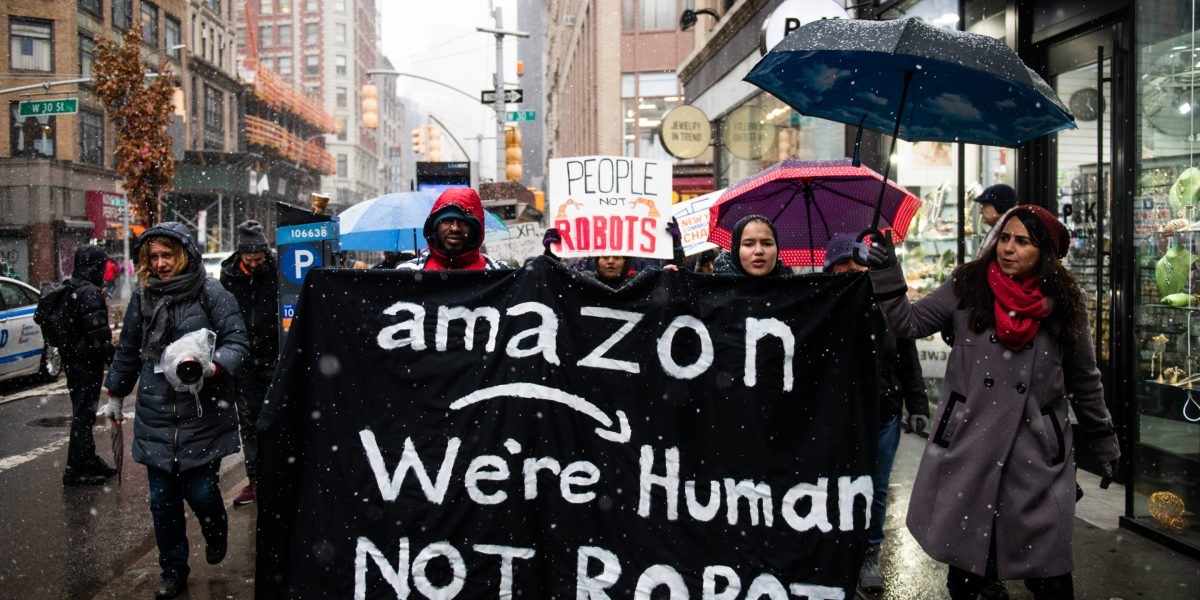
The clearest example is Amazon. A recent Government Accountability Office (GAO) report found that across the 11 states sampled, 12,346 Amazon workers were enrolled in the Supplemental Nutrition Assistance Program (SNAP) and 11,338 relied on Medicaid. That is nearly triple the number of Amazon employees needing federal assistance compared with 2020, when the GAO conducted a similar review. Over the same stretch, Amazon's annual profits climbed from $11.6 billion to $77.7 billion, and its 2025 revenue rose 12%, from $638 billion to a record $717 billion.
Amazon disputes the reading. Spokesperson Rachael Lighty told Fortune that the GAO conclusion is 'wrong' and that raw numbers are misleading without percentages. 'Amazon pay is among the best in the industry,' Lighty said, pointing to health coverage that starts on Day 1 and a 74% enrollment rate among regular full-time employees in an Amazon health plan, against a 65% private-sector take-up rate for full-time workers. Walmart and FedEx saw similar increases in workers taking federal assistance, as did ride-share and delivery companies.
Kathryn Larin, director for education, workforce, and income security issues at the GAO, told Fortune that most of the people using these programs are in the workforce, and most work full-time. SNAP eligibility sits at roughly 130% of the poverty line, which suggests that many of these workers still cannot cover basic needs despite holding jobs. 'These are families that are really barely able to make ends meet, and yet they are working, and they are working a lot,' Larin said.
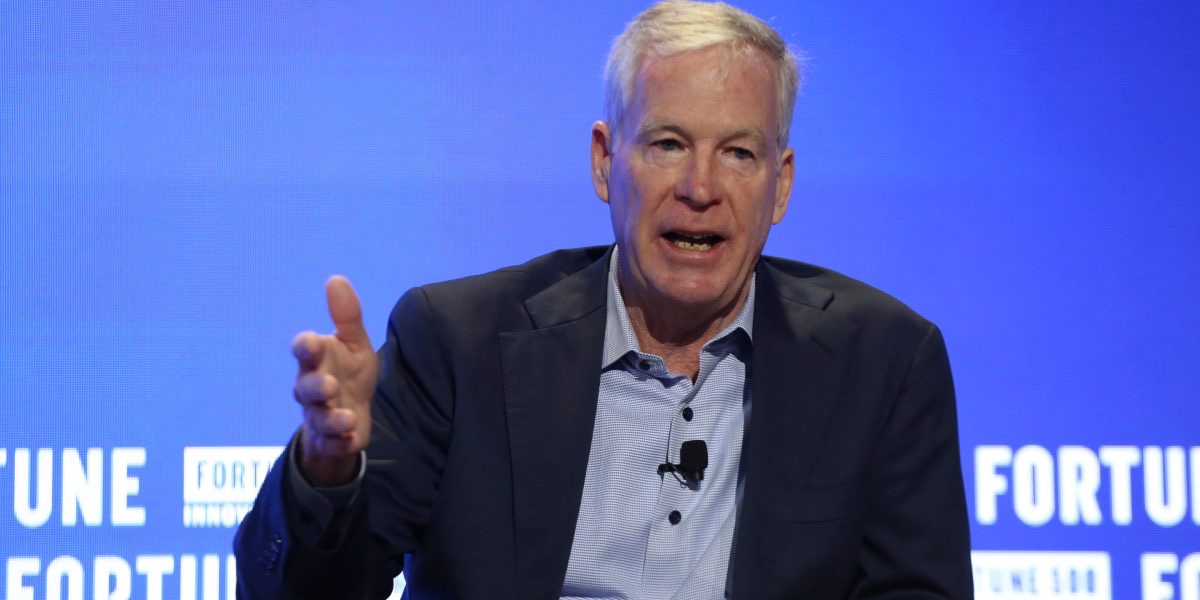
Diane Swonk, chief economist and managing director at KPMG, has warned that the trend hides an affordability crisis behind stable headline indicators. KPMG found that since 1982, corporate profits as a share of U.S. GDP rose from 8% to 15.85%, while employee compensation fell from 66.6% to 61.9%. Union membership has also declined, from 20.1% of U.S. workers in 1983 to 10.0% in 2025, according to MIT Sloan's Anna Stansbury, who points more directly to the 'fissuring' of the workplace. Companies increasingly hire gig workers and subcontractors for jobs once done by direct employees, a shift Stansbury says is most pronounced in lower middle-income roles.
The market rewards efficiency, and Amazon has built one of the most productive logistics operations on earth. But when a firm booking $717 billion in revenue needs its workforce supported by food stamps and Medicaid, taxpayers are effectively subsidizing the wage gap. Capital is compounding while the cost of thin paychecks is shifted onto public budgets. A free-enterprise economy works best when earnings and productivity move together, and this data suggests they have been decoupling for decades.