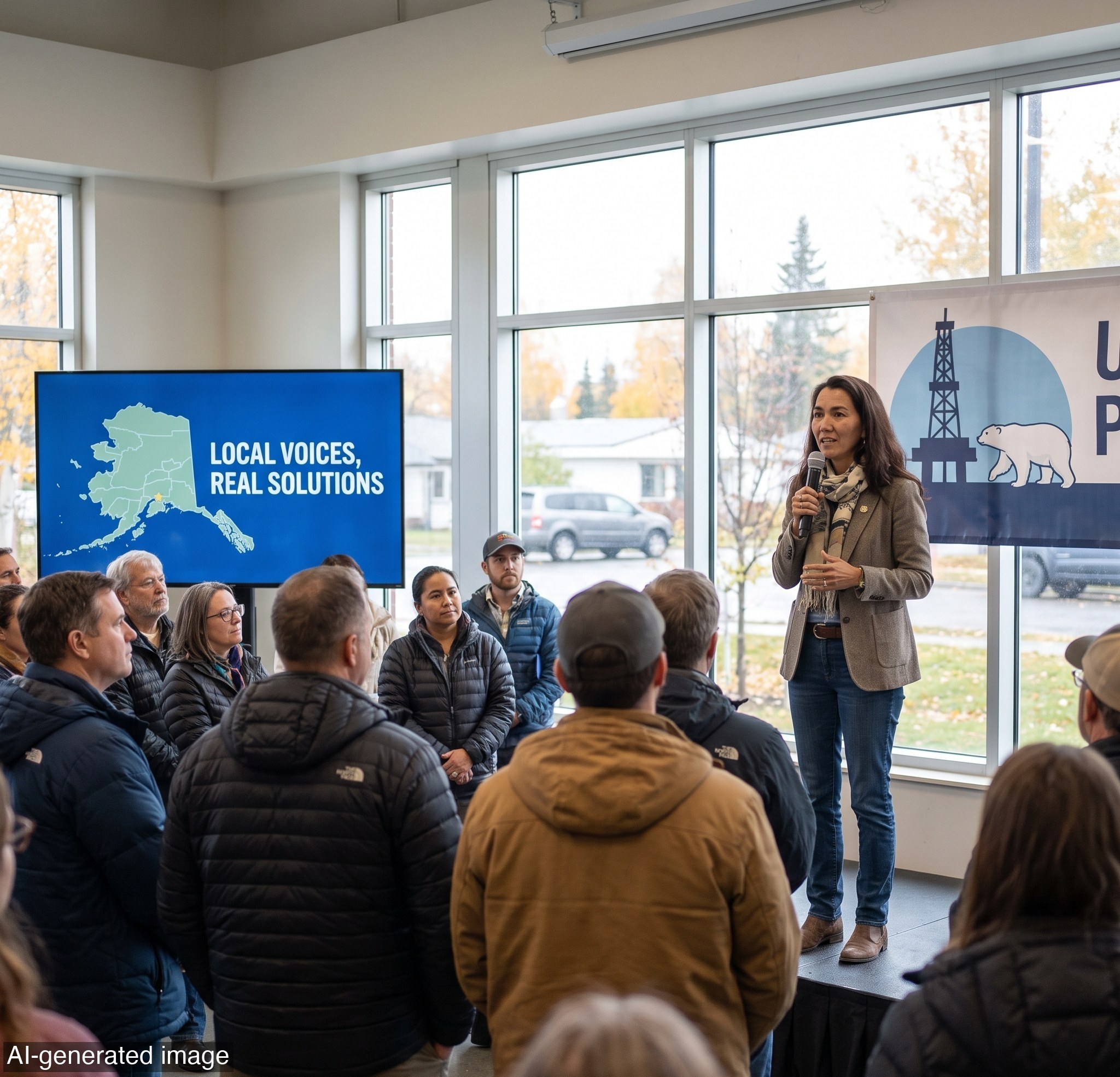
The 'Lower 48' insult has become a defining line in Alaska’s U.S. Senate race. In a state that prizes independence and distrusts outside control, the phrase is shorthand for candidates seen as taking orders from powerful forces in the contiguous United States instead of defending Alaska’s interests.
Republican Sen. Dan Sullivan has made that charge a central attack on Democrat Mary Peltola, a former congresswoman. His campaign has tied her to 'Lower 48 liberals' who opposed expanded oil and gas drilling in a state that has relied heavily on that industry for decades.
Peltola, an Alaska Native, has answered that she 'took on' then-President Joe Biden to help win approval in 2023 of the Willow oil project, which environmentalists strongly opposed. She has also said she will 'take on anyone, including Democrats — anyone in the Lower 48 who doesn’t understand what Alaska needs.'
The political backdrop is bigger than one campaign slogan. Alaska has long had a tense relationship with the federal government, which owns about 60% of the state’s land. Democratic administrations under Obama and Biden banned leasing on roughly half the National Petroleum Reserve-Alaska. Trump’s administration rolled back those restrictions and supported lease sales in the Arctic National Wildlife Refuge.
That clash has real economic consequences. Alaska communities have been hit hard by spikes in fuel prices caused by the Iran war, especially remote places that depend on fuel flown in or delivered by barge before rivers ice over. In Anaktuvuk Pass, Darryl Hugo said oil revenue is largely responsible for the town’s health clinic, school, police and fire departments and water system. 'My region’s economy depends on oil,' he said via a messaging app.
The issue goes beyond energy policy. State leaders have also fought Democratic efforts to limit road building and logging, including disputes over the Tongass National Forest that date to the Clinton administration. Alaska’s share of royalty revenue from oil and minerals on federal land remains another source of tension, with some lawmakers saying the state was promised more at statehood.
Oil production is still below its late-1980s peak, but political leaders point to signs of a turnaround, including strong interest in lease sales earlier this year for the petroleum reserve, home to the Willow project.
The market has already voted on what matters in Alaska: resource access, local control and the ability to convert land and energy policy into public services. When Washington tightens its grip, the taxpayer and local communities pay the price. When Alaska’s own economy gets room to work, the state’s clinics, schools and infrastructure do too.