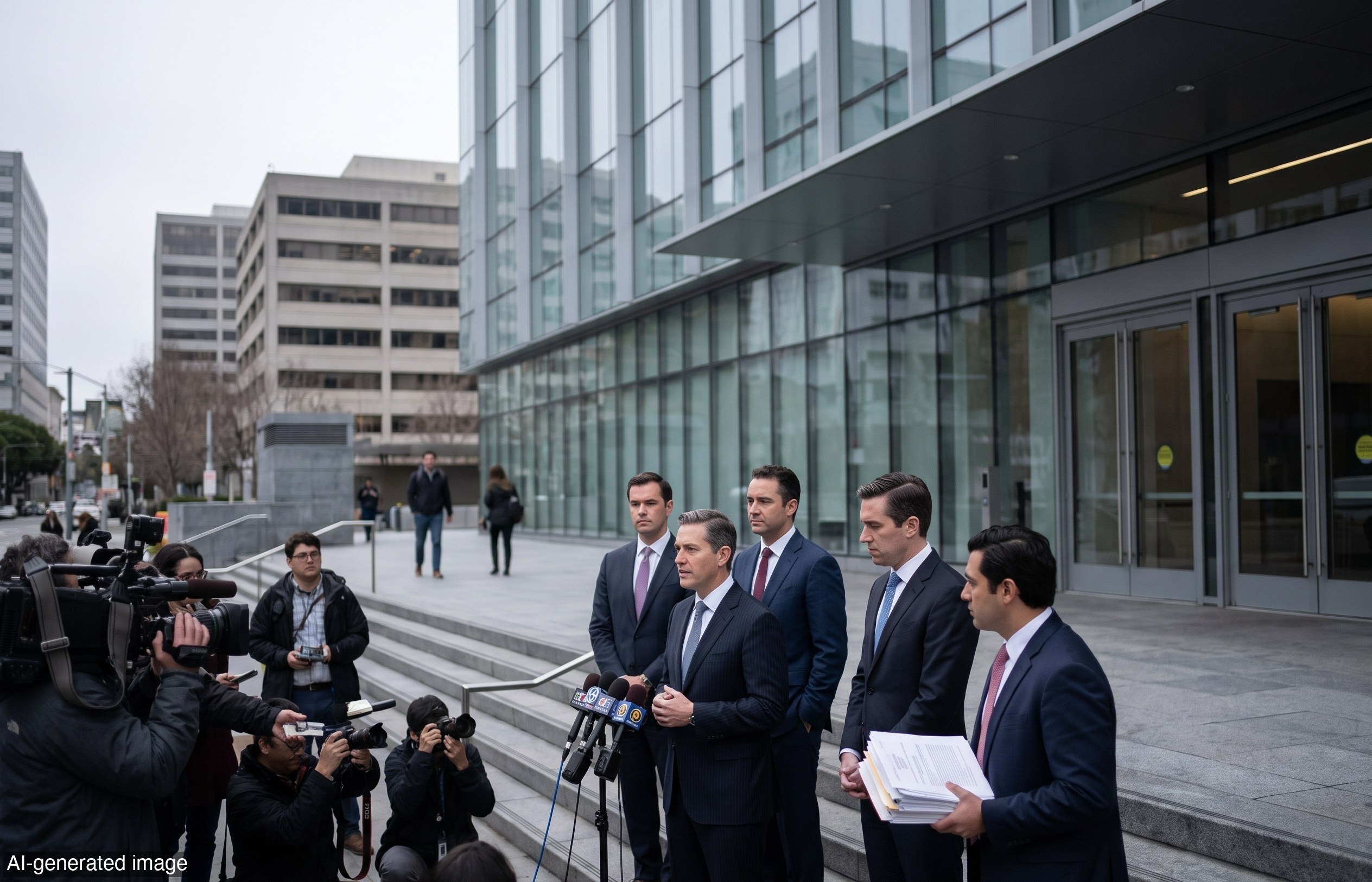
A new civil lawsuit filed Friday in the U.S. District Court for the Northern District of California claims Anthropic, OpenAI, SpaceXAI and Google violated antitrust laws by agreeing to slow the pace of artificial intelligence development.
The suit says the alleged coordination would reduce the value consumers receive from paid AI subscriptions. Lawyers representing four named plaintiffs, who pay for subscriptions to ChatGPT, Claude, Grok or Gemini, are bringing the case on behalf of a proposed nationwide class of other paid subscribers.
The complaint centers on a Sept. 12 essay by Anthropic CEO Dario Amodei. In that essay, Amodei urged industrywide cooperation on decelerating advances in favor of stronger safety measures and said the government could help mediate or enable cross-lab discussions. On the same day, OpenAI CEO Sam Altman, SpaceXAI CEO Elon Musk and Google DeepMind co-founder and chair Demis Hassabis publicly responded in agreement, according to the lawsuit.
The plaintiffs argue that an agreement among chief rivals to make progress 'slower than competition would otherwise produce' has an anticompetitive effect on consumers. Their lawyers say the antitrust laws do not permit competitors to decide among themselves that competition is too dangerous.
Nick Rowley, the lead attorney for the plaintiffs, said private self-serving agreements between the world's most powerful 'for profit' technology companies could make AI 'quickly spin out of human control.' He also said humanity deserves 'iron clad safeguards' and that the rule of law should be established transparently and lawfully by government, with accountability to the public.
Amodei said in his essay that he had become convinced that fully addressing the risks requires 'more prudence' and that companies must 'slow the pace' so risk prevention can keep up. In response, Altman said on social media that OpenAI welcomes the idea of a 'federal framework that sets consistent safety requirements,' but said the company does not believe it needs to wait for an antitrust exemption or legislation to begin that work.
President Donald Trump rejected calls for regulation and said efforts to limit the technology are part of a 'conspiracy.' He also questioned why industry leaders would seek rules that, if strongly implemented, would drive them into 'oblivion and bankruptcy.' Trump said Saturday that he is forming an AI task force and will appoint an 'AI czar,' while the Trump administration has said it wants American AI labs to outpace Chinese competition.
Sen. Josh Hawley, R-Mo., said in a Senate hearing that there is 'no world' in which he would agree to give the most powerful companies in the history of the world an antitrust exemption to collaborate, warning that they could stifle competition.
Capital rewards clear rules, not cartel behavior dressed up as safety. If rivals want Congress or the White House to write the guardrails, that is one debate. If they try to coordinate output and call it prudence, the market and the courts will treat it as something else.
The larger issue is simple: free enterprise depends on competition, and competition only works when the law protects it. Investors, subscribers and taxpayers all lose when an industry starts asking permission to slow itself down.