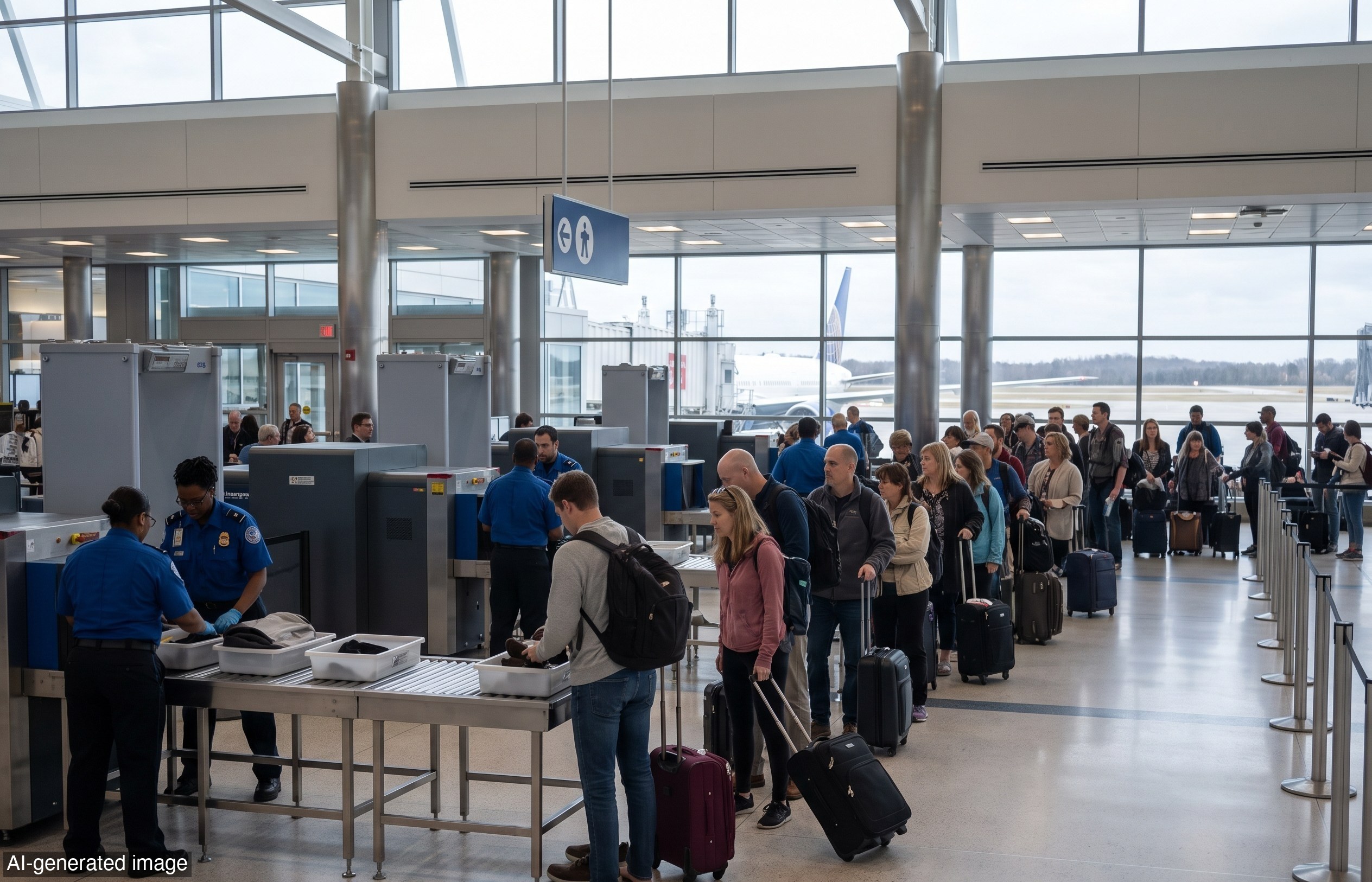
Nearly 25 years after 9/11, the basic experience of flying in the United States still reflects the shock of that morning. A commercial flight now generally requires a boarding pass to get near a gate, federal screening, and close attention to what is in a carry-on bag.
It was not always that way. Travelers once passed through checkpoints staffed by private contractors selected by airlines. Full-sized bottles of shampoo and cans of shaving cream were allowed. Friends and relatives could walk with departing passengers and share goodbye hugs at boarding time.
The modern system was built layer by layer after attacks and attempted attacks exposed weaknesses in commercial aviation. Those vulnerabilities ranged from bombs hidden in luggage to hijackers who turned airplanes into weapons.
No single day changed air travel more dramatically than Sept. 11, 2001, when 19 al-Qaida hijackers commandeered four commercial airplanes, crashed two into the World Trade Center, one into the Pentagon and another in a Pennsylvania field.
Before then, authorities assumed hijackers would try to negotiate, not deliberately crash a plane as part of an attack, according to Mary Schiavo, who served as the U.S. Department of Transportation’s inspector general from 1990 to 1996. 'The focus at the time, generally, was not on suicide attackers,' she said.
Federal officials moved quickly. The FAA immediately restricted gate access to ticketed passengers and banned knives and box cutters from carry-on bags. Congress then created the Transportation Security Administration, shifting responsibility for screening passengers, baggage and other cargo to a federal workforce.
That same November 2001 law required reinforced cockpit doors, more federal air marshals on flights and 100% screening of checked luggage for explosives. With lines and screening times getting longer, TSA later tried to move pre-vetted travelers through more efficiently using watchlist checks, voluntary background investigations and other information to sort passengers by assessed risk.
The system had already been changing for years before 9/11. Nearly 13 years earlier, a bomb destroyed Pan Am Flight 103 over Lockerbie, Scotland, killing all 259 people aboard and 11 people on the ground. Investigators determined that an explosive device hidden in a radio-cassette player had been inside a suitcase checked in Malta and transferred to the flight without an accompanying passenger.
Jane Garvey, a former FAA Administrator, told the 9/11 Commission in 2003 that the Dec. 21, 1988, attack 'stimulated the most significant changes in aviation security since the early 1970s.' After that, the FAA ordered U.S. carriers at airports in Europe and the Middle East to X-ray or physically search all checked baggage, conduct additional random checks and confirm that checked bags belonged to flying passengers.
The result is a flying experience that is safer but also more centralized, more intrusive and more dependent on federal rules. Capital rewards clear rules, but passengers pay in time, convenience and privacy when security becomes another permanent function of the administrative state.
The lesson is simple. Terror forced aviation security to become a public monopoly of suspicion, and Americans have lived with the costs ever since. The market did not design this system; government did, step by step, after each failure made the next layer unavoidable.