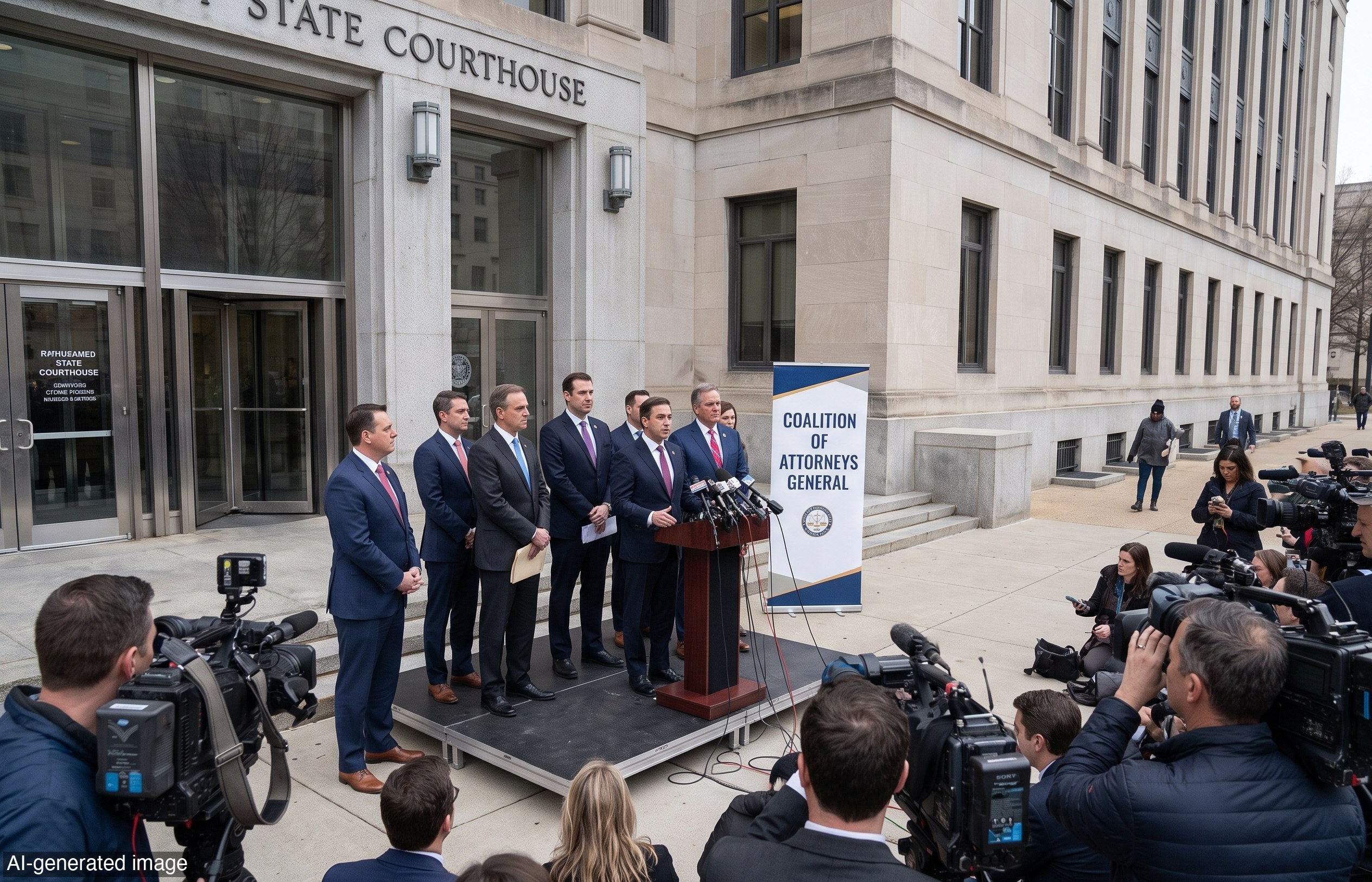
Eight states filed separate lawsuits against OpenAI on Wednesday, accusing the company of violating state consumer protection laws.
The states named in the filings are Iowa, Kansas, Nebraska, West Virginia, Arkansas, Arizona, Idaho and Montana, according to the reports. Four attorneys general stood together at a news conference to announce the action: Iowa’s Brenna Bird, Kansas’s Kris Kobach, Nebraska’s Mike Hilgers and West Virginia’s JB McCuskey.
The lawsuits say OpenAI told parents that ChatGPT was safe while the product was causing harm to children. The allegations include coaching users toward suicide, helping users harm others, and giving dangerous medical advice. One case cited in the filings involves a Texas teenager who died from an overdose after what the suits call dangerous guidance from the chatbot.
Arizona’s lawsuit also says ChatGPT encourages teens to share personal information and, at times, discourages them from sharing that information with parents, authorities or friends. The filings further claim OpenAI failed to stop rogue AI agents from illegally hacking into other companies.
Bird said, 'OpenAI, they wanted to be the first to market. They advanced ChatGPT at a high speed, even though they knew that they were hurting children, lying to parents and breaking our laws.' She also described the coalition as 'a united front against companies that make money hurting our kids and breaking our laws.'
Kobach said coordinated multistate actions are rare and usually reserved for cases like opioid and tobacco litigation or constitutional fights with a presidential administration. He said, 'But usually, you don’t see us getting together to announce the lawsuit unless it’s really, really important.' He also criticized Congress for sitting on AI oversight and answered 'Regulating AI' when asked what could address the issue federally.
OpenAI spokesperson Drew Pusateri said the company has 'built industry-leading age-specific protections into our product that many other AI products lack.' He said the company will continue to work with experts and add safeguards such as parental controls, break reminders and age-appropriate model protections. He also said OpenAI is 'committed to working with states on advancing pragmatic AI policies that apply to the entire AI industry, not just one company.'
OpenAI said ChatGPT is intended for users age 13 and older, and users under 18 need permission from a parent or guardian. The company also said the teen model has safeguards designed to reduce exposure to self-harm, violence, eating disorders and explicit sexual or graphic content.
The market has already voted on the bigger issue here: when a product reaches one billion global monthly active app users, the stakes move beyond hype and into accountability. Capital rewards speed, but the taxpayer and the family pay when rules lag behind the technology.
That is why these lawsuits matter. If the claims hold up, this is not just a fight over one chatbot. It is a test of whether free enterprise can survive without a basic duty to protect children, tell the truth to parents, and respect the law.



