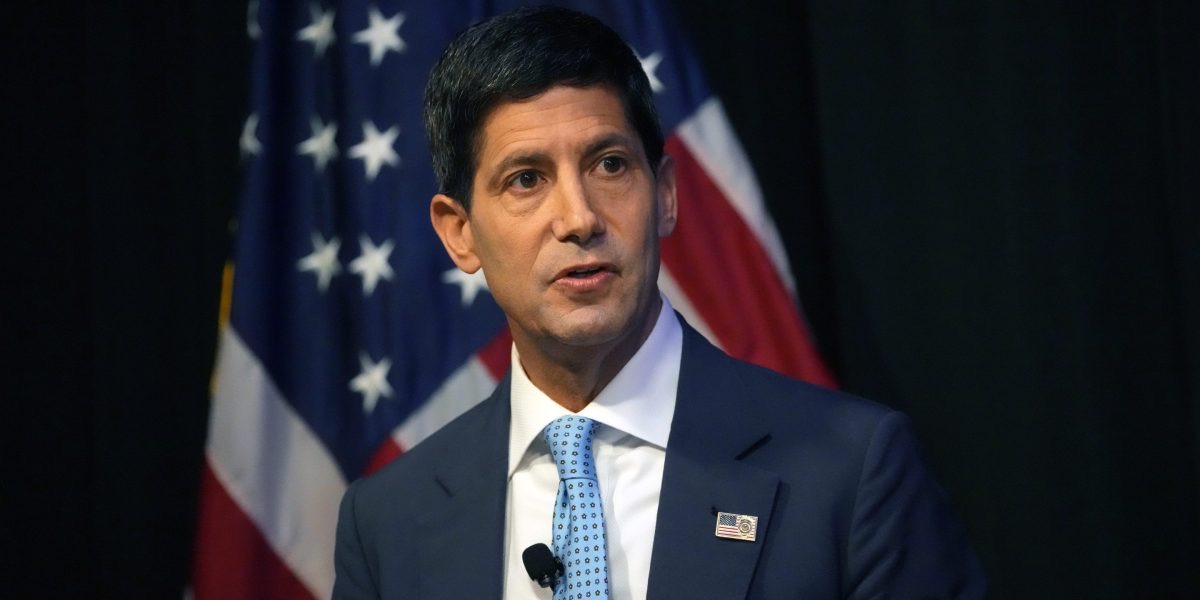
The Federal Reserve is no longer content to wait on the sidelines for artificial intelligence. Speaking in San Francisco at the Productivity and Jobs Task Force Conference, Fed chairman Kevin Warsh said the central bank's staff has begun to evaluate a range of contingencies using stylized, model-based frameworks. In his words, these are 'illustrative scenarios, not forecasts,' and he added that 'many other outcomes—probably including one that will prove most accurate—could be drawn.'
The Fed already publishes data on AI adoption by firm size and on the economic effect of AI-related investment, so the research itself is not new. What is new is the attempt to map what outcomes may look like rather than simply track current trends. Warsh laid out several risks. Super intelligence, as he called it, 'empowers all, including bad actors,' which is why he said the staff is thinking especially about critical infrastructure and its potential vulnerabilities. He also flagged that widespread automation could raise unemployment, and that AI could 'disappoint' if expected returns fail to materialize, bringing on an economic slowdown.
The upside he described is substantial. In his telling, productivity gains shared across labor and the owners of capital would push real GDP growth persistently above its long-run average while the economy stayed close to full employment. Warsh was careful to frame the exercise as preparedness rather than a response to an immediate policy question. 'While I'm not here to offer predictions,' he said, 'I'm not exactly impartial about American leadership in a time so filled with both challenge and possibility.' He also pointed to the goal of a dynamic economy for future generations and 'human flourishing.'
Wall Street has long treated scenario planning as routine. Warsh himself is a former Morgan Stanley vice president and executive director. Fortune reported that JPMorgan set up a war room in January of last year after President Trump's re-election to evaluate the policies he had promised on the campaign trail, and that Bank of America and Citigroup reportedly built similar internal functions for investors. AlixPartners co-CEO David Garfield told Fortune that his firm was helping major companies in every industry build tariff war rooms to respond to a shifting policy landscape.
The Fed's role here deserves scrutiny. Central bank staff modeling the economic consequences of a technology that is still reshaping markets is a useful exercise, but it is also a reminder of how much attention the institution now gives to forecasting outcomes it does not control. Private firms that run these scenarios do so with their own capital at risk and must reprice quickly when the models miss. Public institutions spend other people's money and face fewer consequences when their scenarios fail.
The principle at stake is simple. Productivity gains come from private investment, competition and clear rules, not from official frameworks that try to anticipate the next wave of technology. If AI delivers the boom Warsh describes, it will be because capital and entrepreneurs built it. The taxpayer should be wary of any institution that treats its own scenario planning as a substitute for that process.