The U.S. proposed tighter export controls on AI hardware on Monday, requiring licenses for firms that want to ship advanced chips to Singapore, Malaysia, Thailand and Indonesia.
The new rule also would require large data centers anywhere in the world to get a license if they want to offer computing power to companies based in China.
The move comes days after reports of Nvidia CEO Jensen Huang's ties to Megaspeed, a cloud computing firm that allegedly funneled over $7.5 billion of Nvidia chip shipments to Chinese firms through regional subsidiaries. Megaspeed says it is cooperating with U.S. inspections and denies wrongdoing.
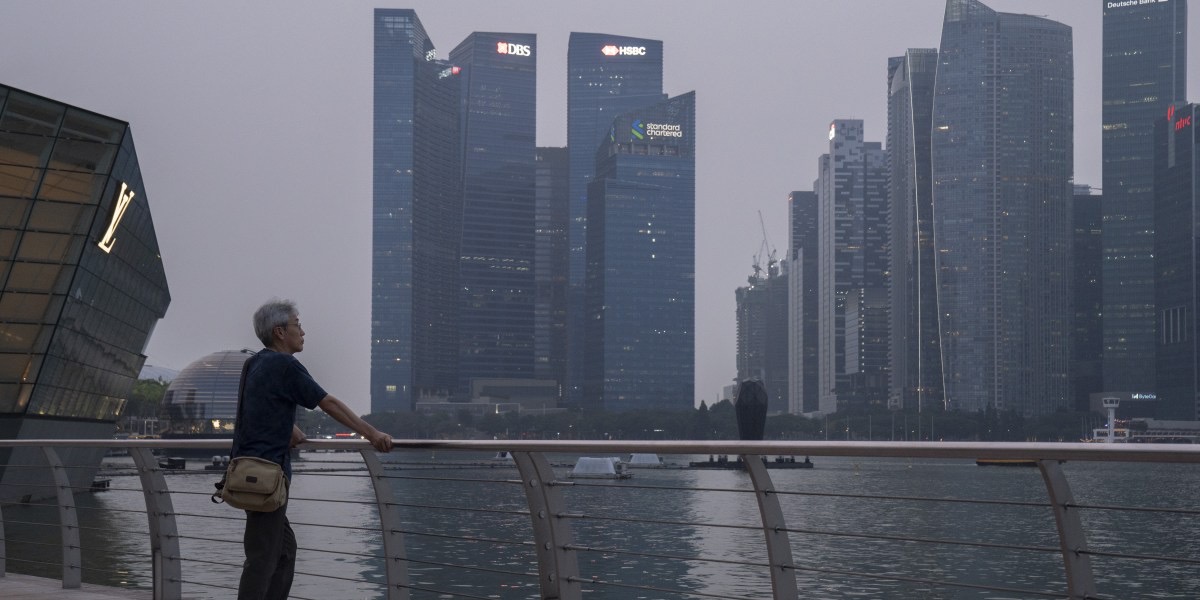
Singapore, where Megaspeed is headquartered, moved quickly to defend its standing. A government spokesperson said Singapore is 'a trusted international business hub, underpinned by a strong rule of law.' The spokesperson added: 'We take our international reputation seriously and do not condone companies using their association with Singapore to circumvent or violate the laws of other countries.'
The country said it is engaging U.S. authorities to review details of the new measure and working with affected companies to understand the potential impact on their businesses.
Elsewhere in the region, officials signaled caution and compliance. Thailand Vice Minister for Commerce Kirida Bhaopichitr told CNBC that the country was 'prepared' for the new rule. 'We don't want to be a hub for transshipment of these goods from the U.S. to China, so we'll more closely scrutinize these companies, especially data centers,' she said.
Indonesia said it is reviewing the rule and 'seeking industry input on its potential impact on operations and investment, including in the data centre sector,' according to an AFP report.
Malaysia and Indonesia have also stepped up efforts to curb chip smuggling. Indonesian officials raided the office of PT Megaspeed International Indonesia earlier this year as part of an inquiry requested by the U.S. FBI to trace Nvidia chips bought by Megaspeed. A Nov. 16 report by Singapore newspaper The Straits Times said inspectors found unused server racks with missing graphics processing units, suggesting the chips were never installed there.
Malaysia's Ministry of Investment, Trade and Industry said on Nov. 13 that it was checking with customs officials to determine whether any chips brought into Malaysia had since been re-exported, and whether they were in accordance with the law.
Data center operators in Southeast Asia are still trying to work out what the rule means for their business. Serene Nah, the APAC head of Digital Realty, said it is 'still an interim rule' and said details are not out yet.
Chris Sharp, Digital Realty's chief technology officer, said 'AI is pervasive' and pointed to financial services and healthcare as key customers in the region. He said businesses want the full benefit of AI capabilities without exposing their infrastructure publicly or routing data over the internet.
For free enterprise, the episode is another reminder that capital follows certainty, but it also flees opacity. When chip flows, data centers and cross-border licensing are under scrutiny, the winners are the firms that can prove compliance and the governments that can enforce rules without smothering investment. Singapore's challenge is to keep its reputation intact while the market recalculates risk.