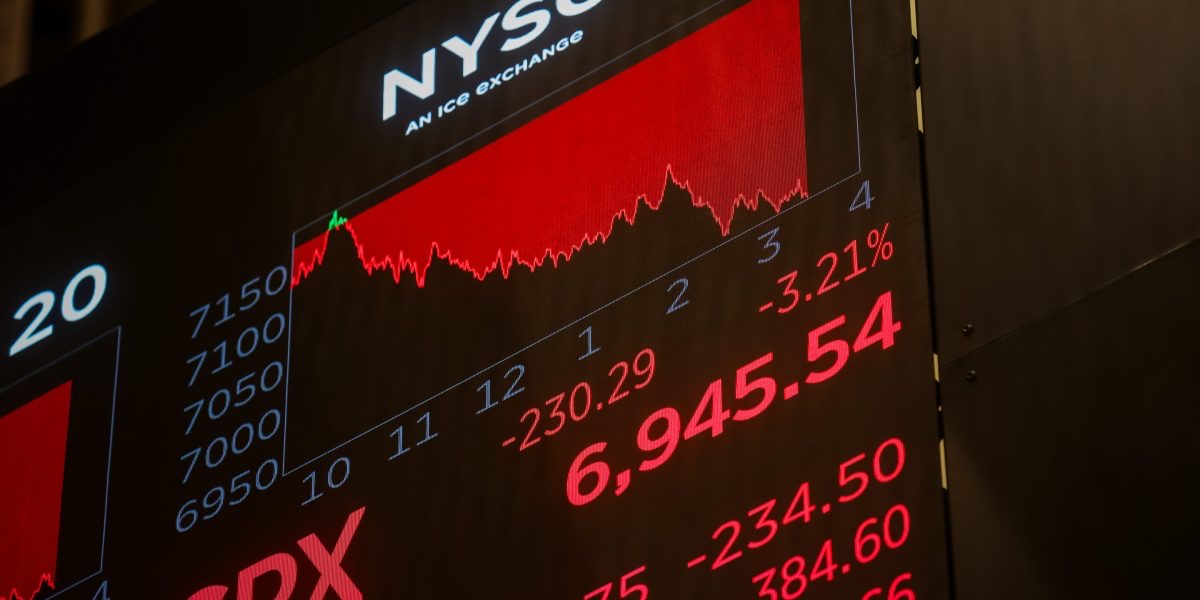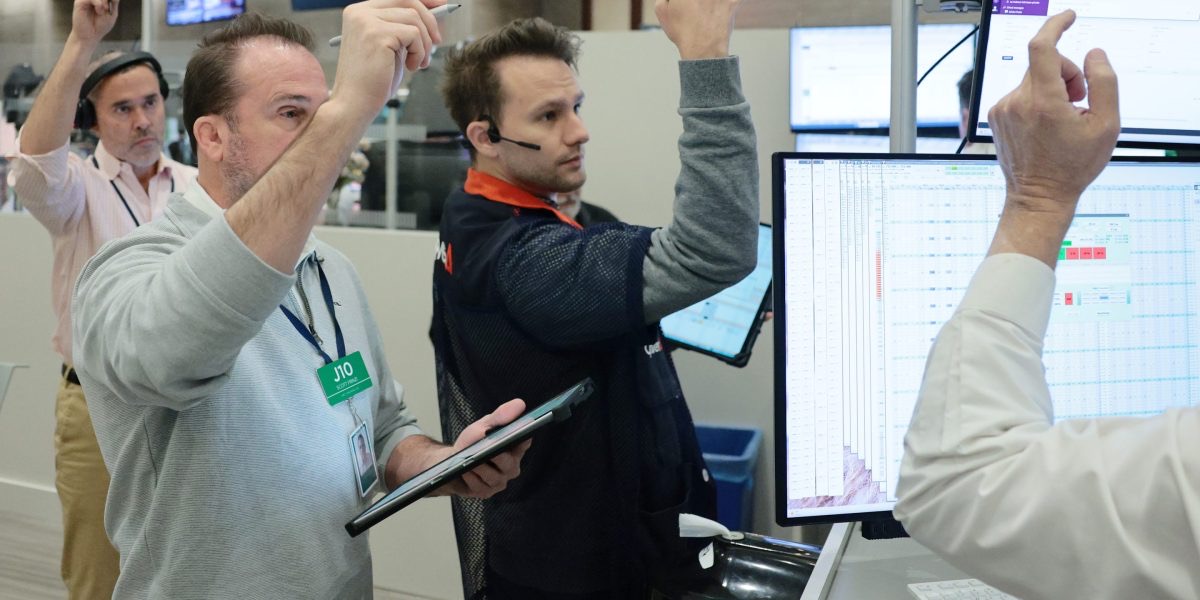
The Dow Jones Industrial Average and the S&P 500 both joined the Nasdaq in correction territory as AI stocks plunged further. Even so, Wall Street is already publishing its forecasts for 2027, and most of them point up.
This week's selloff marked the worst weekly loss since the early days of the COVID-19 pandemic. Many analysts, however, dismissed it as driven more by emotion than by fundamentals. Viktor Shvets, head of global desk strategy at Macquarie Capital, said in a note Friday that 'today's panic does not feel like an AI bust.' Michael Monaghan, portfolio manager and partner at Founder ETFs, said the market is 'selling first and asking questions later.' Jamie Cox, managing partner for Harris Financial Group, predicted investors will 'return to rationality.'
The forecasts themselves are concrete. Morgan Stanley chief U.S. equity strategist Michael Wilson said the S&P 500 would finish 2027 at 8,700, a 26% jump from current levels and a 15% rally from when he made the call. Goldman Sachs also sees the index reaching 8,700 next year, 'albeit with higher volatility than in recent years.' Peter Oppenheimer, the bank's chief global equity strategist, said corporate earnings growth will slow, while inflation, bond yields and oil prices moderate. 'We expect the equity bull market to continue,' he said.
Others are more cautious. UBS Global Wealth Management put the S&P 500 at 8,200 next year, implying 19% upside from Friday's close. The bank warned that 'cannibalization, financing, and execution risks around AI have increased while expectations and index concentration remain high,' and that the market is more sensitive to earnings disappointment or a further rise in discount rates. Wells Fargo's 2027 outlook is also 8,200, assuming slower profit growth.
The most aggressive call came from Steve Chiavarone, chief investment officer for equities at Federated Hermes, who sees the index at 10,000 by year-end, a 45% surge from current levels. He brushed aside this month's midterm elections, in which Democrats swept Congress and several state capitals. Wall Street fears a Democratic Congress will slow the AI infrastructure boom, but Chiavarone argued the risks are overblown. 'A modest pullback in the data center buildout could give cash flows time to catch up, easing inflation pressures and making the investment boom more sustainable,' he said.
The Federal Reserve remains the central variable. Policymakers have grown more hawkish as inflation has exceeded their 2% target for over five years, and Wall Street sees more tightening in the coming months. Some analysts still expect rate cuts later in 2027 as inflation cools, but that assumes the Iran war ends sometime next year.
Gaurav Mallik, chief investment officer at Modera Wealth Management, described the slide as a 'garden variety correction,' with leadership rotating from tech to industrials and financials. 'Multiples are shrinking, and total returns are a function of earnings growth, which so far looks robust for 2027,' he said.
The market has already voted on what it fears, and the forecasts show where the money expects to go next. Capital rewards clear rules and predictable profits. The real test for 2027 will be whether AI spending keeps producing earnings, and whether the Fed stops tightening before the cost of money erodes the margins that justify these valuations.
For the investor, the lesson is not to chase the headline number. Strategists disagree by more than 1,800 points on the same index, which is a reminder that a forecast is an opinion with a price tag. Discipline, diversification and attention to earnings remain the best defense against a market that is, for now, selling first and asking questions later.