The numbers come first. U.S. startups have raised $42 billion in Series A funding this year through October, a 60% increase from a year earlier, according to Crunchbase data. The headline total looks like a boom. The deal count tells a different story.
From 2023 through 2025, the annual number of Series A rounds at $1 million or more averaged 1,200. Roughly the same pattern has held in 2026, give or take 100 deals. Dollars have soared, almost doubling compared with 2023, but the number of companies receiving that capital has not kept pace.
Roseanne Wincek, co-founder of Renegade Partners, an early-stage investment firm, put the shift in plain terms. 'Today, a $25 to $50 million Series A is not that high,' she told Fortune. 'When I started in venture, that was a large C or D.' Startups now cost more to run, and investors expect them to be further along before they write a check.
The capital itself is abundant. Wincek noted that 'the supply of capital has never been larger,' and that for multi-stage firms the gap between writing a $10 million check and a $50 million check is 'pretty de minimis.' Abundant money, however, does not mean cheap money. Compute costs have climbed because AI adoption is straining supply, and Gartner reported in October that data center demand had more than doubled the price of memory over the past 12 months. Talent is expensive too, with founders back in San Francisco competing hard for engineers.
The bar has moved up as well. 'I think that everything has just shifted up, but the bars are higher,' Wincek said. A founder who once reached $1 million in annual recurring revenue could raise a Series A. Today, she said, that same figure 'probably' gets a founder a decent seed round.
The exception is the founder with a famous résumé. Wincek described 'ultra-pedigree founders coming out of the gate and raising very large rounds with a deck and nothing else.' Mirendil's co-founders, Behnam Neyshabur and Harsh Mehta, previously worked at Google and Anthropic, and TypeSafe AI's co-founders include former OpenAI researcher Diogo Almeida and former Meta research engineer Sasha Sheng. Mirendil raised $1 billion last week, and TypeSafe AI pulled in $870 million in October.
For the taxpayer, this matters only indirectly, but for free enterprise it matters a great deal. Capital that concentrates in a small circle of proven names is capital not flowing to the garage-stage builder with a sound idea and no famous employer. Concentration can look like strength in a headline, yet it narrows the field of winners. A market that rewards clear results should reward the founder who earns traction, not only the one who arrives with a pedigree.
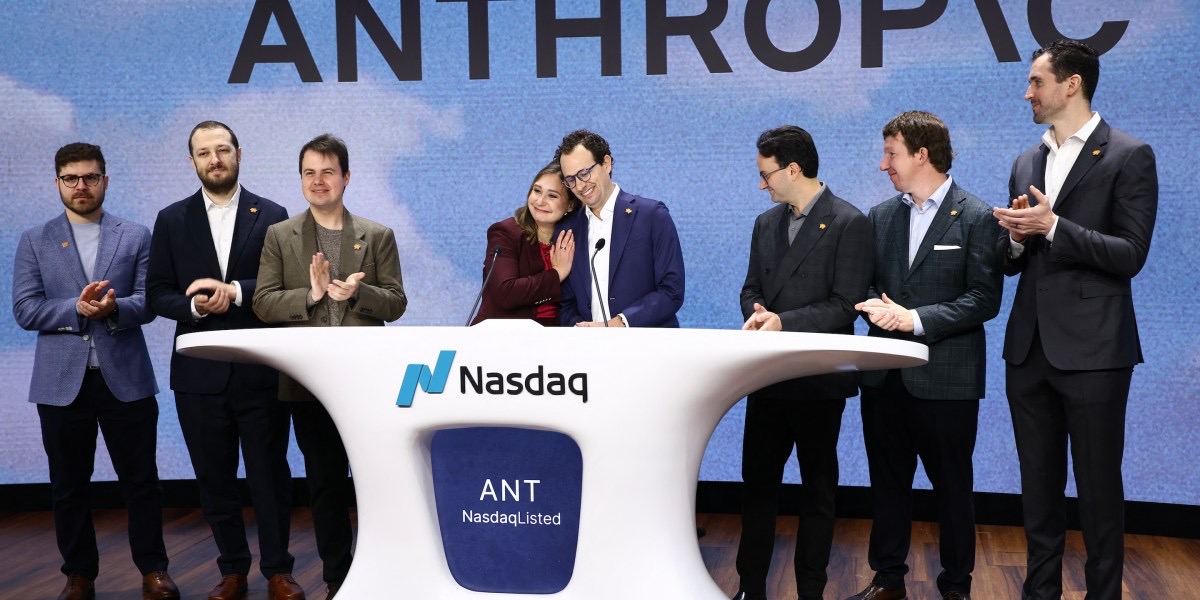
The AI boom explains much of this, and it will face a test as Anthropic goes public. Private-market enthusiasm is about to meet public-market scrutiny. Capital rewards clear rules and clear numbers, and the founders who can show revenue, margins and product-market fit will be the ones best positioned when that reckoning arrives.