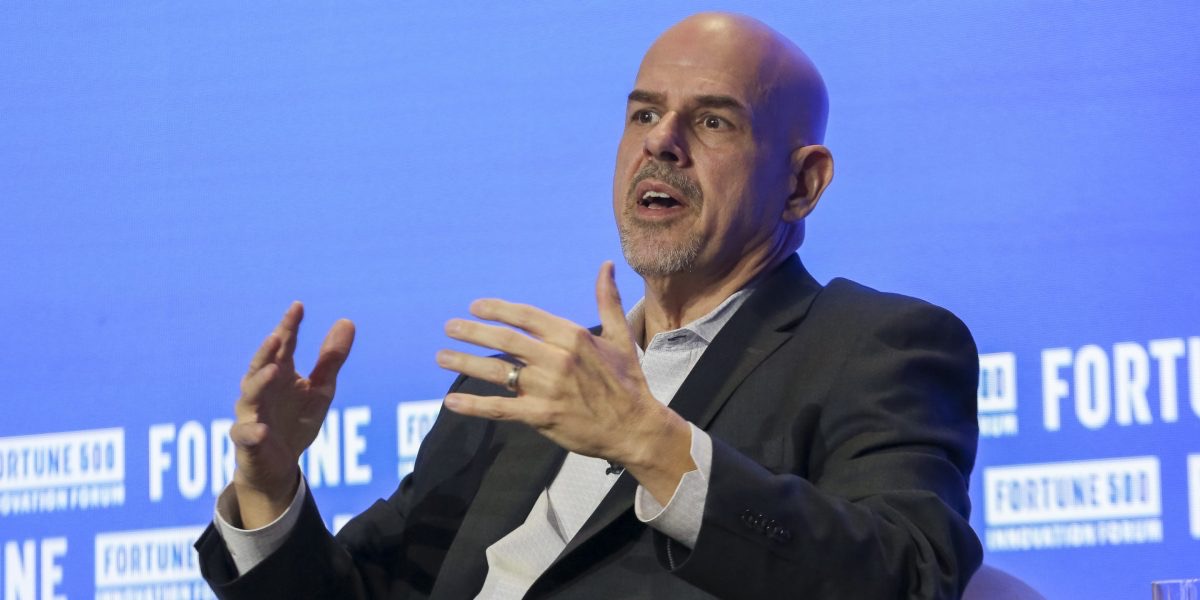
Infrastructure was the recurring theme at this week's Fortune 500 Innovation Forum in Detroit, and not only the physical kind. Executives spoke about the wires, data centers and factories that keep the economy running, and about the policies and trust that make building them possible.
The most pointed admission came from Oracle co-CEO Mike Sicilia. According to Sicilia, the tech industry made a 'classic mistake' in how it sold data centers to the towns asked to host them, by 'flying people in to say, I'm from HQ, and I'm here to help.' His verdict was blunt: 'That's not how we're gonna win hearts and minds.' The backlash is not abstract. People voted overwhelmingly against data center development in local ballot contests.
The other physical diagnoses were just as practical. Honeywell CEO Vimal Kapur blamed decades of layered automation, saying 'humans are not able to keep up with it.' Delta CEO Ed Bastian attributed Friday's ground stop to 'a combination of faulty equipment, coupled with human error.' Kraft Heinz CEO Steve Cahillane said the company needs to 'be hyperlocal' in its supply chains, building in redundancy amid tariffs and local tastes, adding that 'Brand America is not as strong as it once was.'
On policy, the message was that Washington has tough problems to solve. Sen. John Hickenlooper (D-Colo.) told Fortune the midterms were 'more of a to-do list, almost an audition' than a mandate for Democrats. Michigan Governor-elect Jocelyn Benson said she hopes to work with Trump on tariffs on Canadian imports, which she says have cost the average Michigan household $5,600. Neil Bradley of the U.S. Chamber of Commerce warned that the affordability crisis may prompt a political push for damaging price controls.
The market backdrop is sober. S&P 500 futures were down 0.37% in early trading after the last session closed down 1.92%, and Asian markets fell as the United States imposed new restrictions on China's access to chips. Nvidia is expected to report $109.3 billion in quarterly revenue, up about 92% from a year earlier, in its first earnings report under interim CEO Colette Kress. Goldman Sachs expects layoffs to remain low through 2027.
The frame here is simple. Data centers are a capital project, and capital goes where the host community consents and the rules are clear. Sicilia's point is that a polished visit from headquarters cannot substitute for local accountability and a fair share of the benefits. Democrats now face pressure over electricity costs and water use, and one option on the table is state rules requiring companies to pay for the grid upgrades they need rather than passing those costs to households.
That is the free-market answer, and it is the right one. When the builder pays for the power it consumes, the taxpayer and the household are not drafted into subsidizing someone else's growth. Infrastructure that earns local trust gets built; infrastructure imposed by distant executives and distant regulators gets voted down at the ballot box. The industry's mistake was not ambition. It was forgetting that the people who must live beside the wires and servers have a say, and that a project without their consent is a project without a future.



