The numbers come first. The UAE unveiled plans in May 2025 for a 5-GW joint AI Campus in Abu Dhabi, which would be the largest facility of its kind outside the United States. At its core is Stargate UAE, a 1-GW computing cluster developed by Abu Dhabi-backed G42 in partnership with a group of U.S. companies, including Nvidia, which will supply its Grace Blackwell chips (GB300s).
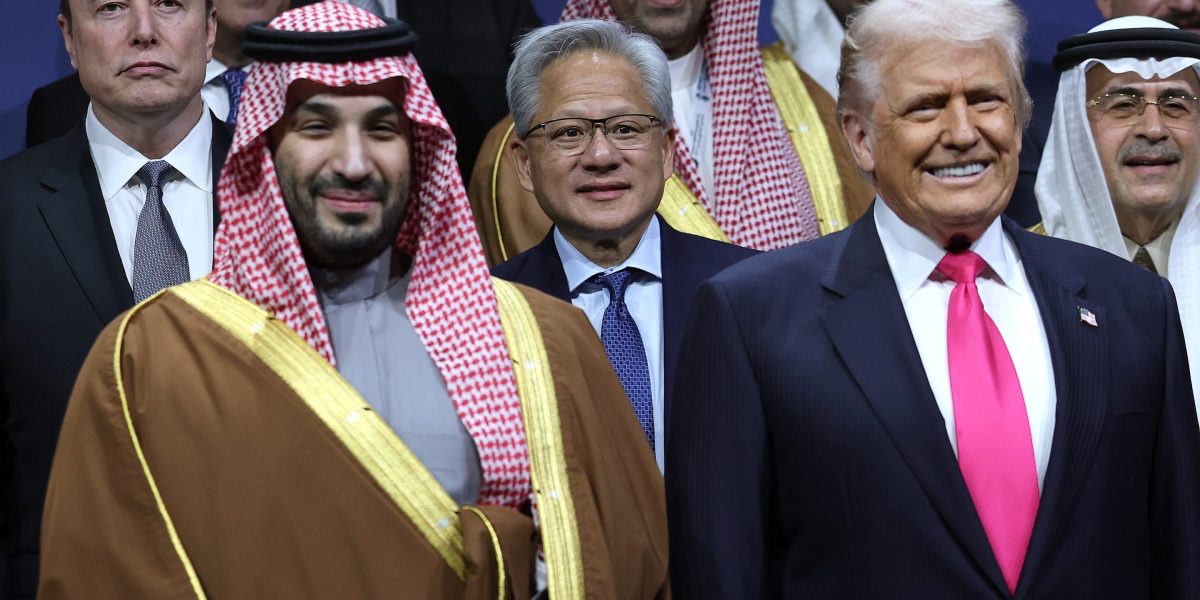
Saudi Arabia has built a similar commercial relationship. During the visit of Saudi Crown Prince Mohammed bin Salman to the White House last November, Elon Musk announced a 500-MW data center in partnership with the Saudi government-backed AI company Humain, to be powered by Nvidia chips. The same day, the U.S. Commerce Department authorized the export of up to 35,000 Nvidia Blackwell GB300 chips to both G42 and Humain. Humain said it planned to purchase 600,000 Nvidia AI chips.
The deepening continued last month, when Humain and Nvidia announced plans to deploy around 27,000 GPUs and develop up to 84 MW of AI computing capacity in the kingdom, beginning in the fourth quarter of this year and followed by large-scale deployments from mid-2027.
The market has already voted on the reliability of these deals. Mohammed Soliman, senior fellow at the Middle East Institute, described the relationship as 'pretty solid and institutional at this point,' noting that the G42 and Humain agreements 'sit on government-to-government agreements that were already in place.' He added: 'Jensen matters a lot and his leaving will have an impact.'
Sam Winter-Levy, senior fellow at the Carnegie Endowment for International Peace, expects Nvidia to become more circumspect. 'Huang was the public face of Nvidia's sovereign AI pitch and had his own relationships with Gulf leaders, which will be hard to replace quickly,' she said, according to the report. She expects existing contracts to be honored, 'probably with more attention to compliance and things like end-use checks, but to make fewer splashy announcements of new deals.'
In July, Washington relaxed export restrictions on the UAE, granting approved organizations greater access to Nvidia chips and other advanced technologies. Yet the upheaval has handed U.S. lawmakers fresh ammunition. Senate Democratic leader Chuck Schumer urged Congress to pass a series of chip-control bills, including the AI Overwatch Act, the Chip Security Act and the MATCH Act, while House Select Committee on China Chairman John Moolenaar called for chip export controls in the annual defense policy bill, the National Defense Authorization Act.
Capital rewards clear rules. Winter-Levy noted that export licenses sit with the executive branch, which has already removed many of the license requirements that slowed chip deliveries to the UAE. Congress, however, can still raise the political cost of new Gulf deals by attaching conditions such as chip location verification, a method used to track where advanced processors physically sit so they are not diverted to restricted countries.
The report also notes that the Bureau of Industry and Security issued an interim rule requiring licenses to export, reexport or transfer advanced chips, though the full text of that rule was cut off in the source.
For the Gulf, the risk is less about Nvidia's balance sheet than about regulation. Each new license condition and each congressional add-on is a cost borne by the investors and governments building these campuses, and ultimately by the taxpayers who underwrite the public side of these partnerships. Free enterprise works best when the rules are stable and written in advance. A chip policy that shifts with each news cycle, and that now answers to a politicized Congress as much as to the Commerce Department, makes long-horizon capital more expensive. The Gulf's ambitions may survive the turmoil, but the price of building them is rising.