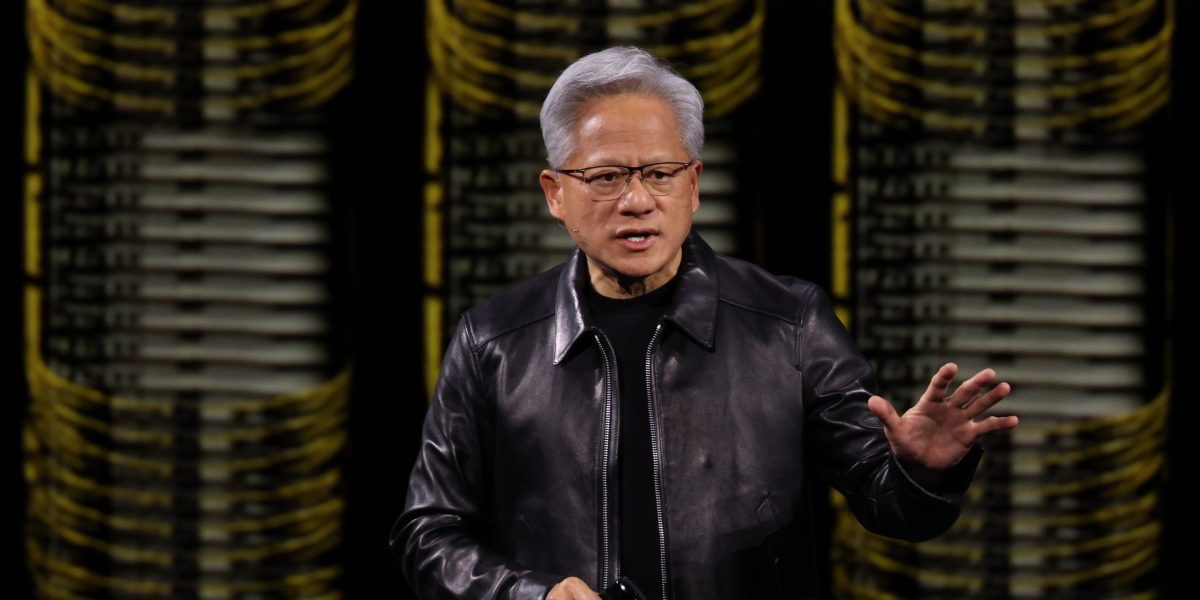
Nvidia's latest earnings release gave investors a clear answer on one question: the company does not need Jensen Huang to remain a powerful American champion. Interim CEO Colette Kress raised forecasts and ran the earnings call with what the Yale authors describe as command, presence and candor. New board chair Harvey Jones, according to the same account, closed the door on Huang's return even as the SEC is now probing Huang and Nvidia.
The numbers come first, and they point away from the cult of the indispensable executive. The business is worth more than any one person, and Kress's guidance showed it. But the authors insist the episode exposes a deeper problem that should concern every shareholder: the failure of board oversight.
Jeffrey Sonnenfeld, Steven Tian and Stephen Henriques of the Yale School of Management and the Yale Chief Executive Leadership Institute argue that both camps in the debate have missed the point. Tech enthusiasts have campaigned for Huang's return and blamed a 'woke' management culture for his exit, while ignoring the investigations into his conduct, including what the authors call blatant violations of Nvidia's code of conduct and unresolved national security concerns. Telegram founder Pavel Durov wrote on X, 'Jensen made a rookie mistake. He had a board,' a line the authors say forgets that executives entrusted with other people's money owe a fiduciary duty to shareholders above their own self-enrichment.
The governance establishment has its own failings, according to the authors. Charlie Elson of the University of Delaware blamed dual-class shares, even though Nvidia has a single-class stock structure. Richard LeBlanc of York University proposed an independent chair, although Nvidia already had an independent lead director, Stephen Neal, a former CEO of the Cooley law firm. The authors call these prescriptions irrelevant clichés drawn from a playbook that ISS and Glass Lewis have preached for decades: split the chair and CEO roles, add independent directors, count committees and tally diversity.
For the free-enterprise reader, the lesson is less about paperwork than about judgment and consequences. Boards exist to protect the owners of capital from executives who put their own interests first. Mechanical rules cannot substitute for directors willing to confront a powerful founder, and mandates cannot manufacture that backbone. When oversight fails, the cost falls on shareholders, employees and the pension funds and retirees who hold the stock.
The Nvidia episode should be a warning to every corporate board. Capital rewards clear accountability, and markets punish boards that look away. Shareholders should demand directors who ask hard questions about conduct, not those who simply tick boxes on a governance scorecard. Real stewardship of other people's money, not ritual compliance, is what protects the enterprise that made Nvidia valuable in the first place.