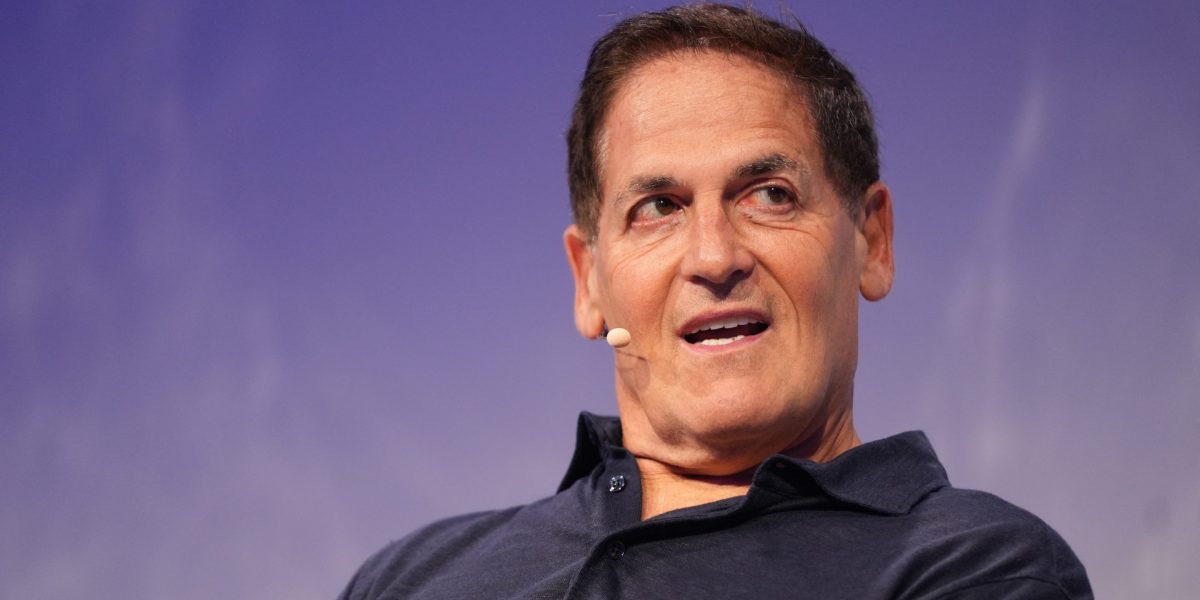
The numbers come first. Mark Cuban went seven years without a vacation while starting his first business, learning new software details late into the night, until he sold it for $6 million. According to Fortune, he is now worth more than $10 billion. Jeff Bezos worked 12-hour days, seven days a week, in the early days of Amazon, staying up until 3 a.m. to fulfill orders. Fortune reports his net worth at $367 billion, making him the second-richest person in the world.
Those are the examples. The thesis comes from Codie Sanchez, a business coach and former Wall Streeter who has nearly 2 million TikTok followers and says she has interviewed nearly a dozen billionaires, including Palantir cofounder Joe Lonsdale. Her podcast, BigDeal, has featured people who are, in her words, 'wildly different.' What they share, she says, is that they are obsessed with what they do 'almost to the point of it being uncomfortable.' 'That's it. That's the secret,' she said.
Sanchez's own path is a study in disciplined movement. She won the Robert F. Kennedy Journalism Award before moving into finance at Vanguard, Goldman Sachs and State Street. She founded Contrarian Thinking, a media and finance education company, and runs the venture fund Contrarian Thinking Capital. She holds an MBA from Georgetown University and is a New York Times bestselling author. Fortune puts her estimated net worth at about $17 million.
The argument cuts against one of the most common debates in the workforce: whether work-life balance is realistic, or even effective. If the most successful operators are obsessed, there is little room for the balanced calendar that many professionals are told to aim for. Sanchez defines obsession as thinking 'nonstop until your relentless action makes it unreasonable for you to not win.' 'Quantity overwhelms failure. Repetition steers fate,' she said.
The Steve Jobs example points the same way. Fortune cited a 2024 op-ed by Shalini Govil-Pai, now vice president and general manager of Android TV at Google, who recalled Jobs 'rolling up his sleeves' and working closely with his team at every level. Jobs was famous for what the industry called founder mode.
Sanchez also argues the commitment does not have to last a lifetime. 'What is shocking to me is what can happen with three to five years of absolute dedication,' she said. 'If you make that 10 years, that's where billionaires start to land.'
The market has already rewarded this kind of single-minded effort, and the people who built the largest fortunes did it through long, unglamorous hours rather than through a balanced schedule. Capital flows to founders who put the business first, and a taxpayer-funded safety net or a policy of shorter workweeks does not create that drive. Free enterprise works because individuals choose to risk their time and their savings on an idea. The lesson for a young entrepreneur is not that rest is a sin, but that the returns go to those willing to pay the price up front.



