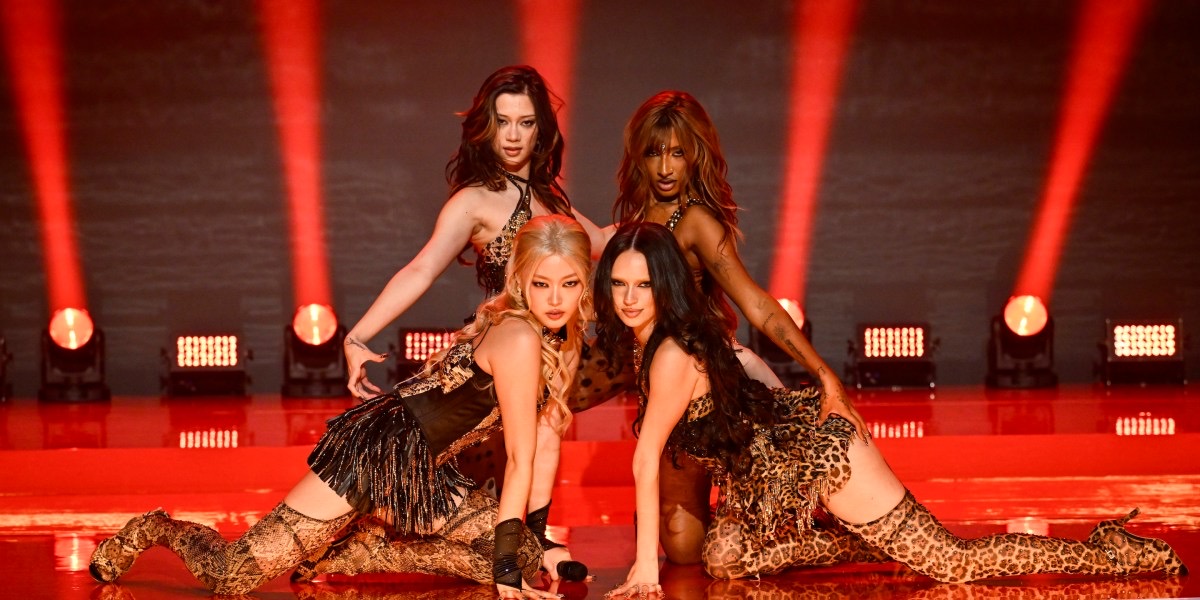
Megan Skiendiel, 20, sang from a chair at the side of the stage at Austin's Moody Center on Nov. 10 while her bandmates danced. She is recovering from a concussion. The image spread quickly, and fans were not objecting that she could not dance. They were objecting that she was on stage at all.
The group is Katseye, the flagship of a joint bet by HYBE, the South Korean entertainment giant behind BTS, and Universal Music Group's Geffen Records. The partners set out to export K-pop's highly structured talent system to a global audience. According to Fortune, the injuries and health breaks are an early test of whether that system's show-must-go-on ethos travels, and of what it costs the performers carrying the franchise.
The disruption is not limited to one singer. Skiendiel's injury forced the group to postpone three dates, starting with a Nov. 3 show at Detroit's Little Caesars Arena that was called off roughly 30 minutes before it was set to begin. In August, an ankle sprain pulled the group out of Olivia Rodrigo's Daisy Chain Fields festival. Manon Bannerman began what the group called a temporary hiatus in February, citing her health and well-being, and has no announced return date. Sophia Laforteza, the leader, stepped away in August. In October, HYBE and Geffen said she would miss the rest of the North American tour and all promotional activity through 2026, returning in the first week of January.
Skiendiel has described her return as carefully limited. 'I am still actively recovering from my concussion,' she wrote to fans before the Austin show, adding that her doctors had recommended reduced choreography, less intense movement and breaks as needed. 'I won't be going full out just yet!' Her Dallas performance, in which she did the 'Pinky Up' choreography in dark sunglasses, fueled speculation that she was being pushed back too soon. Fortune notes that no public evidence shows she was forced to perform.
The commercial logic behind the group is clear. Netflix chronicled the search in 'Pop Star Academy: Katseye,' in which more than 120,000 people applied, 20 made the competition and six made the group. The strategy worked. The group's 2025 'Better in Denim' campaign for Gap, a dance-driven ad seen 80 million times, introduced it to a far broader audience. In August 2025, Katseye drew an estimated 85,000 people to a daytime Lollapalooza set, a crowd widely reported as a record.
That is the bargain at the center of the story. Capital built a product on synchronized choreography, a full lineup and a tightly curated image, and it rewards performers only while they can deliver all three. When a member's health takes her out of the routine, the franchise absorbs the cost in cancelled dates, rebooked tours and a public debate over whether a teenager and twenties-aged performer should be on stage at all.
The editorial reading is simple. A talent model built to maximize output is only as durable as the people inside it, and the market will eventually price that fragility. Investors in the venture should ask whether a system that treats recovery as a scheduling problem is sustainable, and whether the margin gained from relentless output is worth the reputational and human risk. Free enterprise rewards products that deliver, but it also rewards companies that protect the assets that make those products possible. The performers are not a line item on the balance sheet, and the franchise that forgets it may find its earnings thinner than its stage lights suggest.



