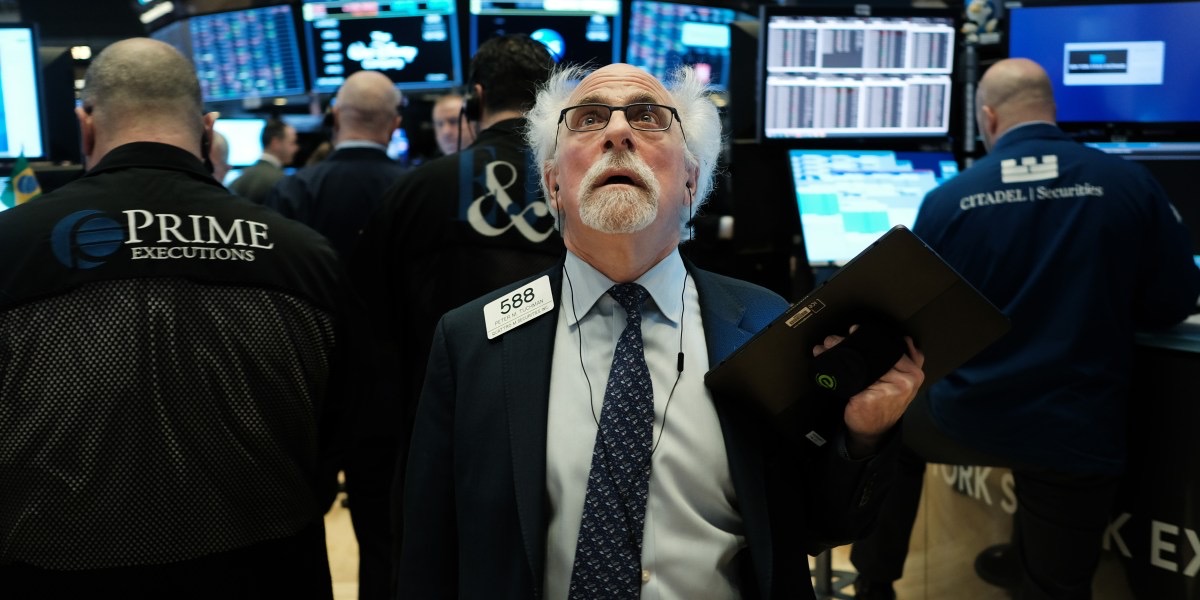
The rest of the world got a holiday from the noise. With America offline for Thanksgiving, stocks in Asia broadly rose and European markets were up strongly. Even New York's closed session told a story: S&P 500 futures were higher, Nasdaq 100 futures gained 0.63%, and Nvidia rose 1.29% in after-market trading.
The bears were not quiet, though. Joachim Klement of Panmure Liberum announced in a video talk that he was selling all the equities in his personal portfolio. 'I think that we are heading towards a major bear market with more than 30% drawdown risk,' he said. His official forecast for 2027 is that the S&P 500 will sink to 5,000, a level that seems unthinkable today. His core concern is that the index is trading below its 200-day moving average, and he quoted Paul Tudor Jones: 'nothing good happens below the 200-day moving average.'
The inflation data is the sticking point. According to the coverage, the Fed's preferred gauge, the index for personal consumption expenditures, rose year over year to 3.8% in October, up from 3.7% the month before. Lawrence Werther and Brendan Stuart of Daiwa Capital Markets called it 'undesirably strong.' Many analysts read a Monday speech by John Williams, the President of the New York Fed, as a signal that rates were heading higher. 'We must take actions over time that will ensure that we get inflation back to our 2 percent goal in a timely manner and on a sustained basis,' Williams said. 'There is still work to do to get that done.'
The economy is not the problem. Chris Zaccarelli, chief investment officer at Northlight Asset Management, said the 4.3% GDP print 'shows that the economy is booming.' New jobless claims came in near their three-year low, according to Thomas Simons and Blake Birkins of Jefferies. But a strong economy gives the Fed room to tighten, and tighter money is never kind to equities. Zaccarelli pointed to 'the AI angst and the newly announced tariffs' as reasons he did not expect a Santa Claus rally this year.
The weakness is concentrated. Much of the drag sits in the technology sector. Outside it, the picture is better: before the holiday, 372 stocks in the S&P 500 moved higher, and the equal-weight index rose 0.82%, Deutsche Bank's Jim Reid noted. The outperformance of European stocks against U.S. stocks is one visible result.
For the free-enterprise reader, the lesson is plain. Capital rewards clear rules and predictable money. When inflation stays hot and the central bank leans toward higher rates, the cost lands on savers, borrowers and the taxpayer who finances the debt. Markets can rally on a holiday, but they price policy over time. The market has already started voting, and what it is saying is that the Fed has work to do.