The numbers come first. Venture investors deployed a record $37.9 billion into defense technology across 269 deals in the third quarter of 2026, up 117.5% from the prior quarter, according to PitchBook data cited by Fortune. Capital is clearly willing to fund the sector. The question is whether the Pentagon can absorb what private money is building.
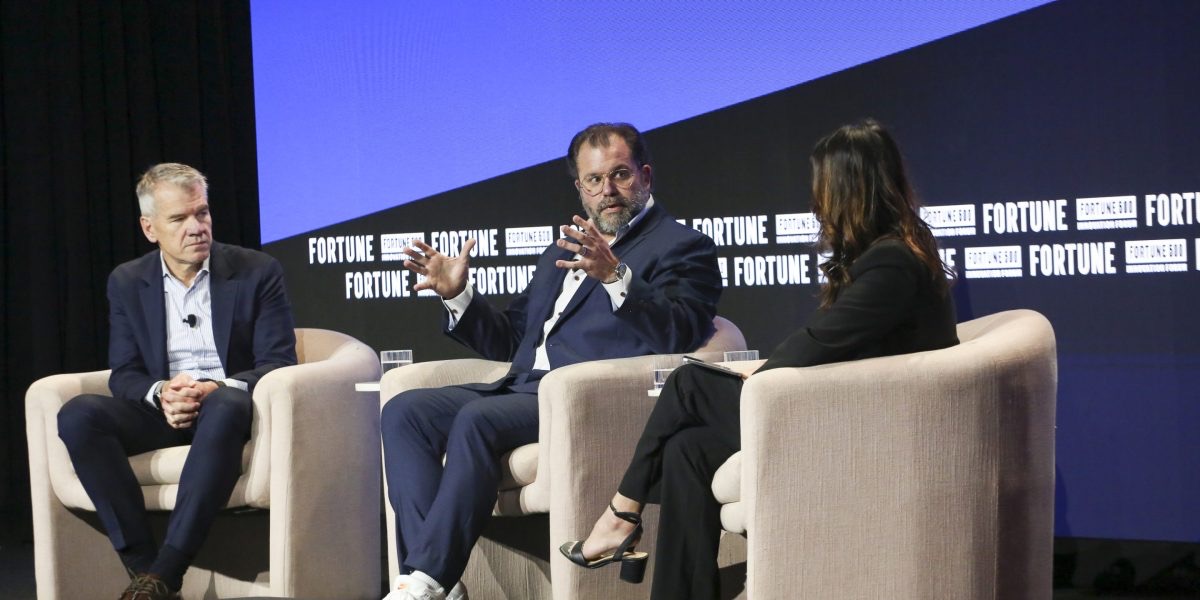
Tyler Sweatt, chief executive of Second Front Systems, a defense software deployment company, told Fortune that 'if you don't act now, it will be existential in the near future.' He described the Pentagon as an 'Industrial Age organization' weighed down by 'big long bureaucracies' and 'antiquated technology production lines' that will have to change. Gary Steele, chief executive of Shield AI, said the transition 'will take time because things move slowly; the technology is not moving slowly.'
The government's own watchdog points the same way. A Government Accountability Office report published in July found that the average time needed to deliver a capability across the Pentagon's major weapon acquisition programs rose to over 12 years, and the GAO predicted this average 'will likely increase in the future.' For a taxpayer footing the bill, that is a long wait for hardware that may already be obsolete when it arrives.
The contrast with the private sector is stark. Steele said Shield expects the time 'from conception to first flight' for its autonomous fighter jet to be less than two years. He compared that with Lockheed Martin's F-35, which began development in 2001, flew in 2011, and took 23 years from contract award to clearance for full-rate production. Steele argued that autonomy accelerates development because testing does not put pilots at risk every day. Whatever one thinks of the programs involved, the comparison exposes how much time procurement rules consume.
Market behavior tells the same story. Shield AI announced on November 5 that it was raising $2.5 billion to support its acquisition of radar systems company Echodyne in a transaction valued at $5.3 billion. Sweatt expects 'a tranche of deals' to follow within six months as investors push for returns. Shield's valuation doubled to $28.8 billion from $12.7 billion in March, and Anduril CEO Brian Schimpf, whose company is valued at $61 billion, said in June that defense tech could be in 'a bit of a bubble.'
This is where the editorial reading applies. Free enterprise is ready to deliver. Entrepreneurs are raising private capital, consolidating and taking risk on their own balance sheets. What stands between that capital and the warfighter is a procurement system that rewards process over performance. Every year a program spends in approval queues is a year of taxpayer money spent without a finished capability. Competition, clear rules and faster contracting would let the market do what central planning has not.
Sweatt himself said the next two years will decide whether the bubble thesis holds. If the Pentagon keeps its Industrial Age habits, the sector's best companies may be the ones that move their work elsewhere, and the country's defense edge will pay for it.