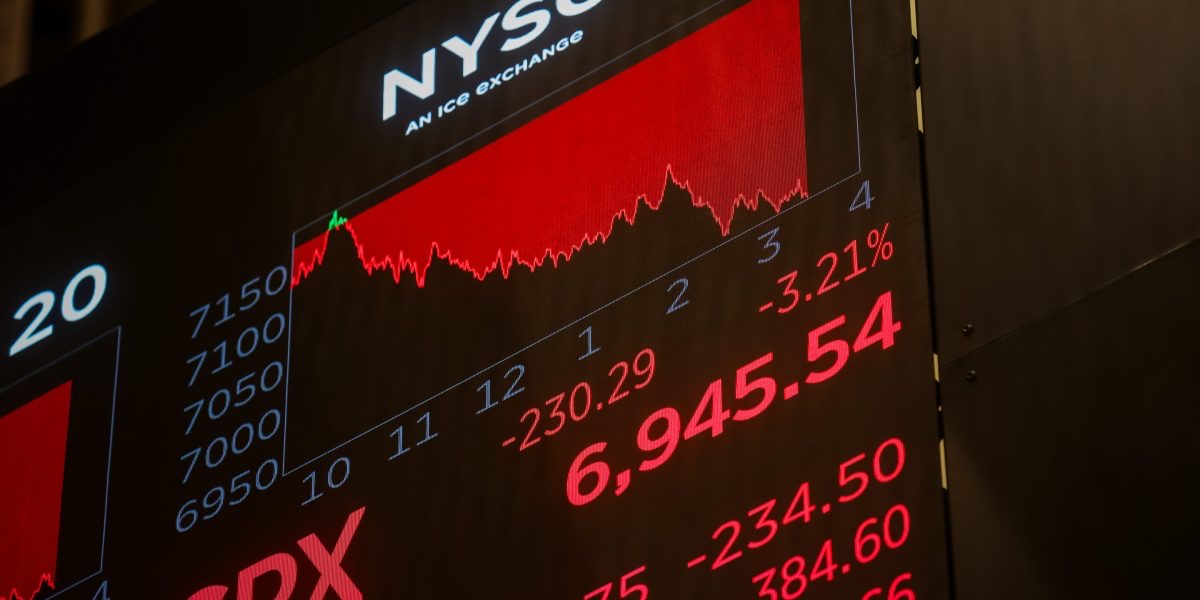
The numbers come first. According to Owen Lamont, a portfolio manager at Acadian Asset Management and a former University of Chicago finance professor, there is a '70% chance that as of November 2026 we are already in an AI bubble in the U.S. stock market.' Lamont told Fortune he has changed his view since January, when he said the market was not yet in a bubble.
What changed is the signal he had said was missing: issuance. Lamont tracks what he calls the 'four horsemen of the bubble apocalypse,' which are overvaluation, bubble beliefs, issuance and inflows of new money. In January, three were present. Issuance was the holdout, because U.S. firms had bought back roughly $1 trillion of their own shares over the prior year. Lamont treats corporate executives as the 'smart money,' and at the time they were not selling.
That has reversed. By Lamont's count, U.S. companies issued a net $2.4 trillion of stock over the 12 months to November 12. In the 12 months to November 2025, they bought back a net $69 billion, and a year before that, $397 billion. He now writes that he 'would no longer write those words' from his January headline.
The headline figure carries a major caveat. Of the $2.4 trillion, $2.2 trillion comes from SpaceX's June IPO, which Lamont's method counts at its full market value. Excluding it, net issuance is $192 billion. That is still a swing from net buybacks a year earlier. The Magnificent Seven moved from net buybacks of $144 billion in the year to November 2024 to net issuance of $276 billion. Lamont wrote that Alphabet and Meta switched from buying back shares to issuing them, and that Meta announced plans to raise nearly $98 billion in equity to fund its AI spending.
Professional investors are heading the other way. According to Bank of America's November survey, fund managers cut their net overweight in tech to 12% from 37%, the biggest one-month drop since June 2006.
The open question is why companies are selling. Lamont offered two explanations: 'the smart money is selling because the market is overpriced,' or firms 'need to fund the AI buildout.' Asked which he leans toward, he said: 'I'm not sure. Could be both.' Either way, someone has to absorb the new shares. TD Securities' rates strategists noted that more AI capital expenditure funded with stock could ease pressure on long-term Treasury yields.
Lamont is not calling a top. 'It is not a slam dunk case: the market might be overvalued, but it is not absurdly overvalued,' he said. 'Net issuance has turned positive, but it's not strongly positive.' By his measure, net issuance runs at 3.1% of total market value, still below the peaks of the 1999-2000 tech bubble and the 2021 COVID boom.
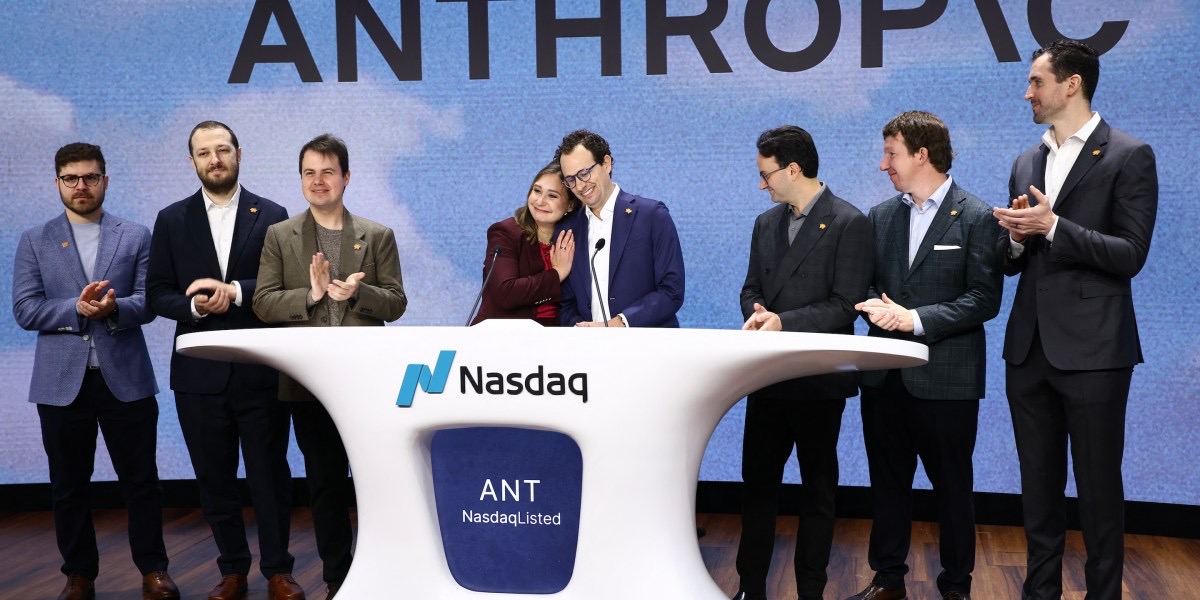
He named three conditions that would move him from 70% to a neutral call: a successful Anthropic IPO, a wave of smaller IPOs, and valuation ratios such as the CAPE ratio breaking prior records. The second is far off. The U.S. had 90 IPOs in 2025, against 311 in 2021 and 677 in 1996, according to data from Jay Ritter cited in Lamont's March note. The first condition is close. Anthropic is set to price its IPO Wednesday and begin trading on Nasdaq on Thursday under the ticker ANT.
The editorial reading is straightforward. When companies sell stock to fund spending, public investors absorb the dilution and the risk, while the executives who once bought back shares to return capital are now raising it. Free enterprise rewards capital that is deployed with discipline, not capital raised at peak prices to chase a trend. Investors who buy at these levels are betting that AI spending will earn a return, and taxpayers and savers who hold index funds carry much of that exposure. The market will reveal the answer, but the signal Lamont describes is one investors should not ignore.