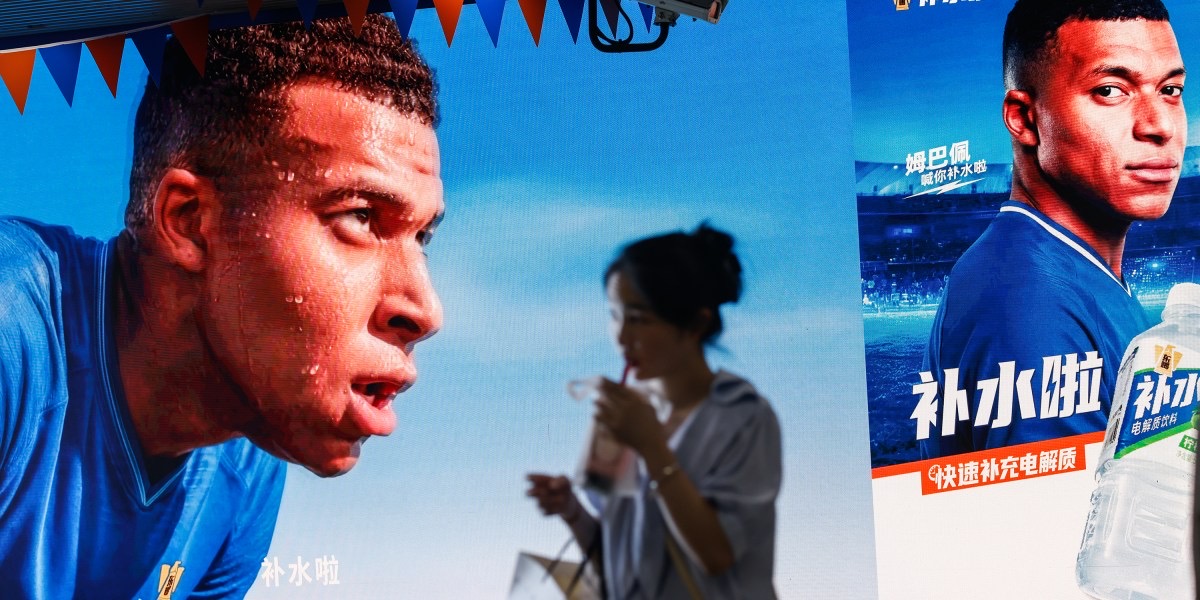
A meme superimposing Kylian Mbappé onto Mao Zedong's body went largely unnoticed until a Chinese football forum picked it up in late October. Weeks later, the Real Madrid striker has become the latest target of what the authors describe as China's economic coercion.
The response was swift. After Mbappé said in a clip from the French talk show The Bridge that the funniest meme of himself showed 'some guy—I think he's a Chinese dictator,' three Chinese sponsors dropped him within a day. His name and likeness were pulled from social media posts and ads for Dior, Hublot, On and Adidas, in stores across China. China's state broadcaster took La Liga matches off the air, and his accounts on Xiaohongshu (also known as RedNote) and Weibo were restricted. China's foreign ministry called the backlash natural.
The pressure reached the institutions around him. La Liga, which earns an estimated $100 million a year in Chinese media rights, apologized through its president, Javier Tebas, to Chinese fans. Mbappé apologized for his 'ill-judged' comment. Real Madrid, which counts millions of Chinese fans and reportedly sells about 15% of its jerseys there, issued a statement apologizing to the Chinese people for any 'discomfort' the star's words had caused.
The numbers explain why no one stayed defiant. Authors Victor Cha and Andy Lim of the Center for Strategic and International Studies (CSIS) write that the apology was 'the only move available' to Mbappé, Real Madrid and La Liga. Their own tracking of 605 cases of Chinese economic coercion since the 1990s found that 582 targeted companies and individuals over perceived slights to CCP legitimacy, territorial disputes, Tiananmen commemorations and arms sales. Almost none concerned trade. The G7 economies, Australia and South Korea accounted for 81% of cases, and in almost every case the target apologized almost immediately and stayed silent.
The precedent is not new. After Houston Rockets general manager Daryl Morey posted a tweet about the Hong Kong protests in October 2019, all 11 of the NBA's official Chinese partners suspended ties and Chinese state media canceled broadcasts, costing the league hundreds of millions of dollars. Since 2005, more than 60 basketball players have signed deals with Chinese brands worth hundreds of millions of dollars in total. Hollywood has adjusted too: MGM digitally turned the Chinese invaders of its 'Red Dawn' remake into North Koreans, and the Taiwanese and Japanese flags vanished from Tom Cruise's jacket in the first trailer for 'Top Gun: Maverick.'
The market is pricing that exposure every day. Sports franchises, studios and consumer brands have built China revenue into their models, and that revenue now carries a political veto that no shareholder voted for. When a regulator-free state can shut off a broadcast or a sponsor with one phone call, the cost of free speech lands on the private company, not on the government making the threat.
The authors' conclusion is that the burden belongs to governments, not to athletes or firms. They call for a collective economic deterrence pledge, in which coercion against one country's companies or citizens would be answered by all. For free-market readers, the principle is simple: a company's freedom to operate, and an individual's freedom to speak, should not depend on whether a foreign ministry is offended. Until Washington and its allies treat coercion as a shared problem, capital will keep choosing silence, and the bill will keep landing on shareholders and on the taxpayers who back the institutions caught in the middle.



