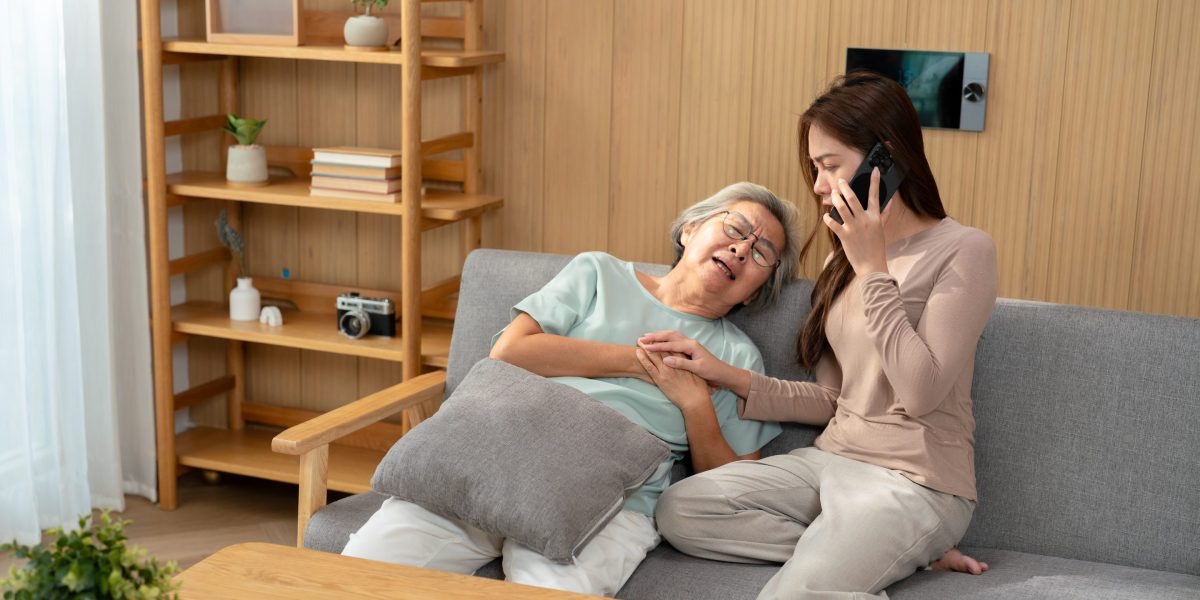
The numbers come first. A 2025 report from AARP and the National Alliance for Caregiving found that 63 million Americans, nearly 1 in 4 adults, provided ongoing care in the past year. That is 45% more caregivers than a decade earlier.
The work has grown harder, too. More than 40% of caregivers provide high-intensity care, and more than half perform medical and nursing tasks such as giving injections and managing catheters. Only 22% have been trained to do them.
Geoff Gross, founder and CEO of Medical Guardian, a Philadelphia-based medical alert and connected-care company, said the aging population is the main driver. He also pointed to strain on the broader care system. 'There's a burden on caregivers right now that is not scalable,' Gross said.
Paid help is scarce and expensive. Gerontologists Jane Tavares and Marc Cohen, writing for Fortune, put the median cost of a home health aide at about $6,688 a month. The direct care workforce remains underpaid and short-staffed.
The bill does not stop when the caregiving does. A report published Nov. 4 by the AARP Public Policy Institute modeled the lifetime income losses of working caregivers born between 1981 and 1985. The typical caregiver in that group stands to lose about $120,500 in earnings, workplace retirement income and Social Security. Roughly $15,400 of that comes from retirement and Social Security income alone. Across that single five-year cohort, the model estimates losses of $2.3 trillion. Only 3.4% of working caregivers in the model lost no work hours to care.
For some families the strain reaches the basics. In the 2025 AARP survey, 1 in 5 caregivers said they could not afford necessities such as food.
Research from the University of Michigan, published in October, shows the gender gap widening. If current rates hold, U.S. women can expect to spend seven years caring for older family members or friends, up from six in 2011. Men's lifetime total held steady at four. The difference appears in care for parents and grandparents, not spouses. Edward Jones managing partner Penny Pennington has called this 'the elder daughter phenomenon,' arguing that eldest daughters are quietly propping up family finances.
Gross said women still bear disproportionate financial, time and energy burdens, and that progress 'isn't happening fast enough.' The U.S. Census Bureau projects that by 2029, Americans 65 and older will outnumber those under 18.
The market has already signaled where the pressure sits. Demand for care rises every year, while the supply of trained, affordable workers stays thin. Capital rewards clear rules and workable incentives. Right now, the household that absorbs the cost is carrying a private, unpriced obligation that no one has chosen to fund.
That is the real lesson of the Sister sketch. Behind the laughs is a question about who pays and who decides. Families, not Washington, are footing most of the bill, and the taxpayer is still asked to fund the rest through programs that have not kept pace with the need. Free enterprise and personal responsibility point toward more room for private care options, more training pipelines and fewer barriers to hiring. Power leaves a paper trail, and in caregiving that trail runs straight through the kitchen table.