The numbers come first. Since September, South Korea's financial sector has been hit by a rolling wave of cyberattacks, with regulators counting 40 incidents at 37 financial firms, including banks, brokerages, insurers, savings banks and crypto exchanges. Researchers traced the September attacks to Artex, an AI-powered tool that automated the intrusions.
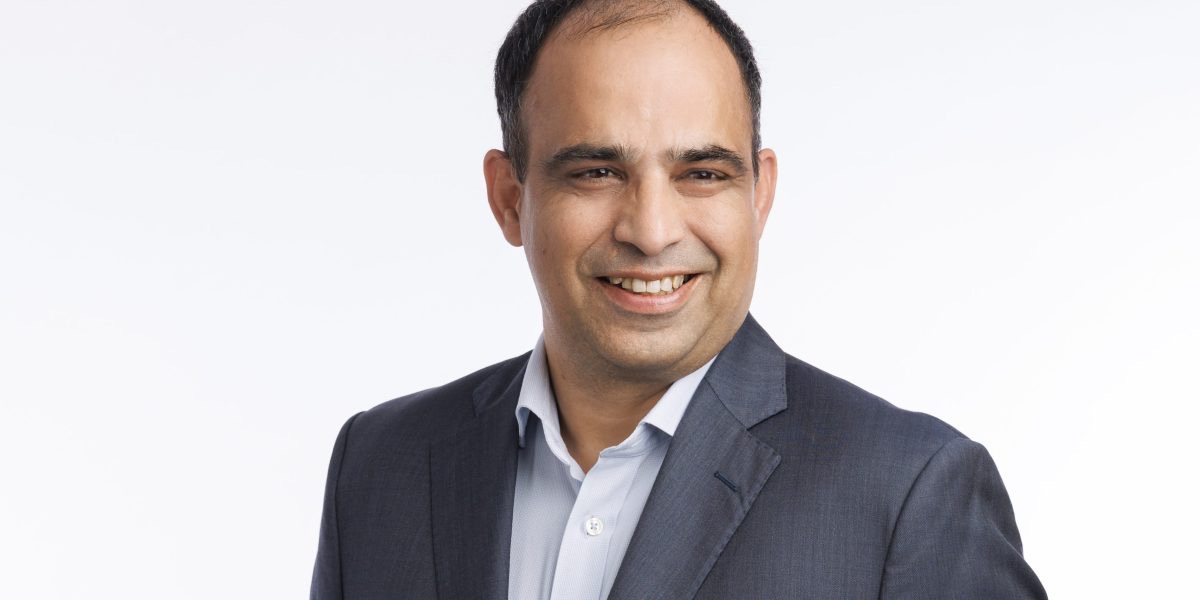
Praveen Raina, head of group operations and technology at Singapore's Oversea-Chinese Banking Corp. (OCBC), told Fortune that the pace of attacks has changed the calculation. "With the velocity that cyberattacks are happening, it is a matter of when rather than if," he said. For banks, he argued, trust may now come less from preventing every attack than from detecting, closing and repairing them faster. "I wish I could prevent them—and we'll try—but what we can control is having the right processes so that we can react quickly to whatever happens," Raina said.
His strategy rests on two elements: cybersecurity and resilience. "We're leveraging AI for cybersecurity," he explained. "With agentic AI attacking organizations, humans cannot keep up with it… it's the nature of the beast. So, we're building a defensive AI wrapper around the bank to protect it." His team also runs red-teaming exercises, structured simulations in which a group acts like a real-world attacker, and operates a bug bounty program that pays white hackers to identify security issues.
The approach also reflects a choice about who builds the technology. Raina joined OCBC in 2008 as senior vice president in group operations and technology. In his first year, he assembled a small team that built an iPhone-native banking app, launched in 2008 as the first digital banking app debuted by one of Singapore's three local banks: OCBC, DBS and UOB. He said the bank had previously relied largely on buying solutions from vendors and implementing them. "As the world changed around us, we made it a point [to develop in-house expertise]," he said.
Today that team has roughly 600 to 700 employees, and it builds almost everything internally. "It gives us better control of things, and we can do more and faster releases," Raina said. The logic is straightforward: a firm that controls its code can patch faster, and speed is precisely what the attack environment now demands.
The same capacity is visible in OCBC's Avatar Banking app, launched in July, which gives clients round-the-clock access to AI-enabled virtual relationship managers. Raina said the process from ideation to release took four to six weeks. The app launched as a beta to fifty customers, and he is preparing to move all private wealth clients onto the platform by the first quarter of 2027. Users can choose between two virtual wealth managers, a man named Wayne and a woman named Wendy.
The longer horizon is quantum. Experts estimate that 'Q-Day', the day quantum computers can crack traditional encryption, will arrive around 2030. Raina expects a Y2K-style crunch, with every institution competing for the same vendors at the last minute. OCBC is training more than 100 quantum-literate staff and running pilots with universities and ST Engineering. "The issue with quantum computing is that it's so powerful that it can break those keys… so the security layer is gone," Raina said.
For the market, the message is clear. Capital rewards institutions that can absorb shocks without freezing operations, and that requires control over one's own technology stack rather than dependence on outside vendors. Banks that outsource their defenses and wait for a crisis to reveal the gaps will pay more, in both losses and customer trust, than those that invest early in people and processes. The market has already started to sort them.
The editorial reading is that this is a case for private initiative. OCBC did not wait for regulators to dictate the response; it built capacity, kept the know-how in-house and tested it against simulated attackers. Taxpayers are not the first line of defense for a private bank's customer data, and the firms that treat resilience as their own responsibility are the ones best placed to protect depositors and shareholders alike.