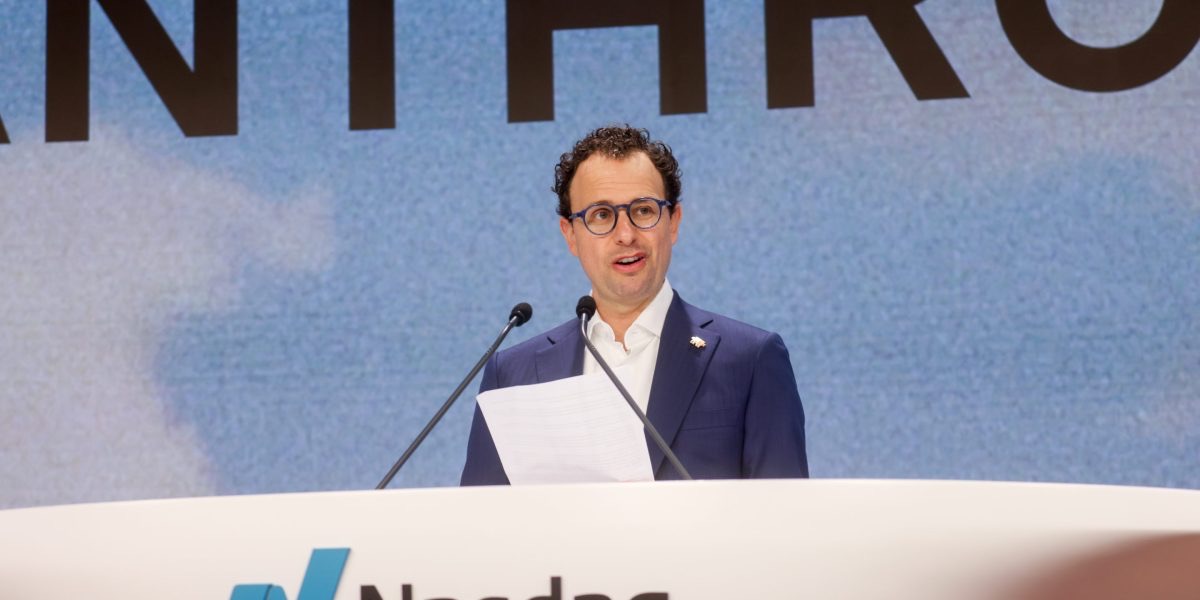
Anthropic, the creator of the Claude chatbot, priced its initial public offering at $83 a share and debuted on Nasdaq under the symbol ANT. The company, which Fortune describes as five years old, was valued at about $2 trillion at the opening, making it a record-breaking listing.
The numbers come first. Shares began trading at $111.50 before noon, then gave back much of that gain during the session and closed at $97.17. Even so, anyone who received shares at the offering price started the day with a 34% gain, according to the closing figures Fortune reported.
Demand was intense. About 1,200 institutional investors submitted orders at the $83 price, and more than half of them did not receive any shares. Retail demand was the largest for any IPO on record, with individual investors taking about 15% of the offering. Fortune's Diane Brady framed the debut as a vote on AI from two directions: 'Buy the stock or buy the product.' The first measures how much capital investors will commit. The second measures whether customers are getting enough value to keep paying.
The broader market did not share the enthusiasm. Fortune reported that S&P 500 futures were down 0.69% the morning after a session that closed down 2.02%. Japan's Nikkei 225 fell 5.06% and South Korea's KOSPI dropped 5.21%. Bitcoin traded near $62,000. The debut, in other words, did little to lift overall sentiment.
The company's governance also drew attention. Fortune noted that CEO Dario Amodei has one direct report, while most of the senior team reports to President Daniela Amodei. The company's risk disclosures, its Long-Term Benefit Trust and its Class F shares all raise questions about who decides when Anthropic speeds up or slows down. Those are questions a shareholder should ask before buying in.
Brady also reminded readers of the dot-com era, when Cisco told the market that the internet would transform how we work, live, play and learn. Cisco's revenue today is roughly three times its fiscal 2000 level, yet its total market value remains about a third below its March 2000 peak. The technology can be right while the stock is wrong.
This is where free-market discipline matters most. A record IPO is not proof of durable profit, and a 34% first-day gain for lucky allocation holders is not proof that the price is justified. Capital that chases a story rather than cash flow is capital that eventually gets punished. Investors who paid up at the open are wagering that the product will earn its valuation. The market will settle that bet, not the headlines.